Breaking Point
The Chasam Sofer says that studying Seder Nezikin can save a person from coming to harm, both physical and financial. If someone, chas v’shalom, has a harsh heavenly decree against him, that decree can be fulfilled by just learning the laws of damages, instead of actually coming to harm. Studying Seder Nezikin can therefore be a powerful source of salvation for Klal Yisrael. It is therefore fortunate that at a time when Klal Yisrael needs salvation, we are studying Bava Kama, the first maseches of Nezikin. Hashem should send us yeshuos b’mheirah.
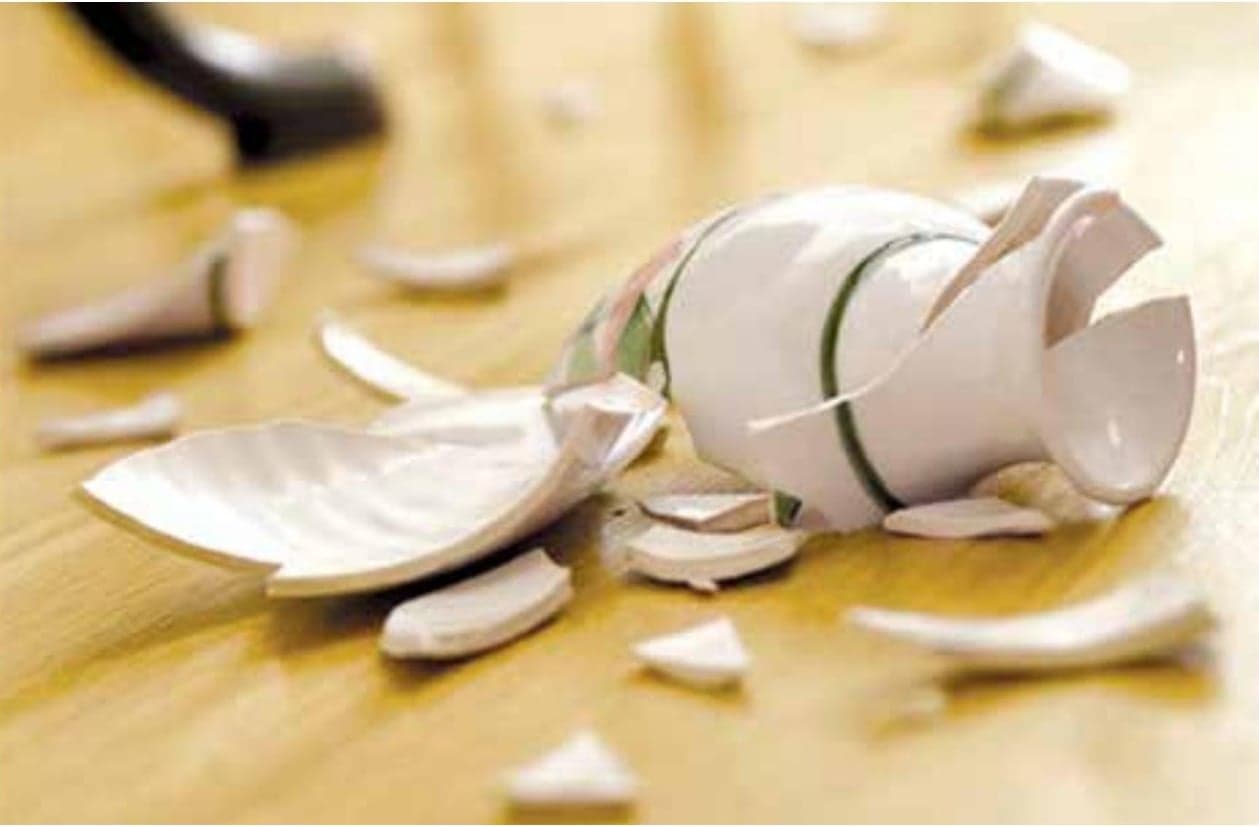
The Gemara (Bava Kama 17b) says that if an object is thrown from a roof but someone hits it with a stick in mid-flight, breaking it before it lands, Rabbah says the hitter is exempt from paying restitution to the owner. Rabbah reasons that the hitter broke an object that was already halachically broken. True, it still is physically intact, but since it is destined to break, it is already considered “broken.” And one cannot be obligated to pay restitution for damage to an already broken object!
It would seem that the person who threw the item off the roof is the one who is responsible for breaking it and should be obligated to pay. Indeed Rashi (17b) says that this is the case. In fact, that is the very reason the Gemara mentioned Rabbah’s statement. The Gemara is trying to prove the concept of basar mei’ikara azlinan—the determination of damages goes according to the beginning [of events leading up to the damage]. When an object was set in motion to be damaged, we consider it damaged from the time the event starts. The Gemara is trying to prove that if an animal kicks an object, it is considered broken from the time it is kicked, as a corollary of the case of a person who throws an object.