Worth Its Salt
Every Shabbos night seudah at the Cohen household was special. This particular week, the air was thick with the aroma of kugel and roast chicken, but for Uncle Dov, there was one singular, pressing priority.
Every “Delving into the Daf” article, newest first.
Every Shabbos night seudah at the Cohen household was special. This particular week, the air was thick with the aroma of kugel and roast chicken, but for Uncle Dov, there was one singular, pressing priority.
As the French army retreated from the frozen outskirts of Moscow in 1812, Napoleon Bonaparte, the man who had once rearranged the map of Europe, was reduced to a fugitive.
The Presidential Autopen The presidential autopen is a clever machine that helps the President manage the huge stack of documents requiring a signature each day.
When someone does you a favor, a possible response is “Shkoyach.” “Can you please pass the gefilte fish?” “Sure.” “Shkoyach.” What does shkoyach mean?
Many people wear two pairs of tefillin — Rashi and Rabbeinu Tam. The question arises whether one may wear both pairs at the same time. The Shulchan Aruch rules that one may.
An individual was applying for a rabbinic position upon the receipt of his semichah. Apparently, the members of the congregation with the open position weren’t too learned.
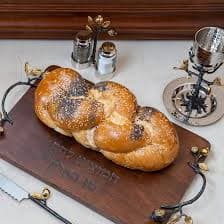
The Daf this week touched on the practice of covering the challah before the Shabbos meal (Pesachim 100a-b). Three reasons are offered for this practice. Tosfos cites two of them. The first is from Rav Achai Gaon.
The very first paragraph in Shulchan Aruch expounding the laws of Minchah raises the following question: “What if there is barely any time left for Minchah?” How appropriate!
There are two practices at the end of the Seder that are commonly associated with each other, though they are not necessarily connected.