Removing a House’s Mezuzos
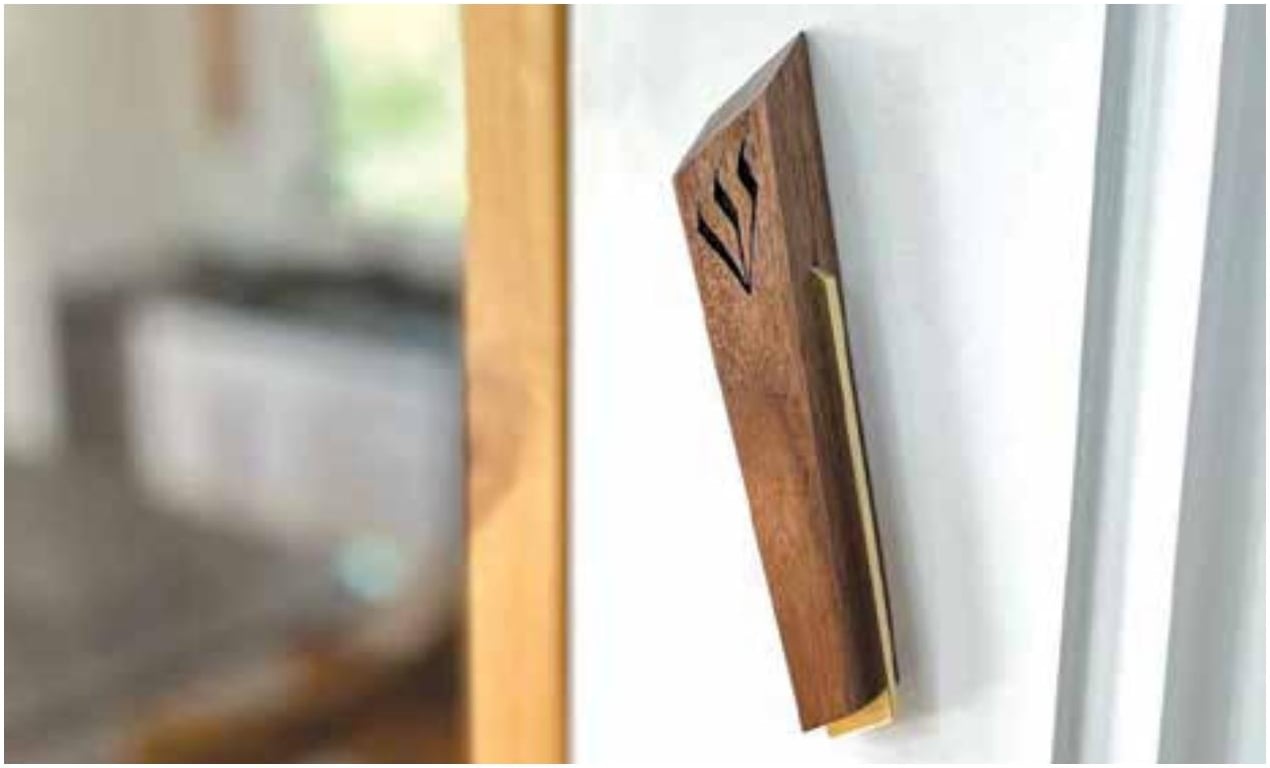
A renter is obligated to affix a mezuzah just as a homeowner is. However, most Rishonim are of the opinion that a renter’s obligation is only rabbinic. The Gemara (Bava Metzia 102a) notes that a renter may not remove his mezuzos when he vacates his rental. The Gemara proceeds to cite a story about a renter who removed his mezuzos when he moved elsewhere. The consequences were disastrous.
The Gemara cites a major exception to the aforementioned halacha. If the next tenant or owner will be someone who will disgrace the mezuzos, then they should be removed.
The Rishonim note that the Amora Shmuel rules that one may remove tzitzis strings from one garment and affix them to a different garment. The halacha should be the same as a mezuzah. Why may the renter not remove his mezuzos and affix them elsewhere?
There are (at least) four answers to this question. Rav Achai Gaon posits that the premise of the question is one hundred percent correct. The halachos of mezuzos and tzitzis strings are the same. Both may be removed and affixed elsewhere. However, one may not remove a mezuzah and put it in a display case. One may not remove kosher tzitzis strings from a garment and put them in a drawer. This is considered disgracing the mitzvah. Therefore, the renter may indeed remove his mezuzos from his old apartment as long as he puts them up in his new one.
Tosfos in Bava Metzia explain that a mezuzah affords Divine protection to the house and its inhabitants. By removing the mezuzah, the vacating renter is harming the future inhabitants. By contrast, no one is harmed when removing tzitzis strings.
The Ritva explains that when one affixes a mezuzah to a home, a certain amount of sanctity rests on that home. It is inappropriate to remove sanctity from a given location. Although affixing tzitzis strings is a mitzvah, it does not create any sanctity in the garment. (A prayer shawl/talis may be somewhat different.) Therefore, it is permissible to remove tzitzis strings and not mezuzos.
Finally, the Birchei Yosef suggests that a renter should not remove his mezuzos because we are concerned that the new renter may be negligent and fail to affix mezuzos. Removing the mezuzos and creating a nisayon for the new renter is inappropriate. However, with the halacha of tzitzis, both garments belong to the same owner, and negligence by someone else is not a concern.
The following thoughts are to engender discussion and not meant as a final ruling.
What are some of the halachic differences between the various opinions? What if a renter is moving out of town? He forgot to order mezuzos for his new home. May he remove his mezuzos and bring them to his new home? The last three reasons would suggest that the answer is he may not. However, according to Rav Achai Gaon, he may. Rav Achai Gaon explains that it is a disgrace to take a mezuzah that is being used for a mitzvah and put it in storage. Here, the renter will affix the mezuzos to his new home. There is no disgrace for his mezuzos. The Birchei Yosef says that in case of need, one may rely on Rav Achai Gaon’s opinion and remove his mezuzos. The Aruch HaShulchan is unsure if this should be relied on.
Rav Achain Gaon’s explanation can also lead to a stringency. If someone has a mezuzah that is perfectly kosher, may he replace it with a mezuzah that is more mehudar? The Mezuzos Melachim (186:1) says it may be an issue. One could argue that it is a disgrace to a perfectly kosher mezuzah to be relegated to a drawer because one has a nicer one. It would seem that one may give the less-mehudar mezuzah away or sell it. This way the less-mehudar mezuzah is still being used. (See there for other options.)
The Mishna Berura rules (OC 15) that one may remove kosher tzitzis strings to replace them with nicer ones.
Suppose someone is reluctant to leave his expensive mezuzos on his old rental. He would like to put perfectly kosher but cheaper ones in their place. Many poskim rule that this is permitted. However, the old mehudar mezuzos should be used and not put in storage.
What if the new renter is present when the old renter is moving out? The new renter is ready to put up his mezuzos immediately upon the old renter removing his. One could make the argument that the first three reasons are inapplicable. There is no disgrace to the old mezuzos because they will be affixed on the prior renter’s new home (assuming they will). He is not harming the new inhabitants, because new mezuzos are being affixed promptly. Likewise, he is not removing any sanctity from the house, because the lapse of time without mezuzos will be mere moments. Yet, perhaps Chazal were always concerned about the possible negligence on the part of the new renter no matter the circumstances. Indeed, the Pischei Teshuva (291:7) quotes the Birchei Yosef that even in this situation the first renter should not remove his mezuzos. The Be’er Moshe (3:181) disagreed and said he ruled leniently on this exact issue many times.
What if the owner of the apartment does not intend to rent it out anymore? The Pri Megadim (OC 15:2) says Tosfos’s logic about harming future inhabitants is inapplicable, and the mezuzos may be removed.
There is a major leniency cited by the Igros Moshe (YD 4:44). Typically, apartments are painted in between tenants. One must remove the mezuzos before painting so that they are not ruined. Rav Moshe, zt”l, said that in such a situation, the departing tenant may remove his mezuzos. The clear implication is that the departing tenant may remove his mezuos and not return them to their place after painting. However, Rabbi Eliyahu Feldman, author of Agur B’ohalecha, suggests that Rav Moshe did not actually mean this. (See there, 40:10.) Still, many in America accept the pask of Rav Moshe at face value and rely on it.
The Steipler and his son Rav Chaim, zt”l, disagree over whether a departing tenant may remove mezuzos that were borrowed from a gemach without replacement.
Any practical questions should be directed to a rav.
More Gemara stories
Questions on this article
Rabbi Avrohom Sebrow
Rebbe at Yeshiva Ateres Shimon in Far Rockaway. He leads the Daf Yomi chaburah at Eitz Chayim of Dogwood Park in West Hempstead, and writes “Delving into the Daf” each week for The Jewish Home.
About and contact