Tattoos
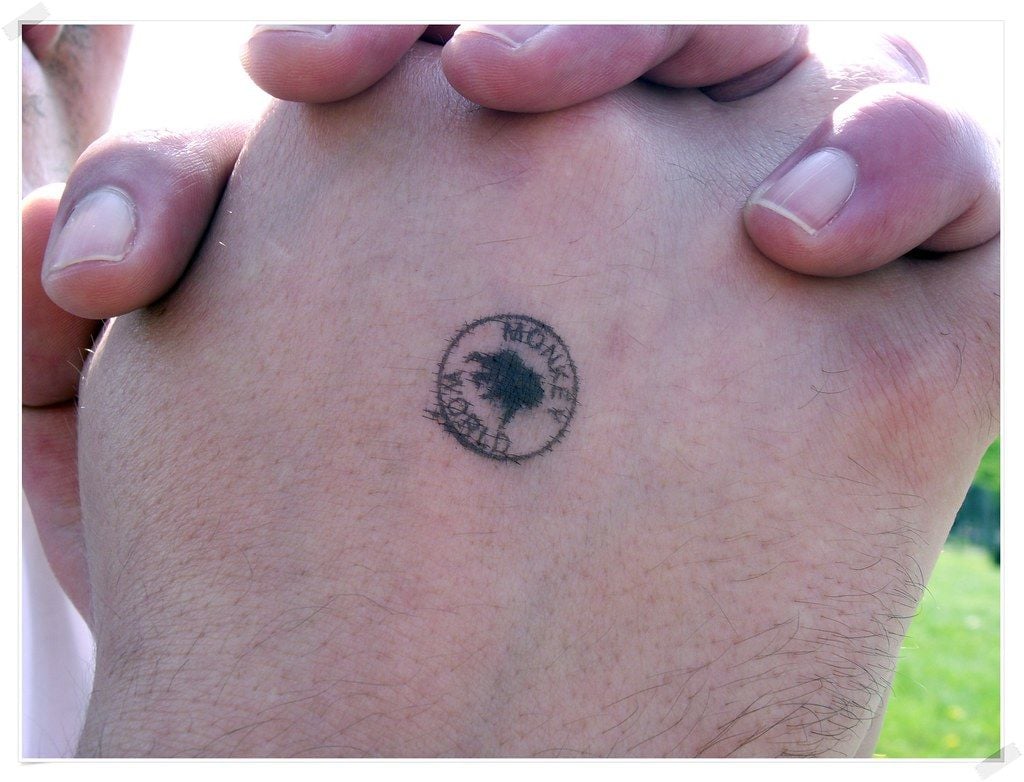
A while ago the top news story on one particular day was that Sarah Palin had notes written on her hand. Never mind that there is terrible unemployment in our country or the debt problem in European countries. What’s important is that Sarah Palin was caught red-handed by a photograph of her giving a speech that clearly showed notes written on her hand. Although this didn’t indelibly stain her image, the liberal pundits tattooed her for it. When asked about it, Palin commented, “Some people can’t afford a teleprompter.” (A jab at President Obama who is notorious for using teleprompters.) Much ink was already spilled on this story, but I just have one question to raise: There are rumors circulating that Sarah Palin’s maternal grandmother was Jewish, obviously making her Jewish as well (more on this later). Why, therefore, didn’t the liberal media attack her for violating the Jewish law against tattooing? Granted the writing wasn’t permanent, so it wouldn’t be biblically forbidden, but isn’t it forbidden at least rabbinically?
A little introduction is in order. The Mishnah in Makkos says, “If someone writes without an incision [on skin] or makes an incision without writing he is not liable [for lashes]. The only way to violate the biblical prohibition against tattoos is to make an incision in the skin and dye the area of the incision with permanent ink. The Mishnah doesn’t discuss, however, what the law is on a rabbinic level. Is it prohibited rabbinically to temporarily write on one’s skin without making an incision?
We know when it comes to hilchos Shabbos that only lasting writing is forbidden biblically. However it is forbidden medrabbanan to write on Shabbos in a temporary fashion. As an example, one may not write on the condensation of windows even though it will vanish shortly. Likewise, one may not draw pictures with the liquids left on his Shabbos plate because that is considered temporary writing and is forbidden medrabbanan. Should we conclude that likewise a temporary tattoo is forbidden even during the week medrabbanan?
Tosfos in Gittin seems to indicate that indeed even temporary writing on one’s skin is forbidden. The Gemara there is discussing a get that was written on human flesh, and the Gemara says that the get is valid. Tosfos says that even though the writer of the get violated at least an issur derabbanan against tattooing, the get is nevertheless valid. How does Tosfos prove that there is an issur derabbanan? From a case mentioned in our Gemara (21a). Our Gemara states that one may not put a certain type of ashes over a wound with the intention of healing it because it will leave a mark. It will appear to be a tattoo so the rabbis forbade it. Some Acharonim seem to feel based on our Gemara and the aforementioned Tosfos that the halachah should be codified that even temporary writing on one’s skin is forbidden.
However, this is problematic. The Mishnas Chachomim says that it was the custom even back then that people wrote on their hands. Can it be that so many Jewish people unwittingly violated an issur derabbanan? Nowadays, some museums and amusement parks stamp people’s hand upon entry as proof of payment. Many G-d-fearing people have had their hands stamped. Could it be that they transgressed this rabbinic prohibition?
R’ Vozner in Sheilos Uteshuvos Shevet Halevi (3:111) says certainly not. The writing for a get has to be permanent to be valid. Tosfos is certainly not discussing a situation where a person simply takes a pen and writes a get on his hand. That writing is only temporary and definitely invalid. Instead, Tosfos is discussing a case where an individual wrote a get on a person’s hand that already had incisions. Alternatively, the writing of the get was formed by the incision itself without the use of ink. The writing in these last two cases would be somewhat permanent and the writing would be valid for a get. The act of the writing itself would be prohibited only rabbinically. Since the person writing the get did not do both, make the incision and fill it with ink, a Torah precept was not violated. However, if there was no incision at all, one would be permitted even medrabbanan to write on skin. However, that writing would not be valid for a get. R’ Vozner says that this is indeed what Tosfos intended to prove from our Gemara’s case of using ashes as a method of healing. The Gemara here is discussing an open wound. The ashes would get under the skin and leave a permanent mark even after the wound healed. Therefore it is forbidden rabbinically. To put ashes on a superficial wound would be totally permitted. The rabbinic prohibition of tattooing only applies to a permanent tattoo that was made on an existing incision or the incision itself was being utilized to write something without the use of ink. Temporary writing on skin is permitted according to R’ Vozner.
Now we know why the pundits did not fault Sarah Palin for violating halachah and being spotted with writing on her hands. It is permitted even for a Jewess to temporarily write on her hands. However, a more likely reason for the pundits’ silence is that rumors of her Jewish lineage seem to be a total fabrication. Her actual lineage has been researched and publicized. So don’t ink her in as a member of the Jewish nation. The moral of the story is that if you don’t have enough room on your hand for your notes, then just go out and write a book. Also, don’t agree to be interviewed while wearing gloves.
More Gemara stories
Questions on this article

Rabbi Avrohom Sebrow
Rebbe at Yeshiva Ateres Shimon in Far Rockaway. He leads the Daf Yomi chaburah at Eitz Chayim of Dogwood Park in West Hempstead, and writes “Delving into the Daf” each week for The Jewish Home.
About and contact