Illegal Irrigation
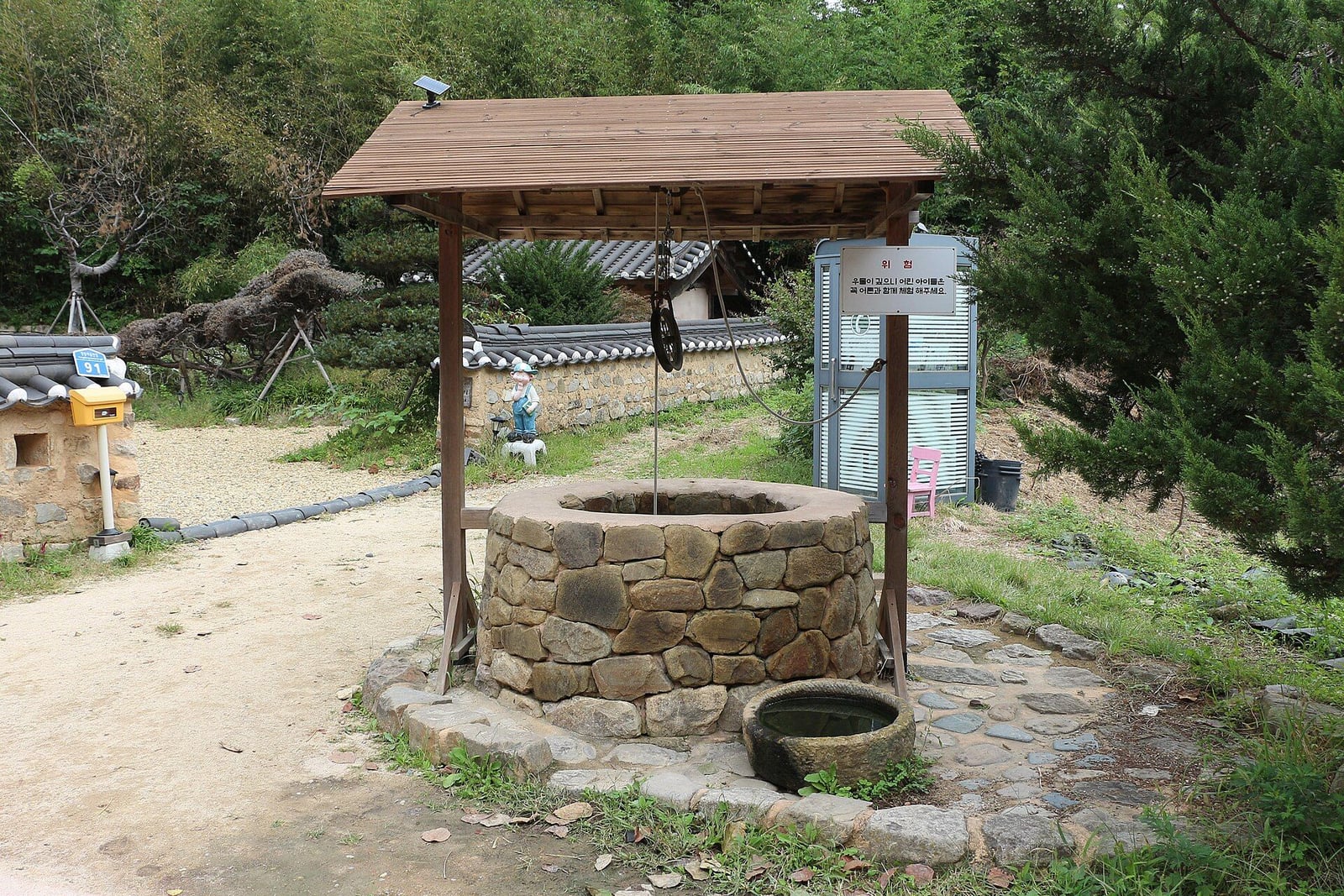
I was visiting a New Jersey suburb near Lakewood one summer and I noticed that all the lawns were brown—save one. The house where I was staying had a luscious green garden in front.
Due to lack of rain, drought restrictions are often put into effect. Either you can’t water your lawn or can do so only on certain days. The luscious green lawn, however, was served by its own private well. Incredulously, I asked the homeowner, “You dug your own well just to get around the drought restrictions?” He told me that I was wet behind the ears. With the amount of money he saved on his water bill, it was a wash. In fact, after a few years, he’d be saving money.
Now, if you were one of his neighbors who was green with envy, could you siphon some water from his well? If you asked for permission, he might tell you to pipe down. So can you surreptitiously help yourself to some of his water? The answer would seem to be an obvious no. Not having your own well is really the pits. However, this week’s daf may muddy the waters and provide fertile ground for a nice discussion. So let’s dive right in.
The Gemara (Avodah Zarah 59a) quotes Rebbe Yochanan in the name of Rebbe Shimon ben Yehotzodok that one cannot make public water forbidden. If an idolater decided to worship a public water source, the water would nevertheless be permitted for drinking. This is true despite the fact that one cannot derive any benefit from a worshipped item. An exception is provided for public property. (This is an oversimplification, as there are a myriad of factors involved. I’m just providing a watered-down version.)
The Gemara makes the obvious inference that if an idolater worshipped a private water source, the water would in fact be prohibited for use. Tosefos wonders how there could ever be a private water source. It was a watershed moment of Jewish history when Yehoshua conquered Eretz Yisrael. The Jewish nation was ready to settle on their land. But Yehoshua made the receipt of everyone’s allotted land conditional upon the acceptance of a number of regulations. One of those regulations was that if someone had a water source on his property, everyone would be entitled to use it. So Tosefos surmises that even a “private” water source is actually a public water source. So, what is the Gemara referring to when it mentions a private water source?
You may argue that this Tosefos has nothing to do with Lakewood. As holy as Lakewood may be, it still is not Eretz Yisrael. In Eretz Yisrael a Jew may conceivably use another’s well without permission, but not in Lakewood. However, that may be a faulty argument. Tosefos Ri M’Birnaya (Avodah Zarah 47a, s.v. “Lo,” cited in the Mesivta), states conclusively that Yehoshua’s regulations apply in chutz la’aretz as well. It seems that when the B’nei Yisrael agreed to Yehoshua’s stipulations, they consented to conduct themselves accordingly for all time, even when not living in Israel. So from that moment on, these regulations became mandatory for all Jews forever, regardless of where they may reside.
So are you now planning on raiding your neighbor’s private well if heaven forbid there was a drought? I hate to rain on your parade, but I didn’t yet quote Tosefos’s answer. To recap: The Gemara makes reference to a private water source; based on the above how is that possible? The first answer is that Yehoshua’s takanah applies only to a naturally occurring spring. It doesn’t apply to a well for which someone expended time, money, and effort to dig. The Gemara’s reference to a private water source is perforce referring to a well and not a naturally occurring spring.
So, about that thought of taking your neighbor’s water? Ditch it!
Sorry to spring this on you, but another answer offered by Tosefos won’t help you either. Tosefos (on 47a on a different topic) states that you may not enter your friend’s property to access his water. Yehoshua’s takanah granted permission to use water from your neighbor’s spring but did not provide access to his property. You may only use the water if you can do so without entering his property. This probably also dries up your plans.
The final answer offered by Tosefos does not add to the stream of bad news, as it isn’t applicable to our Lakewood scenario. Tosefos says that the private water source refers to a situation where the landowner owns all the land nearby. In such a case, no one has permission to access his spring, because Yehoshua’s takanah granted permission only to people living in proximity. Since this person is the only one who has authority over the waters, it would indeed be a private water source.
In conclusion, if your neighbor is brooking no compromise about his water stream rights, you might consider digging your own well. It will add to the value of your home and stop it from being underwater. As to your plans of taking other people’s water: table them.
Be well!
More Gemara stories
Questions on this article

Rabbi Avrohom Sebrow
Rebbe at Yeshiva Ateres Shimon in Far Rockaway. He leads the Daf Yomi chaburah at Eitz Chayim of Dogwood Park in West Hempstead, and writes “Delving into the Daf” each week for The Jewish Home.
About and contact