Water Works
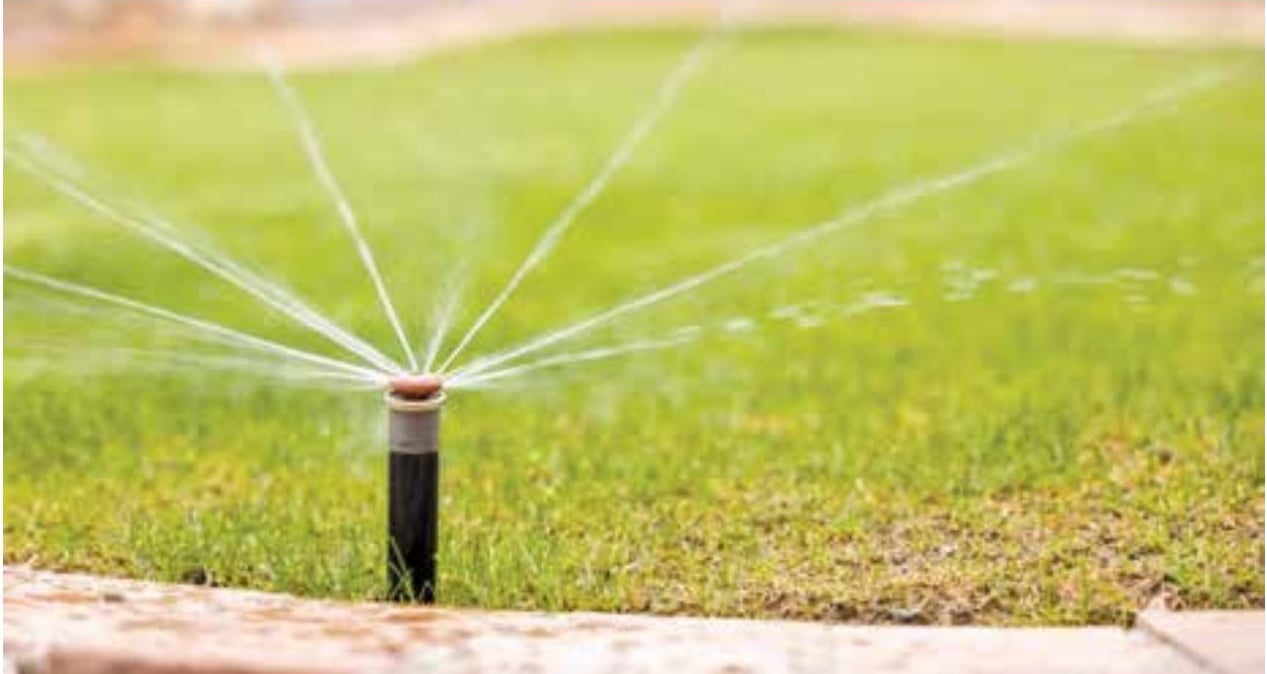
I was visiting a New Jersey suburb one summer and noticed that all the lawns were brown — save one. The house where I was staying had a luscious green garden in front.
Often, due to lack of rain, drought restrictions are put into effect. Either you can’t water your lawn at all or you can only do so on certain days.
This luscious green lawn, however, was served by its own private well.
Well, well, well… looks like this needs more digging.
I asked the homeowner incredulously, “You dug your own well just to get around the drought restrictions?!”
He told me I was wet behind the ears. With the amount of money he saved on his water utilities, it was a wash. And after a few years, he’d be saving some serious green.
At first, the savings might seem like a drop in the bucket — but over time, they add up.
Now, if you were one of his neighbors who was green with envy (but otherwise pretty brown), could you siphon some water from his well?
Ask for permission, and he might tell you to pipe down.
Help yourself without asking, and you could land in hot water.
The Gemara (Avoda Zara 59a) quotes Rebbe Yochanan in the name of Rebbe Shimon ben Yehotzodok that one cannot make public water forbidden. If an idolater decided to worship a public water source, the water would nevertheless be permitted for drinking — despite the general rule that one cannot derive benefit from a worshipped item. There is an exception for private property. (This is a watered-down summary of the sugya.)
The Gemara infers that if an idolater worshipped a private water source, the water would be prohibited.
Tosfos wonders: how could such a case exist?
It was a watershed moment in Jewish history: Yehoshua conquered Eretz Yisrael, and the Jewish nation was ready to settle the land. But Yehoshua made everyone’s inheritance conditional on accepting certain rules. One of these was that if a person had a water source on his property, everyone could use it.
Tosfos therefore suggests that even “private” water is, in practice, public — leading to the question of what the Gemara means by “private.”
One might argue this has nothing to do with Lakewood. After all, it’s not Eretz Yisrael.
But Tosfos Ri M’Birnaya rules that Yehoshua’s enactments apply even in Chutz La’aretz. When the Jewish people accepted his stipulations, they bound themselves to keep them everywhere, for all time.
Still planning to raid a neighbor’s well during a drought? The sugya might seem to give you a flow of new ideas, but Tosfos’s ideas tend to shut the tap.
Tosfos suggests that Yehoshua’s rule applies only to a spring, not a man-made well. So if someone invested the time, money, and effort to dig a well, ditch the idea of helping yourself.
Tosfos elsewhere (47) suggests that even if a spring is public under Yehoshua’s rule, one may not trespass to reach it. If you can access it without stepping onto private land, fine — otherwise your plan dries up, leaving you tapped out.
Tosfos also suggests that a “private water source” can refer to a case where the landowner controls all the surrounding land. With no neighbors nearby, there is no one to whom the takana applies — making it truly private. This explanation by itself would not add to the stream of bad news. In Lakewood, a person would theoretically be able to help himself to his neighbor’s water.
So, if your neighbor is brooking no compromise on water rights, consider digging your own well. It’ll add value to your home and keep you from being underwater. And if you do it right, you might even make a splash with the neighbors.
As for stealing water, table that idea.
Be well.
More Gemara stories
Questions on this article
Rabbi Avrohom Sebrow
Rebbe at Yeshiva Ateres Shimon in Far Rockaway. He leads the Daf Yomi chaburah at Eitz Chayim of Dogwood Park in West Hempstead, and writes “Delving into the Daf” each week for The Jewish Home.
About and contact