Of Mules and Mussar
Daf Yomi learners have become very familiar with the Rashbam. His commentary replaced Rashi’s for most of Bava Basra.
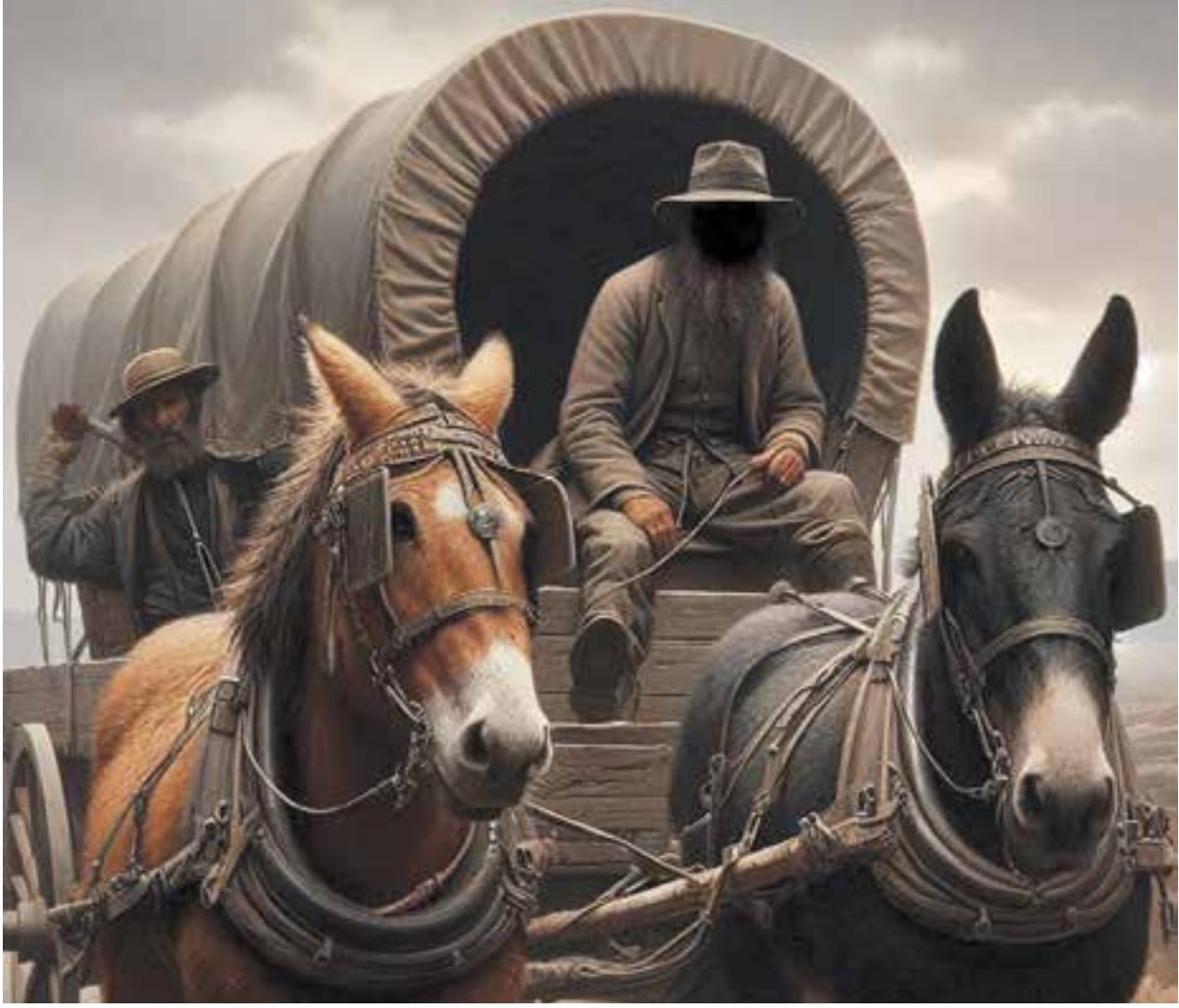
At the end of Eruvin, the Mordechai (528) recounts an interesting incident involving the Rashbam. The Rashbam, known for his pious demeanor and unwavering humility, consistently kept his gaze lowered as a mark of his restraint and focus on spiritual matters. On one particular day, he was about to board a horsedrawn wagon, which also included a mule in the team, a scenario that presented a significant issue in Jewish law. The riding of such a mixed team would violate the prohibition against klayim, a term that refers to the prohibition against mixing different species in acts of labor.
The Mordechai ponders whether this particular violation fell under the category of a Torah commandment or was merely a Rabbinic caution.
Just at the moment when the Rashbam was about to step into the wagon, divine providence intervened in a remarkable way. His younger brother, Rabbeinu Tam, who was fifteen years his junior, fortuitously arrived on the scene. Recognizing the imminent mistake, Rabbeinu Tam promptly stepped forward to prevent his brother from boarding the wagon.
With a blend of concern and brotherly admonition, Rabbeinu Tam chastised the Rashbam for his lack of vigilance. He emphasized the importance of being aware of one’s surroundings, expressing that the Rashbam’s commendable habit of keeping his eyes downcast – though rooted in humility – nearly led him into a significant halachic transgression. Rabbeinu Tam cited a well-known verse from Koheles, cautioning, “Don’t be a big tzaddik!” This advice served as a reminder that excessive piety can occasionally lead one astray. Thus, the encounter between the siblings not only highlighted a critical lesson in mindfulness but also underscored the intricate balance between piety and practicality in religious observance.
Rav Nosson Gestetner, zt”l, wondered what was the Rashbam’s rationale for not being careful. Granted, it could be argued that a horse and mule pulling a wagon is uncommon. Perhaps, generally, one need not be concerned about unusual occurrences. Still, someone of the Rashbam’s stature should presumably have been more stringent with himself. Rav Nosson suggested that the answer lies in the Rashbam’s commentary on Bava Basra (133b).
Rav Ilish offered his opinion on a halachic question. Rava, however, disagreed and conclusively disproved Rav Ilish’s answer. Rav Ilish was embarrassed. He figured that Rava would now assume that Rav Ilish could not be relied upon for correct rulings. The one time that Rav Ilish issued a ruling in front of Rava, it was the incorrect one!
Rava, sensing Rav Ilish’s embarrassment, appeased him by quoting the pasuk: “I, Hashem, will hasten it in its time” (Yeshaya 60:22). The Rashbam explains that Rava’s take on the incident was the exact opposite of what Rav Ilish was thinking. Of course, Rav Ilish always issued correct rulings. The one time he was about to err, Hashem ensured that Rava was around to correct him. This is how Hashem deals with tzaddikim, ensuring that when they require assistance, that assistance is nearby. So, too, Rav Nosson theorized, the Rashbam felt he could rely on Hashem’s protection. Halachically, he need not have been concerned for the unlikely possibility that a horse and a mule were pulling the wagon. Therefore, he could maintain his holiness by gazing only at the ground. He would rely on Hashem’s protection for the extra stringency of being concerned with uncommon possibilities.
However, that leaves the issue of why Rabbeinu Tam admonished his older brother, who seemed to have a well-grounded philosophy. Rav Nosson pointed to a Tosfos in Shabbos. The Gemara in Shabbos (12b) relates that Rebbe Yishmael was learning by candlelight on Shabbos. He became so engrossed in his Torah learning that, forgetting it was Shabbos, he manipulated the wick. Rebbe Yishmael wrote a reminder in his notebook that when the Beis HaMikdash is rebuilt, he will bring a Korban Chattas for inadvertently violating Shabbos.
Tosfos notes that we find that Hashem even protects the animals of tzaddikim from “sinning.” For example, the donkey of Pinchas Ben Yair would not eat grain that wasn’t appropriately tithed. So how could it be that Hashem allowed Rebbe Yishmael to sin inadvertently? Rabbeiu Tam answers that the exceptional Divine Protection granted to tzaddikim to prevent them from sinning is limited to consuming forbidden foods. Hashem will save a tzaddik from eating non-kosher food by mistake. However, the exceptional Divine Protection does not extend to other inadvertent sins.
Therefore, Rav Nosson explained, Rabbeinu Tam admonished the Rashbam according to his own opinion. Rabbeinu Tam is of the opinion that there is no extra Divine Protection offered to tzaddikim against the aveira of klayim. Therefore, he held that the Rashbam should have forgone his extra stringency of always gazing downwards. Instead, he should have been stringent and been concerned about unlikely occurrences of klayim, of a horse and a mule pulling a wagon. The Rashbam, for his part, disagreed. He kept his gaze downward. He felt that he could rely on Hashem for special Divine Protection even for unlikely occurrences of klayim.
Stories in this article (3)
Stories in this article
More stories in Bava Basra
All in this masechtaYosef Sees an Upside-Down World
Hashem Rebukes Hoshea HaNavi
Rabban Yochanan ben Zakkai’s Nephews and the Lost Dinarim
Luleyanus and Pappas Save the Jews of Lod
Questions on this article
Rabbi Avrohom Sebrow
Rebbe at Yeshiva Ateres Shimon in Far Rockaway. He leads the Daf Yomi chaburah at Eitz Chayim of Dogwood Park in West Hempstead, and writes “Delving into the Daf” each week for The Jewish Home.
About and contact