Drunk on Mitzvos
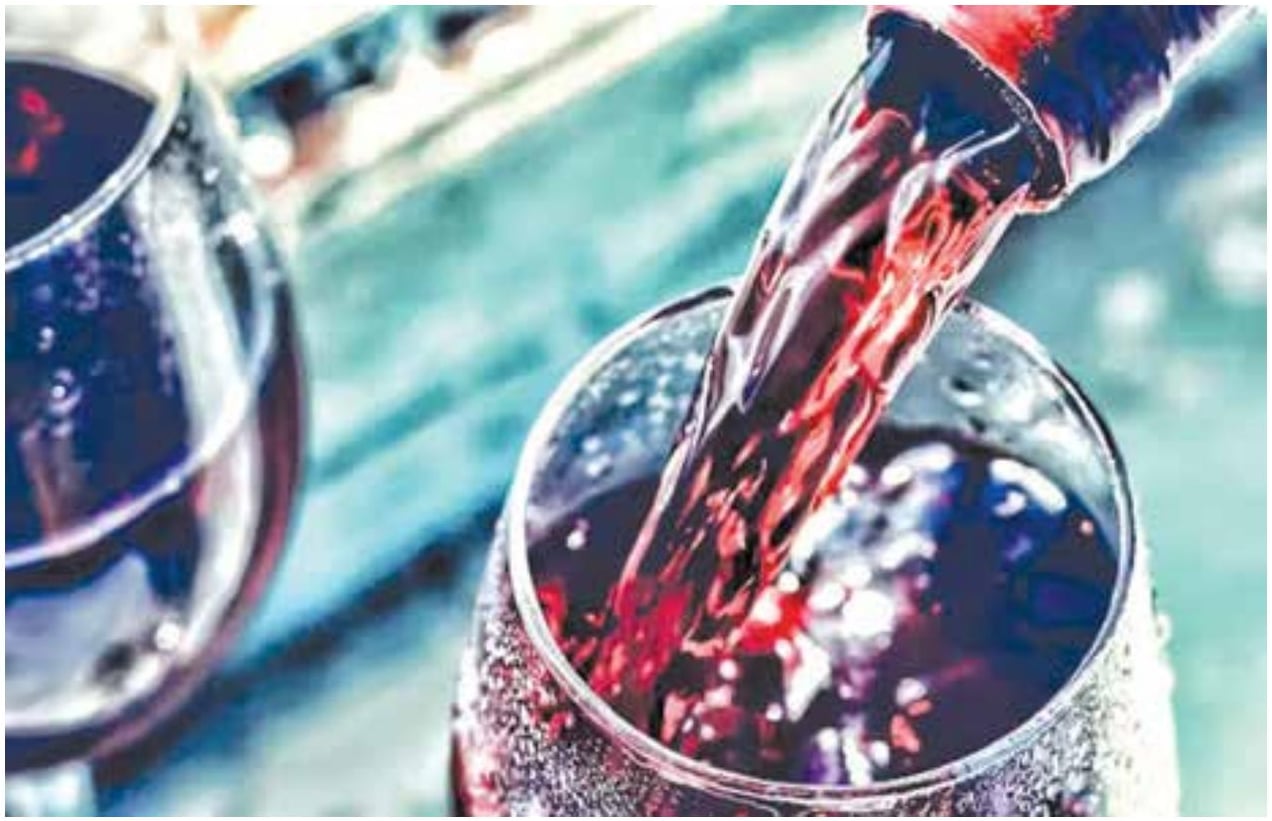
Those who study the daf will notice that the last word of Friday’s daf (Bava Metzia 23b) can be translated as “bed” or “Purim.” Rashi translates it as bed. The Maharsha says it means Purim. We trust a scholar to identify a lost object as belonging to him even without any identifying mark as long as he is established as being scrupulously honest. The Gemara states that the definition of a scrupulously honest scholar is that he only lies about three things. He lies about the identification of his host to ensure that his host isn’t overrun with hundreds of people seeking lodging. He humbly says he didn’t learn a certain mesechta when he really did. He also lies about “puraya.” The Maharsha says that a scholar will lie and say he is drunk on Purim even when he isn’t.
Why is the scholar lying about this? Moreover, if there is a mitzvah to get drunk on Purim, why isn’t the scholar getting drunk?
A few explanations of the Maharsha have been offered. The simplest explanation is that the scholar isn’t feeling well enough to drink on Purim. However, he is embarrassed that he isn’t fulfilling the mitzvah properly for reasons beyond his control. Alternatively, he doesn’t want people to conclude that there is no mitzvah to drink on Purim. Therefore, he lies and says he is drunk. This way, he won’t be embarrassed, and people will not get the wrong impression.
The Chaya Adam (quoted by the Biur Halacha) rules that someone who knows that he will not be able to perform mitzvos properly when he becomes drunk should not become drunk on Purim. Therefore, someone who will not bentch properly or daven Maariv due to his intoxication should not become drunk. Moreover, someone who acts frivolously when he becomes drunk should also not become drunk. This is in line with the Meiri, also quoted by the Biur Halacha, that drinking is supposed to lead someone to sing songs of praise to Hashem. Based on the Meiri and Chaya Adam, another explanation of the Maharsha is suggested. This scholar knows that when he becomes drunk he might not bentch properly. Therefore, he cannot become drunk. However, to save himself from embarrassment from not being able to hold his liquor, he feigns drunkenness. Alternatively, his drunk friends are pressuring him to drink. He knows he cannot because he will miss Maariv with a minyan. Therefore, he tells them he is drunk so they leave him alone.
Another reason he may feign drunkenness is because that’s what he holds the mitzvah is! The Nimukei Yosef (Megilla 7b) opines that the Gemara never meant literally that one should become drunk on Purim. One should act jovially to the point where an onlooker would assume that he is drunk. He is not literally lying but misleading people to assume that he is drunk.
Perhaps the scholar is lying to say he is drunk because he holds that the Gemara that says one should become drunk on Purim is not accepted as practical halacha. Indeed, Rabbeinu Efraim holds this way. It is for that reason that the Gemara cites the story of how Rabba killed Rebbe Zaira at a Purim seudah to demonstrate that one should not become drunk on Purim. That story had a happy ending. Rabba davened to Hashem, and Rebbe Zaira came back to life. Still, Rebbe Zaira himself refused to party with Rabba the following year. He reasoned that “an open miracle doesn’t happen every day.” Rabbeinu Efraim says the takeaway is that one should not become drunk on Purim. (The Ben Ish Chai said that the story should not be taken literally and offers a deeper explanation.)
Perhaps the scholar is saying he is drunk because there is no wine left. Those partying with him are now drinking liquor instead. The scholar is of the opinion that the mitzvah to drink on Purim is only with wine. After all, the parties mentioned in the Megillah were all with wine. Rashi, in explaining the mitzvah to drink on Purim, says “with wine.” Therefore, the scholar is refusing to drink the other alcoholic beverages because he holds the mitzvah to drink is only with wine. Indeed, Rebbe Shlomo Zalman Auerbach, zt”l, is reported to have ruled like this. The other partygoers hold that the mitzvah can be fulfilled with any alcoholic beverage. Rashi merely mentioned wine as an example of an alcoholic beverage. Rav Moshe Feinstein, zt”l, is reported to have ruled this way.
Perhaps the scholar is saying that he is drunk because he holds that he already drank enough wine. The Gemara says that one should drink on Purim until he doesn’t know “bein arur Haman l’boruch Mordechai.” The Darchei Moshe explains that the numerical value of “arur Haman” and “boruch Mordechai” is the same. One should drink until he can’t figure out the calculations. The scholar feels he has already drunk enough and cannot perform the math in his head. The other partygoers understand the Gemara literally and are pressuring the scholar to drink more.
Alternatively, the scholar and the partygoers can be arguing about a classic rule in Shas. When the Gemara states “Ad, until” does it mean up to and not including or up to and including? The scholar holds like the Korbon Nesanel. If one drinks to the point where he doesn’t know the difference between “Cursed is Haman” and “Blessed is Mordechai,” he has already drunk too much! The Gemara meant one should drink up to that point, but not including! The Seder HaYom seems to have understood the Gemara like the partygoers – up to and including.
The scholar might say he is drunk because he holds like the Rema cited in the Shulchan Aruch. One should drink more wine than he is accustomed to until his eyes are heavy and he wants to sleep. When he sleeps, he is blissfully unaware of the difference between “arur Haman” and “boruch Mordechai.” The scholar is following the ruling of the Pri Megadim and the Mishna Berura, that the Rema’s opinion should be followed. Therefore, he feigns drunkenness so he is not pressured to drink any more wine. The partygoers hold like the simple reading of the Shulchan Aruch that one should become drunk.
Finally, an absolutely fascinating pshat in the Maharsha is cited by the Eshkol Yosef (Gilyon 266). Chazal tell us that due to the miracle of Purim, there was a new kabbalas haTorah. People drink to celebrate and achieve an extreme level of joy to show that they are happy with the beautiful gift of the Torah. They leave all their worldly worries and cares behind. The righteous scholar does not need to drink. He is filled with ahavas Hashem to the point where an alcoholic beverage will not make him any happier. He is already exuberant! He demurs wine and says he is drunk because he does not want to show off his level of spiritual perfection. Just as he lies and says he did not learn a specific mesechta even though he did, he lies and humbly says he does not need a drink because he is already drunk. He obscures the true reason for his ecstasy.
L’chaim!
Stories in this article (1)
Stories in this article
More about Rabbah
All storiesRabba, Rav Yosef and the Rosh Yeshiva Seat
Rav Chisda Asks Rabbah Not to Tell the Students
Rava Sharpens His Knife on Yom Tov
Rabbah and Rav Yosef's 22-Year Question
More stories in Bava Metzia
All in this masechtaRav Huna Sends Rabbah to Learn from Rav Chisda
Rav Henoch Leibowitz Explains Da'as Torah
Rav Heschel and the Visit From Rabbi Yochanan
The Oven of Achnai
Questions on this article
Rabbi Avrohom Sebrow
Rebbe at Yeshiva Ateres Shimon in Far Rockaway. He leads the Daf Yomi chaburah at Eitz Chayim of Dogwood Park in West Hempstead, and writes “Delving into the Daf” each week for The Jewish Home.
About and contact