A Moldy Birthday Cake and a Firstborn Beef
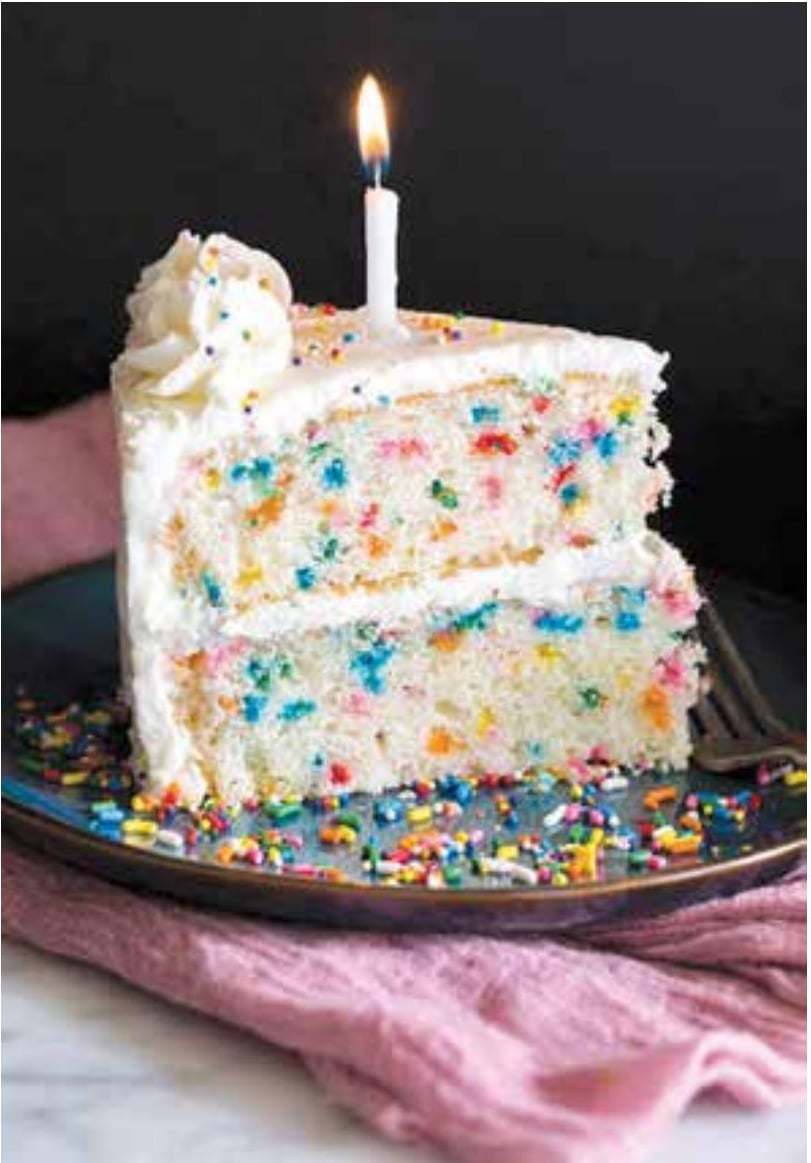
Boruch walked into the bakery carrying a bakery box. “Boruch! Welcome!” Shimon the baker greeted him warmly. “What can I get for you today?”
“Actually, I’m not here to buy anything,” Boruch replied. “I’m here to return something. I bought this cake from you on Friday, and we served it Friday night in honor of my son’s birthday. Unfortunately, we discovered that the cake had mold on it!”
“Oy! I’m so sorry,” Shimon said. “Let me take a look.”
Boruch opened the box. Shimon inspected the cake and nodded.
“Yes, I see the problem. You’re definitely entitled to some money back. Let’s see: the cake cost $30, and a quarter of it is missing. So I’ll refund you $22.50. See? A piece of cake! We value our customers here, and I don’t want to give you a hard time.”
Boruch stared at him in disbelief.
“Twenty-two fifty? I want the whole $30 back!”
Shimon sighed. “Here we go again. Let me guess: you learned something about this in Daf Yomi.”
“You took the words right out of my mouth!” Boruch replied.
“But you’re in the middle of Bechoros, the masechta about firstborn sons and animals. What could that possibly have to do with a half-eaten birthday cake?”
“Plenty!” Boruch declared. “And this is no half-baked argument.
“A kosher firstborn animal, a beheimah though not a chayah, may not be eaten unless an expert rules that it has a permanent blemish, which permits it to be slaughtered outside the Beis Hamikdash. Now suppose someone sells meat from a firstborn that was slaughtered without that ruling. The meat is forbidden, and the buyer can demand his money back.”
“Of course, he can!” Shimon said. “The meat is forbidden to eat!”
“But here’s the interesting part,” Boruch continued. “What if the buyer already ate some of the meat before discovering the problem? Does he get back the money for what he ate, too? The Mishnah on 37a says he does! He gets a full refund, even though some of the meat is already gone.
“So I want a full refund for my cake, even though my family ate some of it. After all, I didn’t order a moldy cake for my son’s birthday!”
Shimon thought for a moment.
“Interesting, but that may be because of the special stringency of kodshim. A firstborn animal is meant to be brought as a korban. Sadly, we no longer have a Beis Hamikdash, but we still treat animals that could have been korbanos with special severity. You can’t necessarily bring a proof from there to an ordinary sale.”
“Fair point,” Boruch conceded. “But the Mishnah gives a second case. A butcher sells meat, and the buyer discovers that it’s treif. Here, too, the buyer gets a full refund, even for what he already ate. So I still get my full refund!”
Shimon pulled a Gemara off the shelf. “Let’s see what Rashi says.”
He studied the page for a moment.
“Aha! Rashi explains that this is a kenas, a penalty on the seller for selling forbidden meat. That has nothing to do with me! I’m not deliberately feeding people forbidden food. Your family ate a quarter of the cake and enjoyed it. Why should I pay you back for something you enjoyed?”
Boruch wasn’t ready to let it crumble.
“We can’t just assume a kenas is the whole story. The Shulchan Aruch rules that if the meat was forbidden only rabbinically, the buyer does not get his money back for what he ate. If the whole rule is a penalty on the seller, why not penalize someone who sells rabbinically forbidden meat, too?”
“Not so fast!” Shimon shot back. “Torah prohibitions are treated more strictly than rabbinic ones, so the penalty could be only for the more serious case. But either way, you’ve just admitted that the rule applies only to Torah prohibitions. What does that have to do with your cake? Are you telling me that eating moldy cake is a Torah prohibition?”
“Actually, yes!” Boruch exclaimed. “The Shulchan Aruch HaRav rules that eating something dangerous to your health is forbidden by Torah law. And moldy cake can be downright dangerous!”
Shimon raised an eyebrow.
“Fine. But then explain the Shulchan Aruch’s distinction to me. Why does the buyer get paid back for what he ate when the food was forbidden by the Torah, but not when it was forbidden only rabbinically?”
Boruch was ready.
“The Sma explains it based on the Gemara. Really, the buyer deserves a full refund, because the sale was a mekach ta’us, a transaction based on a mistake. The seller’s argument is that the buyer still got nourishment and enjoyment from what he ate. But when a Jew discovers that he ate food forbidden by the Torah, he’s so disgusted that it’s as if he got no benefit at all. His revulsion cancels out the benefit.”
Shimon smiled.
“So the same should apply to rabbinically forbidden food!”
“Maybe we don’t feel the same revulsion when the prohibition is only rabbinic,” Boruch admitted. “But the Nesivos offers a different explanation.
“The buyer thought the food was kosher, and he had every reason to trust the seller, so he ate the forbidden food by accident. Someone who violates a Torah prohibition b’shogeg, unintentionally, has still sinned and needs teshuvah. But the Sages never forbade rabbinically prohibited food in that way when it’s eaten by accident. So someone who unknowingly ate rabbinically forbidden food didn’t commit a sin that needs teshuvah.”
Shimon pounced.
“Wonderful! You just undercut your own claim. By the Sma’s explanation, the buyer gets no benefit because he’s disgusted. But your family enjoyed a quarter of a delicious birthday cake! They got their nourishment, they enjoyed their dessert, and they probably even sang ‘Happy Birthday.’ Why should you get paid back for that?”
Boruch shook his head.
“You’re forgetting one small detail. My family was nauseated when they found out the cake they’d eaten was moldy. Whatever pleasure they had while eating it was wiped out by the revulsion afterward. The icing on the cake turned out to be the mold!”
“Nice try,” Shimon replied. “But you made that up! Who says you can invent your own rules about what counts as revolting?”
“Actually, Rav Chaim Kanievsky, zt”l, ruled on a similar case!
“A caterer’s food spoiled on Friday night. Facing the terrible embarrassment of having nothing to serve at the family’s kiddush, the caterer unfortunately gave in to his yetzer hara and cooked replacement food on Shabbos. The family later found out what had happened and was horrified to learn that they’d eaten food cooked on Shabbos.
“Rav Chaim ruled that the family didn’t have to pay the caterer. Their revulsion at discovering they had eaten food cooked on Shabbos canceled out the benefit they got from it.”
Shimon kneaded his chin.
“Interesting. But I remember hearing another explanation, from the Gra. If I recall correctly, he holds that you may not do business with food forbidden by Torah law. If so, the meat the buyer ate had no monetary value at all, and that’s why he gets a full refund. Food forbidden only rabbinically, though, may still have value, since it can be sold to a non-Jew. So the buyer has to pay for what he ate.
“If that’s the reason, your argument falls flat. My cake isn’t meat from a firstborn animal, and you can’t just apply the rules of forbidden meat to a bakery!”
Boruch looked down at the box, then back at Shimon.
“Are you sure? Are you really going to tell me a moldy birthday cake has any monetary value?”
Just then, Boruch spotted Rabbi Blau, author of Pischei Choshen, walking past the bakery.
“Perfect!” Boruch exclaimed. “Let’s ask Rabbi Blau!”
The two hurried outside and laid out their dispute. Each made his case, hoping the rav would deliver the decisive ruling.
Rabbi Blau listened carefully.
“Shimon has a strong argument from Rashi,” he began. “The Shach holds that the buyer gets his money back even for what he ate only because of a kenas. And there is a kenas only when the seller knowingly sold forbidden food. Here, even if we say that moldy cake is forbidden because it’s unhealthy, Shimon certainly didn’t sell a moldy cake on purpose. By that view, we deduct for what the family ate.”
“You see?” Shimon said. “I was right!”
“But Boruch also has a good point,” Rabbi Blau continued. “His family was revolted by the cake. According to the Sma, when the buyer is revolted, he doesn’t have to pay for what he ate.
“Since the halacha isn’t clear, the money stays where it is. Boruch already paid, so Shimon is within his rights to give a partial refund and deduct for what Boruch’s family ate.”
Shimon turned to Boruch with a grin.
“Here’s your $22.50,” he said, handing over the money. “And have a cookie on the house. Happy birthday to your son! May he have many more birthdays until 120, and may all his future cakes be mold-free.”
Stories in this article (1)
Stories in this article
More about Rav Chaim Kanievsky
All storiesBedikas Chametz in the Kanievsky Home
Rav Chaim Kanievsky Stays in Cheder for 30 Days
Rav Chaim Kanievsky's Torah Tour of the Zoo
Rav Chaim Kanievsky Answers a Second Grader
More stories in Bechoros
All in this masechtaYalta Asks Rav Nachman for the Taste of Meat and Milk
Chanan Bisha Pays With a Worn-Out Zuz
Questions on this article

Rabbi Avrohom Sebrow
Rebbe at Yeshiva Ateres Shimon in Far Rockaway. He leads the Daf Yomi chaburah at Eitz Chayim of Dogwood Park in West Hempstead, and writes “Delving into the Daf” each week for The Jewish Home.
About and contact