The Kiddush Club
The following article, dated August 18, appeared on the European Jewish Press website:
“The Rabbinical Center of Europe (RCE), which assists more than 600 rabbis across Europe on issues of daily life, was confronted last week with this very unusual halachic question after a member of a Jewish community in Germany passed away.
“The man’s last will was to be buried with his best friend, a bottle of vodka, with which he had never parted during his lifetime.
“After hearing the weird request, the Jewish community’s rabbi immediately contacted the RCE’s halachic experts in order to determine if it is permissible to place a bottle of vodka in the grave of the man...
“The issue actually raises a serious halachic dilemma. On the one hand, it is extremely important to fulfill the last wish of a Jew, but on the other hand it is unacceptable to bury any object together with the body of a deceased person. The difficult question was then forwarded to Rabbi Yaacov Rozhe, who serves as chairman of the Zaka Rabbinical Council and as representative of Israel’s chief rabbinate in the Medical Institute of Abu Kabir.
“He replied that there is no halachic prohibition of placing the bottle near the coffin but under no circumstances may it be placed in the coffin itself or beneath it, so that no object interposes between the coffin and the ground. With the implementation of this ruling the man and the bottle were interred side by side...”
One comment posted online stated, “This takes Kiddush Club to a whole new level.”
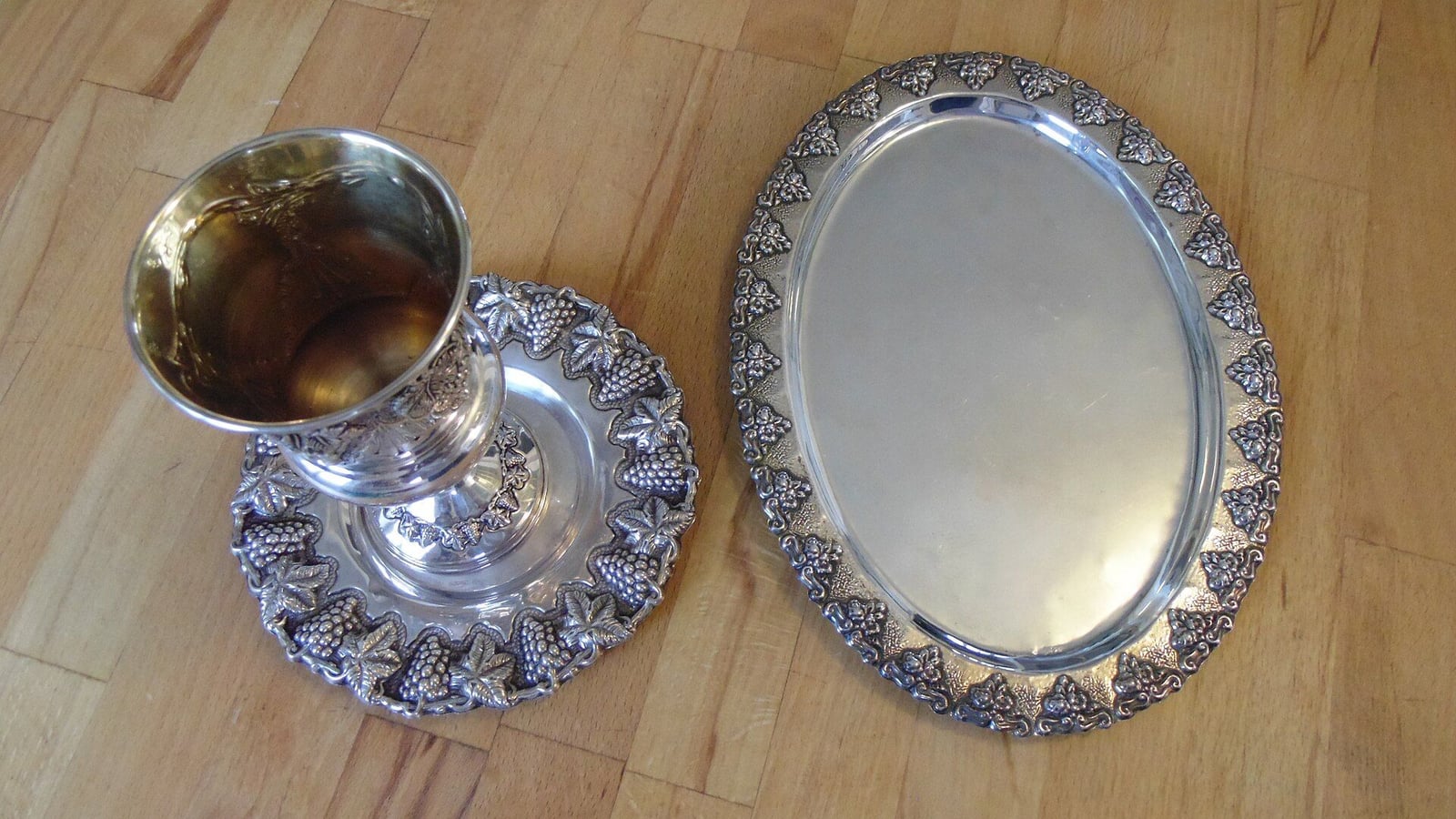
For the uninitiated, Kiddush Club is defined on Wikipedia as “a slang term applied wherever an informal group of people leave a synagogue’s sanctuary during Jewish services on Shabbat (Saturday) morning to congregate, make Kiddush (frequently over liquor) and socialize. Participants often leave services during the Haftarah reading and the sermon.”
The OU has taken a strong stand against the practice. Rabbi Tzvi Hersh Weinreb, the executive vice-president of the Orthodox Union, wrote, “This phenomenon destroys kevod ha’tefillah (the dignity of the service). And it is ironic that the timing of the Kiddush Club exodus usually coincides with the reading from the Haftarah, which is a unique opportunity for most of us to encounter the prophetic message.”
However, I would like to add an ominous warning that may hit closer to home for some people: It may be hazardous to your wealth.
The Gemara in Gittin 38b states three reasons why Hashem would cause a person to lose his wealth. The second reason listed is as a punishment for conducting property inspections on Shabbos in order to know what to fix up after Shabbos. The third reason listed is as a punishment for conducting a Shabbos meal during “bei medrasha.” Rashi defines that as “when the sage delivers public derashos on Shabbos.” It is considered a particularly egregious offense to dine while the rabbi is teaching Torah.
A participant in my daf yomi chaburah commented that this Gemara could apply to Kiddush Clubs as well. If someone leaves shul to make Kiddush during the Haftarah and the rabbi’s sermon, he is violating this very Gemara and opening up the possibility of the forfeiture of his wealth. In fact, I believe that the Kiddush Club is a much worse violation than the one mentioned in the Gemara. At least in the Gemara’s example, the individual was eating at home and didn’t make it back to shul for the derasha. In the Kiddush Club scenario, the individual is present in shul, but exits and returns right after the rav’s derashah, thereby demonstrating that he considers the rav’s words insignificant and not worthy of his time. He would rather eat his herring and kichel than listen to the rav. That is a terrible violation of kavod haTorah. I’m not sure how anyone who respects his rav would allow this terrible affront to his rav to occur in his shul.
The meforshim offer various explanations as to why the three offenses listed in the Gemara are particularly punished with loss of money. One interesting explanation is offered by the Ben Ish Chai. He states that Eisav and Yaakov made a pact: Eisav would take this world and Yaakov would take the World to Come. When a Jew has riches, Eisav lodges a complaint: “He is stealing from me!” Our response is that Torah is one of the pillars the world stands on. Without Torah the world could not survive. We are entitled to earthly possessions not because it is our portion, but because the Torah we learn causes even Eisav to have his share. (He mentions the concept “matzil m’zuda shel yam—something saved from a raging river. We will be”H understand this concept more in Seder Nizikin.) When someone disgraces the Torah, by eating herring instead of learning, he loses his right to have abundant material possessions. Without the merit of Torah, this world belongs to Eisav, and by every right a Yid should be poor.
I never had a yetzer ha’ra to join a Kiddush Club, since in my shul it is impractical: The rav speaks before leining! However, I cannot imagine how anyone would want his children to see his blatant disrespect for Torah and minhagim (Haftarah). Why should someone expect his children to follow Torah and minhagim if he shows his blatant disrespect for both?
Hashem should give us the fortitude to bring about the end of this terrible practice.
More Gemara stories
Questions on this article

Rabbi Avrohom Sebrow
Rebbe at Yeshiva Ateres Shimon in Far Rockaway. He leads the Daf Yomi chaburah at Eitz Chayim of Dogwood Park in West Hempstead, and writes “Delving into the Daf” each week for The Jewish Home.
About and contact