Down In The Dumps
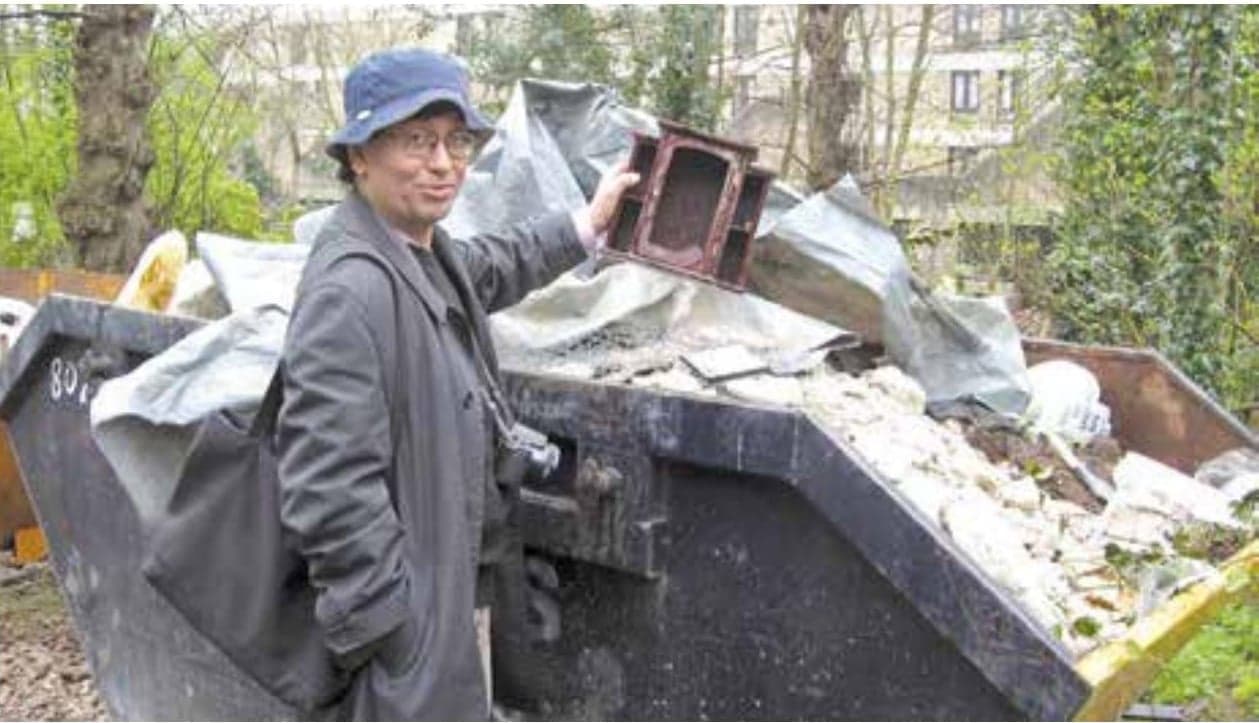
“Dumpster diving” is the practice of sifting through commercial or residential trash to find items that have been discarded by their owners but which may be useful to the dumpster diver.
Seder Nashim · dafim 2–90
Finished August 14, 2023 in this cycle. 15 articles, 7 stories
“Dumpster diving” is the practice of sifting through commercial or residential trash to find items that have been discarded by their owners but which may be useful to the dumpster diver.
The following article is based on Gittin (11b-12a) and Chashukei Chemed on Bava Metzia (10a). The article is intended to engender discussion and not to provide halachic guidance.
In 2010, vice presidential candidate Sarah Palin delivered a highly anticipated speech to around 1,100 supporters at a Tea Party Convention. However, she couldn’t get through it without a few notes scrawled on her hand.
A rav once complained to the Divrei Yoel, the Satmar Rebbe, zt”l, about an affront to his honor: a child dressed up as a monkey had delivered his mishloach manos.
The story is told that someone approached the Chasam Sofer with a dilemma. This man had a Torah scroll in his possession, but he was unsure if the scribe who wrote it was Jewish, or if perhaps it was written by a…
All those teachers who complain that their students frequently doodle may find some solace in the Gemara (Gittin 36a). The Gemara says that Rav would frequently draw a picture of a fish.
The following article, dated August 18, appeared on the European Jewish Press website: “The Rabbinical Center of Europe (RCE), which assists more than 600 rabbis across Europe on issues of daily life, was confronted…
Wichita Falls, Texas, is home to Sheppard Air Force Base. A Strategic Air Command Operational Wing of B-52 bombers was located there in the ‘60s. The 494th Bomb Wing was located there until 1965.
HaGaon Rav Yosef Shlomo Kahaneman, zt”l, would often adjure his students to treat every moment of life as priceless. He would encourage them to take advantage of every moment to be involved in mitzvos and positive…
The Gemara in Gittin (55b) tells the famously regrettable story of a wealthy man in the first century who sends his servant to deliver an invitation to his friend, a man named Kamtza, for an upcoming party.
The Gemara (Gittin 57b) says that Na’aman (commander of the armies of Aram) became a ger toshav; Nevuzaradan became a ger tzedek; Haman’s descendants learned Torah in Bnei Brak; Sisera’s descendants taught children in…
Many attorneys are familiar with the case of Pierson v. Post. It is often the first case studied in law school when property rights are taught.
The topic of overeating is discussed in the daf this week (Gittin 70a). The Gemara quotes a beraisa that states, “One who fills his belly with anything will become sick.” Rashi explains that eating as much as one…
The Gemara records the story of a man who was deathly ill. He did not have any children and he knew that when he passed away, his wife would be subject to perform either yibum or chalitzah.
The Daf this week and specifically Tosfos’s explanation (Gittin 83a and 84a) deal with a paradox of sorts. The result of an action causes that very action to be invalid, which accordingly negates the result.
At a Yerushalayim wedding the ring was forgotten, then dropped under the chuppah. When guests called it a sign, the Brisker Rav gave them a different reading.
Asked whether a Sefer Torah was written by a Jew, the Chasam Sofer replies with a pun: check the last column, where Jewish custom has many people write letters.
Rav Kahaneman asked the Chofetz Chaim to lend him a sefer. He did not own it, he explained, and was already pained over the time spent paying for the seforim he did own.
Reish Lakish leaves some saffron to his children and laments it, applying a harsh verse to himself for the time he spent earning what he never needed.
A party invitation goes to the wrong man, Bar Kamtza is thrown out in shame, and his revenge plot ends with Rabbi Zecharia ben Avkolos's fateful ruling.
Sent to war by Achashverosh, Haman squanders his funds and begs Mordechai for a loan, but must sell himself as Mordechai's slave instead, says the Midrash.
Staying at an inn on Shabbos, Rebbe Zalman of Vilna finds the mezuzos invalid. To keep his guest, the innkeeper declares the inn ownerless before witnesses.