Be Our Guest
The pasuk says (Bereishis 18:3), “And he [Avraham Avinu] said: ‘My master, if I found favor in your eyes, please pass not away from your servant.’” Rashi on Shavuos says that the simple explanation of “My master” is…
Seder Moed · dafim 2–35
Finished November 13, 2021 in this cycle. 9 articles, 8 stories
The pasuk says (Bereishis 18:3), “And he [Avraham Avinu] said: ‘My master, if I found favor in your eyes, please pass not away from your servant.’” Rashi on Shavuos says that the simple explanation of “My master” is…
A travel company is currently running a marketing campaign with “Captain Obvious” as their spokesman. He utters such phrases as “My enemy’s enemy is my enemy’s enemy.” A researcher was trying to uncover the origins of…
The Gemara in Brachos (18b) records a particularly interesting incident. A pious man gave a poor man a dinar on Erev Rosh Hashana during years of famine.
The Chofetz Chaim made Kiddush right away for hungry travelers and sang Shalom Aleichem later, explaining that angels can wait but hungry guests should not.
Rabban Shimon ben Gamliel's son, chosen as chazzan for his fine voice, stops before the Rosh Chodesh verses of Mussaf on Rosh Hashanah, and explains why.
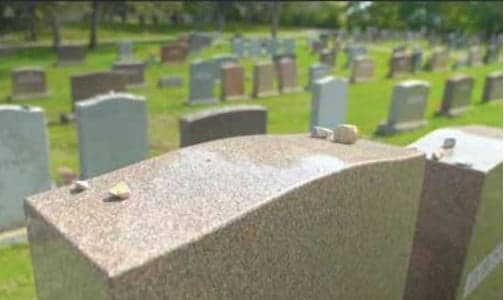
A pious man gives charity in a famine, flees his wife's anger to a cemetery on Rosh Hashanah night, and overhears two spirits reveal the year's decree on crops.
A man tells the amora Levi that someone was "kava" him. Levi asks the beis midrash what it means, and learns the man was robbed but didn't want to shame the thief.
Bilam's donkey sees an angel, stops and speaks to rebuke him, then dies at once, so that wicked Bilam would be spared the shame of a living reminder.
People frequently ask if one is permitted to shower or bathe on the 17th of Tammuz, Asarah B’Teves, or Tzom Gedaliah. A daf learned this week by daf yomi participants may shed some light on this issue.
An accounting joke has an employer ask several accountants applying for a job: “What is one plus one?” “Two,” one accountant answers. “Eleven,” another accountant answers.
Is a Jewish household allowed to have a metal table? That’s a ridiculous question, right? What could possibly be the problem? But the Gemara (Rosh Hashanah 24a–b) states that one should not make a courtyard…
I recall a conversation I once heard when I was a resident of a dormitory. One fellow tossed a wrapper onto the floor, whereupon his friend chastised him about the unsanitary conditions of his room.
Rebbe Yochanon Ben Zakkai led the Jewish nation through the tumultuous years immediately following the destruction of the Second Beis Hamikdash. His guidance preserved Torah-true Judaism.
Little Johnny watched, fascinated, as his mother sprayed furniture polish on her old dining-room table. “Why do you do that, Mommy?” he asked.
A driver slams the car door on Rav Moshe Feinstein's fingers. In great pain, Rav Moshe says nothing, so as not to embarrass the man who kindly drove him.
On vacation in Switzerland, Rav Moshe Betzalel told the Brisker Rav why Rabban Yochanan ben Zakkai's two takanos came together: the second gave the Jews hope.
When young Rav Henoch Leibowitz called himself a good-for-nothing, his father asked one question that showed such thoughts are the yetzer hara's tool.