Standing Tall
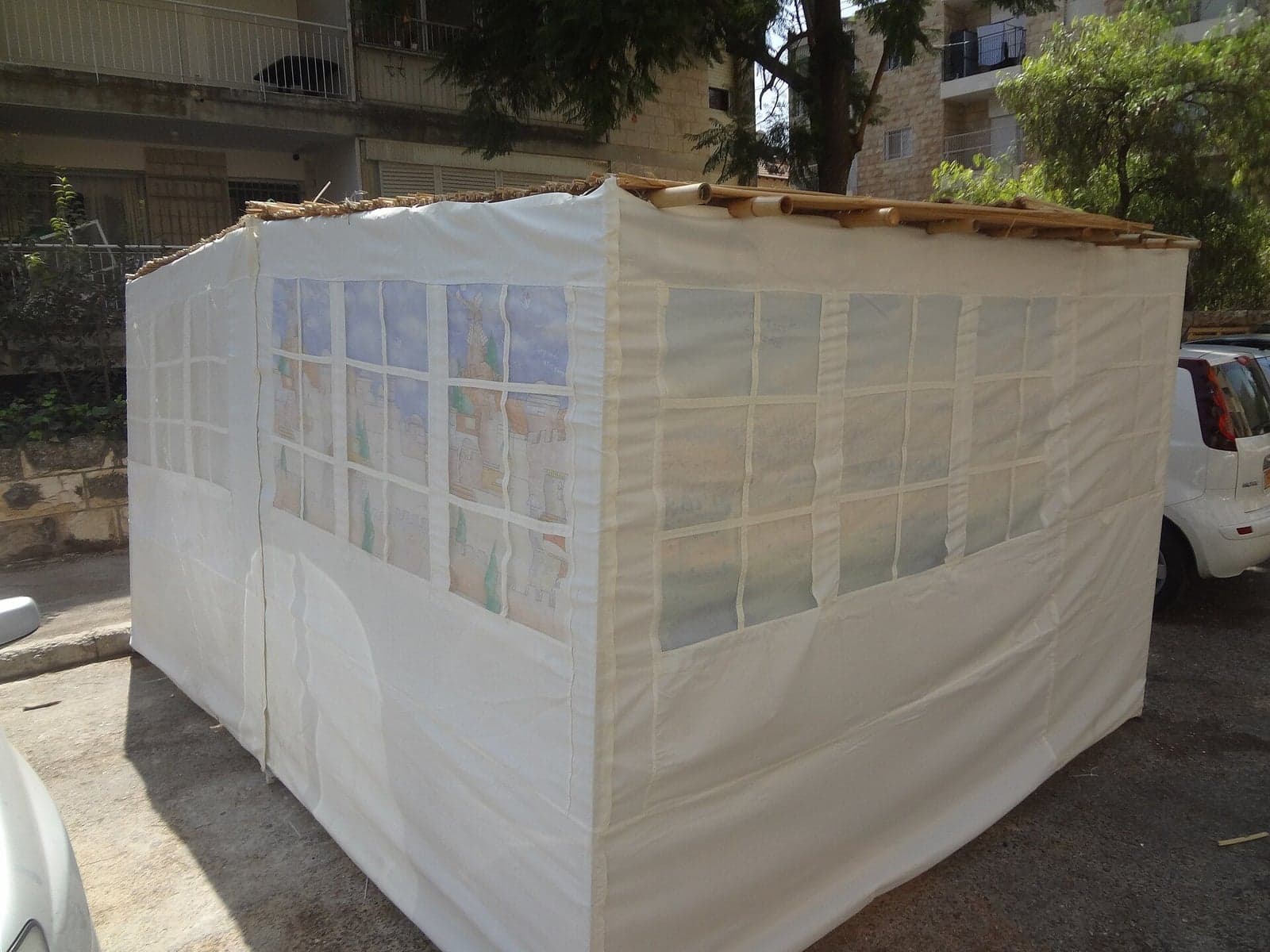
What do Chanukah and Purim have to do with daf yomi Sukkah? Maseches Sukkah begins with the halachah that a sukkah that is taller than 20 amos (between 30 and 40 feet) is invalid.
Seder Moed · dafim 2–56
Finished September 1, 2021 in this cycle. 12 articles, 4 stories
What do Chanukah and Purim have to do with daf yomi Sukkah? Maseches Sukkah begins with the halachah that a sukkah that is taller than 20 amos (between 30 and 40 feet) is invalid.
From the comments I received about my previous article (September 1), I realized several things. Firstly, many people read the Five Towns Jewish Times.
The Gemara in Succah (5a) is attempting to find a source that the minimum height of a succah is ten tefachim (30-40 inches). Tosfos opines that the same source will apply to walls that enclose a domain for the purposes…
Is this sukkah kosher? The snow is severely weighing down the schach (sukkah ceiling) in the center. One potential issue: Has the sukkah become too cramped?
As the cold snap for our area continues, it might hearten us to know that people elsewhere have it worse. In Chicago, the temperature has already been below zero for 20 days this winter season.
A tale is told about a visitor to a yeshiva. Upon entering the study hall, he noticed that the students were engaging in self-improvement techniques to acquire the trait of humility.
Commercial sukkos used to be generic and “one size fits all.” Sukkah manufacturers have come a long way. You can now purchase ready-to-assemble designer sukkos.
Shimshon picks up his lulav and esrog on the first day of Sukkos. However, the pitum is facing the floor. Boruch: Shimshon, your esrog is upside down!
A well-regarded first-grade rebbe from a local yeshiva laments that many of the talmidim in his class wear tzitzis that are invalid. The first time they wear a given pair of tzitzis they are kosher, but through…
The Gemara (Sukkah 44a) relates an enigmatic episode: A wealthy man approached Rebbe Elazar Bar Tzadok and told him that he owns villages, vineyards, and olive orchards.
Suppose a person has two esrogim, an inferior one that is definitely kosher and a beautiful one of questionable validity (it may have been from a grafted tree).
Boruch: Shimshon, do you want to study the daf with me? Shimshon: I’m sorry, I’m studying for a test on the laws of Shehechiyanu on Sukkos. Boruch: A test on the bracha of Shehechiyanu on Sukkos?!? What’s there to study?
In an English shul that resists change because 'Rav Unterman didn't do it,' Rabbi Rothberg builds sukkah walls of stacked chairs, and learns who did it first.
Rabbah bar Avuhah finds Eliyahu HaNavi standing in a non-Jewish cemetery and asks how a kohen may be there; Eliyahu cites Rabbi Shimon bar Yochai.
Moshe Rabbeinu asks Hashem not to open Vayikra with words showing his greatness. Hashem agrees to write the aleph small, as a sign of Moshe’s humility.
A rich landowner asks Rabbi Elazar bar Tzadok about Shemittah olives used as wages, then rushes away mid-conversation to stop it, deeply impressing the sage.