When a Father Is Named “Abba”
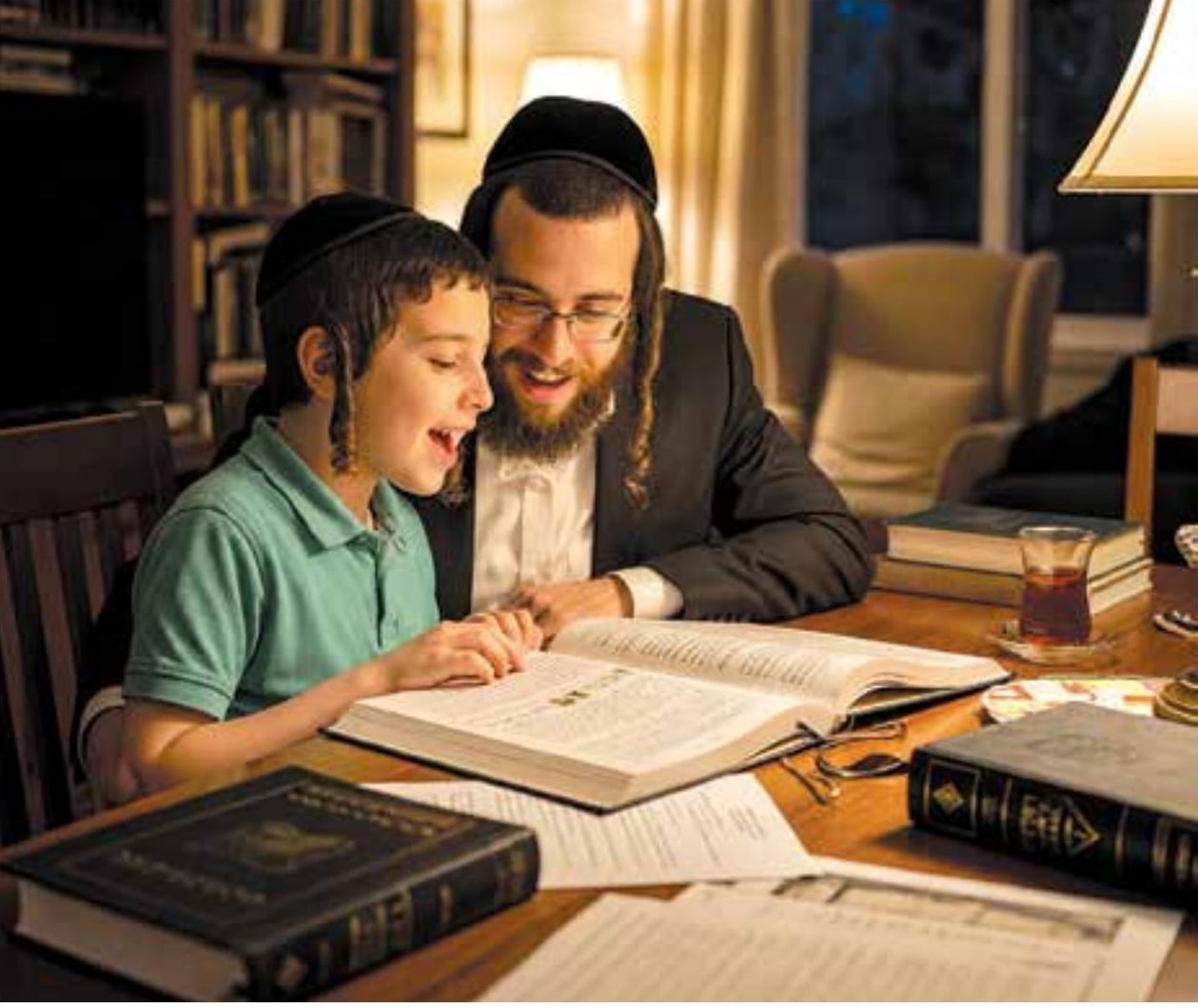
There are many endearing names a person can call their father: Dad, Daddy, Tatty, Ta, Papa, Pop, or Abba. But a fascinating question arises: Can a child use the endearing nickname “Abba” if his father’s actual, given name is Abba? Does using the nickname cross the line into the prohibition of calling one’s father by his first name?
The Gemara records that the great Babylonian Amora Shmuel frequently referred to his colleague and contemporary, Rav, as “Abba.” This linguistic choice ignites a fundamental debate among the Rishonim:
Rashi’s View: Rashi explains that Shmuel did not mean to use a proper name. Rather, Shmuel was using “Abba” as an honorific title, an endearing term meaning “father” or “elder master,” meant to show deference to a contemporary scholar who was older and greater than him.
Tosafos’s Critique: Tosafos strongly disagrees, proving textually that Rav’s literal birth name was, in fact, Abba (Abba Arikha). Tosafos cites several instances where sages called Rav “Abba” in contexts completely devoid of honor. Therefore, Tosafos opines that Shmuel simply used Rav’s given name because they were peers and such familiarity was permitted.
However, Tosafos’ explanation runs into issues. The Gemara notes that even Rav’s premier students, like Rav Kahana and Rav Hamnuna, referred to their master as “Abba.” Yet, the Gemara in Sanhedrin 100b explicitly states that Gehazi was severely punished because he called his master, the prophet Elisha, by his first name!
While Tosafos suggests that Rav Kahana may have become great enough to be considered a colleague of Rav, they admit they cannot explain why Rav Hamnuna would call his teacher by his first name. Tosafos concludes that on this specific point, Rashi’s explanation, that “Abba” was simply a title of honor, perfectly resolves the students’ behavior.
Shmuel’s Father and the Halacha of Rare Names
The plot thickens when we look at Shmuel’s own lineage: Shmuel’s father’s name was also Abba.
The Shulchan Aruch (Yoreh Deah 240:2) rules that if a person’s father has an uncommon or rare name, that person should not call a friend who shares that same name by their first name in the father’s presence. The Vilna Gaon traces the source of this halacha to the Aruch, who explains the origins of the famous Amora Abaye.
According to the Aruch, Abaye’s birth name was actually Nachmani (named after his grandfather). However, because Abaye was raised by his uncle, the great sage Rabbah bar Nachmani, Rabbah could not bring himself to constantly call out his own father’s name (Nachmani). To avoid this disrespect, Rabbah lovingly nicknamed his star pupil Abaye, to hint that he has the same name as his father.
Using this backdrop, the Aruch L’ner addresses our dynamic between Rav and Shmuel. He notes that the name “Abba” was relatively rare. If “Abba” was Rav’s actual first name, Shmuel would have entirely refrained from using it out of respect for his own father, Abba bar Abba! Even if the name wasn’t rare, why wouldn’t Shmuel simply call him “Rav” like the rest of the world?
The Aruch L’ner uses this proof to explain Rashi. Shmuel chose the word Abba specifically because it was not a proper name in that context; it was a pure honorific title for a spiritual father of the generation.
Practical Halacha
Can these two views be reconciled to solve our original riddle? The Chida steps in with a brilliant synthesis, proposing that even Rashi could agree that Rav’s given name was biologically Abba.
The Chida suggests that when a specific name falls into total disuse, its halachic status changes. Because nearly the entire world referred to Abba Arikha simply as “Rav,” his biological first name (“Abba”) became completely dormant. Once a first name is no longer actively used to identify a person, it loses its casual identity. Therefore, when a student or colleague used the word “Abba,” it was universally understood to mean “honored master,” not a familiar first name.
From this, one might think a child could call his father “Abba” even if the father’s given name is Abba, tracking the idea that it is being used strictly as an endearing title.
However, the Shem HaGedolim immediately cautions against running to follow this leniency. There is a sharp distinction between the two scenarios:
Rav was a public figure whose first name was entirely eclipsed by his title. A private individual named Abba is known to his friends, family, and colleagues as “Abba.” Because it is his commonly used first name, a son calling him “Abba” sounds identical to using his first name, which constitutes a distinct breach of kibbud av.
If a father’s given name is “Abba,” using the word “Abba” as a casual nickname can inadvertently mirror calling him by his first name. For practical guidance on how to navigate this familial knot without compromising halacha, it is best to ask a Rav or your Abba.
More Gemara stories
Questions on this article

Rabbi Avrohom Sebrow
Rebbe at Yeshiva Ateres Shimon in Far Rockaway. He leads the Daf Yomi chaburah at Eitz Chayim of Dogwood Park in West Hempstead, and writes “Delving into the Daf” each week for The Jewish Home.
About and contact