K’vyachol
Many times in the course of divrei Torah and conversation, the Hebrew word “k’vyachol” is used. I conducted an unscientific study and concluded that people generally understand the word to convey that the statement…
Seder Moed · dafim 2–88
Finished July 8, 2021 in this cycle. 18 articles, 8 stories
Many times in the course of divrei Torah and conversation, the Hebrew word “k’vyachol” is used. I conducted an unscientific study and concluded that people generally understand the word to convey that the statement…
If you had asked someone 2,000 years ago what “eBay” means, he would have told you “it’s fruit.” Onkelos uses the word “ebay” many times in his translation of Bereishis. Nowadays, eBay is an Internet success story.
It seems that sitting in the left lane, engine idling, waiting for oncoming traffic to clear so you can make a left-hand turn is wasteful not only of time and peace of mind, but also of gas and therefore money.
Rebbi Yose ben Kisma said: Once I was walking by the way when I met a man. He greeted me and said, “Rabbi, where are you from?” I responded, “I am from a great city of sages and scribes.” He said to me, “Rabbi, would…
Everyone knows how hard it is to wake up in the morning. One Siyum HaShas video in fact focused on the coffee served at the Daf. Many Daf Yomi shiurim take place early in the morning, and coffee provides a welcome boost.
The Mishna in Yoma (28a) tells of a story that once in the Beis Hamikdash they assumed that it was already considered halachicly daytime. Therefore, they slaughtered the animal designated for the Korban Tamid.
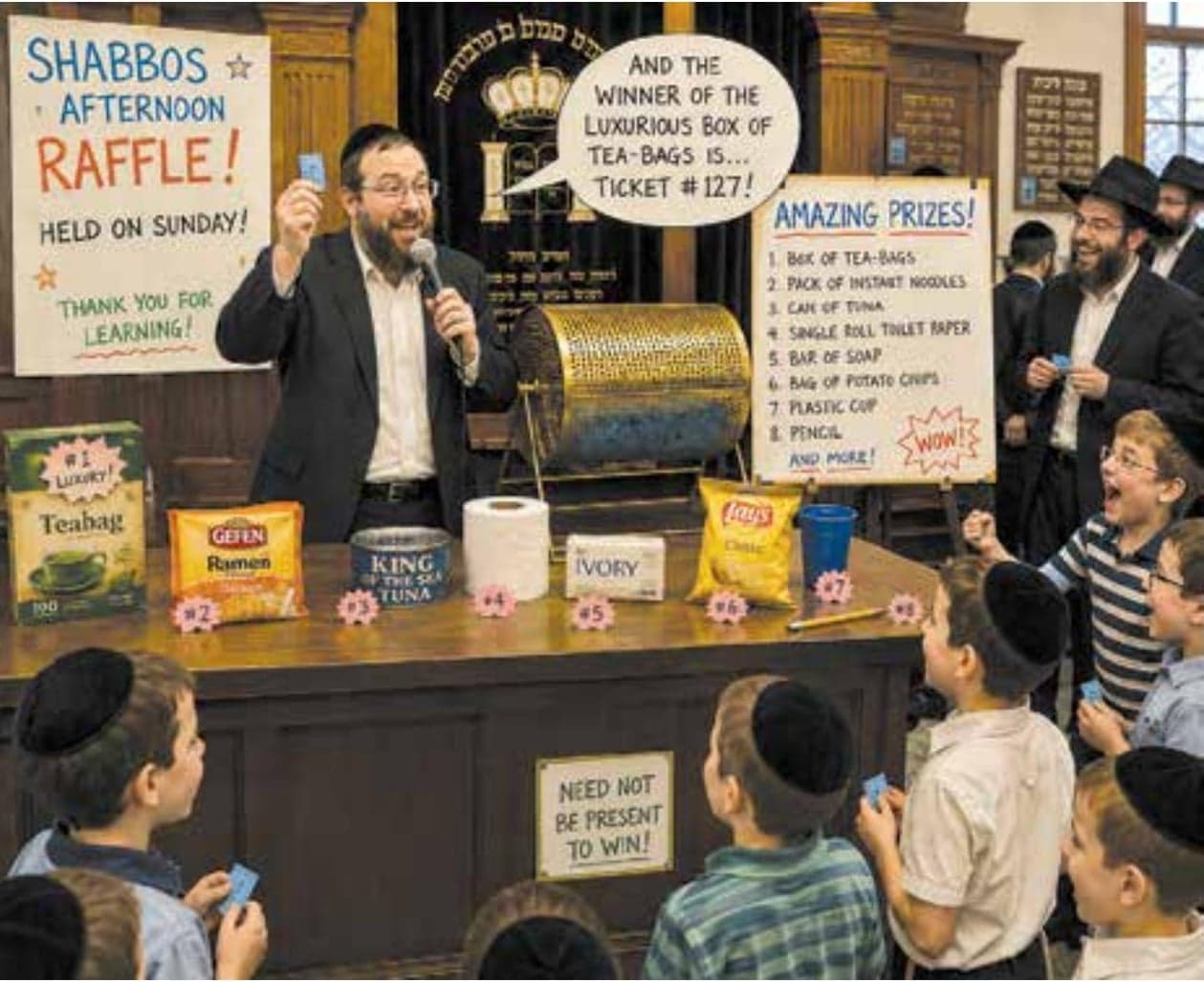
It is 5:45 PM on a sticky July Shabbos afternoon in the Catskills. Inside the wood-paneled walls of the main shul, a single window AC unit is fighting a valiant, entirely losing battle against the ninety-degree heat.
The best defense students have against being forced to learn is to try to use halacha against their teachers. For example, there is a dispute whether all parts of Torah may be learned on erev Tishah B’Av afternoon or…
The Medrash Tanchuma (Parshas Tazria 6) cites a story about an impoverished kohen living in Eretz Yisrael. Trying whatever he could to support his family, he just couldn’t make ends meet.
The Mordechai (Gittin 461) relates that Rabbeinu Tam once allowed a kohen to pour water over his (Rabbeinu Tam’s) hands. This caused one of his students to inquire as to how he could allow a kohen to serve him, being…
Twenty-five years ago, there was an established shul that let it be known that they were looking for a new rav. There were many candidates for the one position.
Boruch and Shimon take a day trip to visit some of the quaint bungalow colonies located in the scenic Catskill Mountains. Of course, when newly built, they were a pristine vacation destination.
An acquaintance remarked that this year in Judaism is “the year of the cow.” I did not have the faintest idea of what he was talking about until he explained: “This is the year of two udders (Adars).” Since Purim is…
Boruch: I learned the Daf very well this week, and I can’t really see how it has relevance to practical halacha. Shimon: The Daf doesn’t have to have any practical relevance.
The Gemara relates (Yoma 66b) that a wise woman asked Rebbe Eliezer: Since all the people that worshipped the Golden Calf committed a serious sin, why do we find that they received different punishments?
Rav Nachum Bar Papa is mentioned in Yoma (67a) on a daf that was recently learned by Daf Yomi participants. What he was quoted as saying is certainly important. Yet, some commentators chose to focus on the name itself.
There was a pregnant woman who smelled food on Yom Kippur. She developed a ravenous desire to eat. If she did not satisfy the craving, it was possible that her life or that of the fetus would be in danger (Yoma 82b).
One Thursday night, I was shopping at a supermarket. That store is open until midnight on Thursday nights, which is perfect for people who wait until the last minute to do their Shabbos shopping.
A man offers Rabbi Yose ben Kisma gold, gems and pearls to move to his town, but the sage refuses to live anywhere except a place of Torah.
In the Second Beis HaMikdash, the wealthy Marta bas Baitos pays King Yannai a half-se'a of dinars to make her fiancé, Yehoshua ben Gamla, Kohen Gadol.
A poor kohen teaches his wife the laws of tzaraas before leaving to earn a living abroad, and her reply about a single hair convinces him to stay home.
Rabbeinu Tam lets a kohen pour water over his hands. A student challenges him, Rabbeinu Tam stays silent, and Rabbeinu Peter explains why it was allowed.
After Rabbi Elazar ben Rabbi Yosi cures Caesar's possessed daughter, he tears up Rome's evil decrees and sees the stolen paroches of the Beis HaMikdash.
A wise woman asks Rabbi Eliezer why the Golden Calf worshippers got different punishments. His cryptic answer about the spindle teaches that the process matters.
On Purim a tipsy bachur in Radin asks the Chofetz Chaim for a share in his Gan Eden, and is offered it on one condition: never speak or hear lashon hara.
A pregnant woman craves food on Yom Kippur; Rebbi has them whisper that it is Yom Kippur, she holds back, and her son becomes Rabbi Yochanan.