Remembering Rav Henoch Leibowitz, zt’l
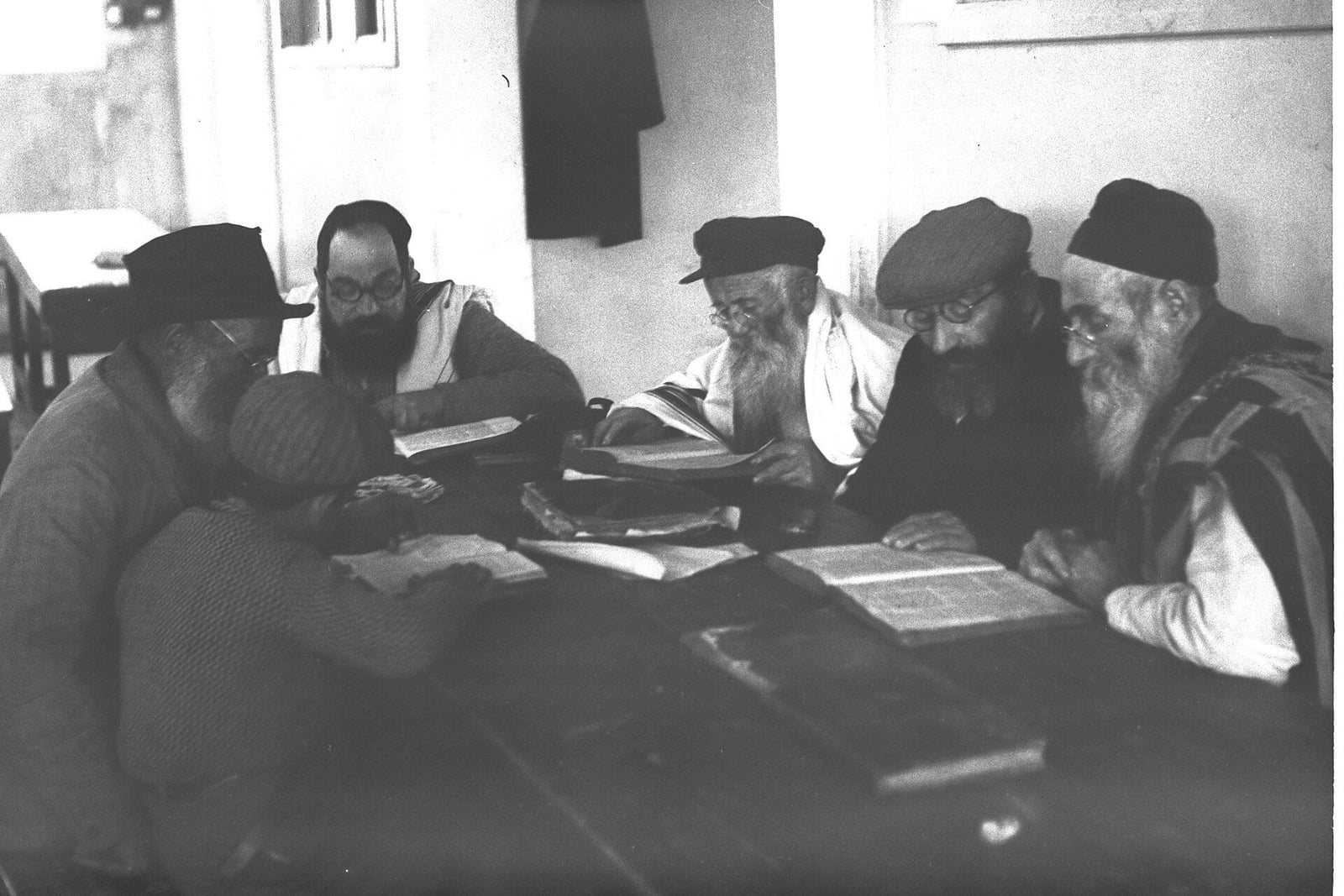
The second yahrzeit of Rav Alter Chanoch Henoch Leibowitz, rosh yeshiva of Yeshivas Chofetz Chaim, was just before Pesach. I was thinking then about some of my memories, and one still haunts me. The rosh yeshiva always had a busy and strenuous schedule. He had to juggle the needs of the yeshiva and the needs of his many past and current talmidim. When he was in Eretz Yisrael, I insisted on a personal appointment that I really did not need. At the meeting, the rosh yeshiva could barely keep his eyes open. I ended the meeting abruptly. I later heard that he fainted from exhaustion at the next appointment. However, in yeshiva it was very rare to see the rosh yeshiva seem tired.
Many people are aware that the rosh yeshiva’s blatt shiur was not a lecture. On the contrary—it was an all-out feud. The rosh yeshiva used to good-naturedly repeat that one observer called it a three-ring circus. There were intense arguments that took place between the rosh yeshiva and the talmidim in the shiur. The rosh yeshiva always put on a good show that seemingly displayed that he was refreshed, energetic, and ready to engage in the Melchemta shel Torah.
One of my friends once walked him to his office at the conclusion of the blatt shiur. He told me that the rosh yeshiva fell against the wall from exhaustion as soon as he entered his room and wasn’t even able to make it to the chair. However, observing the shiur you would think that he was a well-rested person many years his junior. It is no wonder that on the occasions when he had to leave yeshiva for communal purposes he would say, “I really need a break from my talmidim.” Yet only moments into his trip he would say, “How can I leave them?”
When bein ha’zemanim was approaching, he would often reference the Gemara in Sukkah and tell us, “Kasheh alai p’reidaschem—your departure is difficult for me.” That is but one indication of the tremendous love he had for his talmidim.
The rosh yeshiva often housed a number of bachurim in his own basement. One very close talmid who had that privilege was Rabbi Shimon Ishal. When Rabbi Shmuel Wasser (now a rosh yeshiva in St. Louis) was getting married in Florida, Rabbi Yehuda Mandel came to pick up Rabbi Ishal from the rosh yeshiva’s house for the flight to Florida. When the rosh yeshiva saw them leaving, he lovingly walked them out and said, “I wish I could go with you, but I can’t.”
This incident reminded me of one of the oft-repeated shmuessin of the rosh yeshiva. The Torah tells us how Rivkah hatched a plot to ensure that Yaakov would receive the berachos from Yitzchak. The Ramban explains that she was acting based on prophecy. She prepared food for Yaakov Avinu to bring to Yitzchak and she gave him Eisav’s clothing. She even accepted upon herself any curse that might be uttered at her son. The Midrash Rabbah in Parashas Toledos says that Rivkah accompanied Yaakov to Yitzchak’s door and said, “I have done everything I can for you; I would go in with you, but I can’t” (for then the plot would be discovered).
The rosh yeshiva pointed out that surely Yaakov knew how much his mother loved him. Moreover, she had done everything to help him to prepare. Certainly Rivkah would enter with him if she could! Why was this utterance needed? The rosh yeshiva demonstrated from here the necessity of relatives and spouses to constantly tell each other what they mean to them. These expressions of affection are obvious, but they are worth repeating. If this applies to Rivkah and Yaakov, how much more so does it apply to us.
Incidentally, this is but one example of how Rabbi Leibowitz’s mussar shmuessin prepared his talmidim for marriage. There was once a pamphlet on the topic of marriage being distributed for engaged individuals. The pamphlet started out by saying that it was a necessity, since students only care for themselves and their books. While the rosh yeshiva was not against the idea of the pamphlet as a whole, he was opposed to those opening remarks being applied to his talmidim. Could it be that a talmid who went through his yeshiva and learned mussar daily would not be sufficiently concerned for others? (Incidentally, in contrast to many other yeshivas, attendance was taken during mussar seder, as it was a mandatory part of the curriculum.)
The rosh yeshiva and his first rebbetzin, a’h, were living examples of what a marriage should be. I’m sure that when a book is eventually written, this will be covered at length, but for now let one story suffice. The rosh yeshiva’s first wife was once faced with a sink full of dishes. She did not feel up to washing them at the moment. However, she was concerned that if she left them in the sink, the rosh yeshiva would wash them. She therefore placed a small sign in front of the dishes that said “SINK BROKEN.” Feeling assured, she went to rest—only to return and find the rosh yeshiva washing the dishes in the bathroom!
Financial Honesty
While learning a daf in Sanhedrin, I was reminded of one of the lessons taught by the rosh yeshiva. The Gemara states in Sanhedrin 38b that many of the actions performed by Hashem are stated in the Torah in the plural form to teach us that before acting, Hashem consults with the Heavenly Court. Not that Hashem needs any consultations, of course, but this teaches us that we should always consult with others.
The rosh yeshiva often repeated an insight he once heard. Hashem said, “Let us make man” after the rest of the world had already been created. But if man were not to be created, then what was the point of creating the world? The lesson the Torah is teaching us is that even after one has invested much time in a project, he should still consult others and be ready to abandon it even though it is almost complete.
The rosh yeshiva lived this mussar and was always ready to abandon a project no matter how advanced the preparations were. Even after the construction for the new Chofetz Chaim building in Kew Gardens Hills was well under way (the culmination of many years of planning), the rosh yeshiva still considered arguments against moving the yeshiva to that particular location.
The rosh yeshiva would often tell his talmidim that if you want to open a yeshiva, you have to be ready to fix the plumbing yourself. You must take such extreme responsibility for your yeshiva that you would be willing to do any manual labor the yeshiva needs. Further, he would say that you must be ready to close the yeshiva if the situation warrants it. He told of a yeshiva that was started by one of his talmidim. That yeshiva became so burdened with debt that it was doubtful whether it could function as an ongoing concern.
When the amount of debt reached the value of the building, the building was sold, all debts were repaid, and the yeshiva was closed. He would explain that you can’t build a yeshiva on non-kosher money. If a yeshiva is operating with labor that cannot realistically be funded, then the yeshiva is functioning with treife gelt.
At his directive, the Chofetz Chaim Yeshiva is brutally honest in its finances. Rabbi Shlomo Yonason Harris, shlita, related at the rosh yeshiva’s levayah that one time the yeshiva was given a grant from New York State for a specific project. The project came in under budget and there was a surplus. The government agency was called for instructions on how to return the extra funds. The agent on the other line commented that it was the first time anyone was returning a surplus from grant money!
The rosh yeshiva would often say that the honesty of a yeshiva’s office directly affects the quality of learning in the yeshiva. The saintly Chofetz Chaim would not even accept money for his yeshiva from someone who desecrates the Shabbos. He felt that such funds would negatively affect the learning in his Yeshiva in Radin. The rosh yeshiva felt that nowadays yeshivos may accept money from such individuals. However, any money that is donated by nochrim should be used for English books (or for food).
The rosh yeshiva demanded honesty from his talmidim as well, and he would constantly tell his talmidim that they should rather live an austere lifestyle than burden themselves with debt which would only cause severe problems down the road. One married student was in a situation where his wife’s employer refused to pay her on the books. The rosh yeshiva was adamant that full taxes must be paid on the income, regardless of the lack of integrity of the employer.
This talmid was faced with a rather burdensome tax bill of $2,000—which is significant even now, but was much more so back then. He told the rosh yeshiva that he didn’t have the funds to pay the IRS bill and didn’t want to borrow the money and fall into debt. The rosh yeshiva advised him of a specific opportunity he could undertake to earn some money, adding just one caveat—that the talmid should wait until bein ha’zemanim.
The talmid felt tremendous pressure from the looming tax bill and twice asked the rosh yeshiva if he could leave yeshiva before the semester ended. Twice the rosh yeshiva replied in the negative. Just when the talmid thought he would have no choice but to leave yeshiva regardless of the rosh yeshiva’s wishes, he was given a message that the rosh yeshiva wanted to speak to him.
He entered the rosh yeshiva’s office and saw that he had his checkbook open. The rosh yeshiva asked him if $500 would hold him over until bein ha’zemanim; the student answered in the affirmative and he accepted the check graciously. Years later, the student left yeshiva and earned his first paycheck. He gave the rosh yeshiva a check to repay part of the $500. At first the rosh yeshiva had no idea what it was for. (After it was explained to him, the rosh yeshiva still refused to cash it.)
Being Generous
Those who knew the rosh yeshiva knew that he was a very generous person. He personified the mussar that he taught. He constantly mentioned that Yaakov Avinu returned for small jugs even though they were of little value. The rosh yeshiva explained, based on the Midrash, that Yaakov did this because honest money is hard to come by. Tzaddikim want to distance themselves so far from even having a nisayon of thievery that they are careful about every penny.
Yet the rosh yeshiva would also quote the Ramban, who described Avraham Avinu as a nediv lev, a generous person, in reference to when he had to pay 400 shekel kesef to Ephron for seemingly bad land. The rosh yeshiva asked, “Is that generosity? Avraham Avinu was being ripped off!” But once Avraham decided that it was proper to pay Ephron’s full asking price, he did so generously. Money that one has to spend should not be given over begrudgingly. The money we have is given to us as a pikadon from Hashem. Why should we feel bad if the Owner directs us to use it for the proper purpose?
When it came time for the rosh yeshiva to sell his house in Forest Hills, someone mentioned that he could negotiate with a real-estate agent who would happily agree to sell the house for only a three or four percent commission. The rosh yeshiva asked the talmid, “What is the full undiscounted commission?” The talmid answered, “Six percent.” The rosh yeshiva said, “Then that is what I will pay!” He didn’t begrudge anyone earning a living and making an honest profit from him.
Speaking of generosity, one talmid once approached the rosh yeshiva while he was in Eretz Yisrael with a question: “Should I fly home for Pesach for the sake of kibud av v’aim, in which case I won’t have the money to fly back, or should I stay in Eretz Yisrael for the summer?” The rosh yeshiva told the talmid that in his situation he should fly home for Pesach. Before the rosh yeshiva left Eretz Yisrael he told the student that he would pay for his return ticket!
His first rebbetzin, a’h, used to listen to a classical music radio station and the rosh yeshiva felt very strongly that she should send in a yearly donation. She derived benefit from that station and it was only proper for her to support them. (This radio station has an annual appeal.) This is but another example of the rosh yeshiva’s generosity: using money for whatever is proper.
The rosh yeshiva was tremendously grateful for the mesorah he received from the famed Slabodka Yeshiva in Europe. He consequently always supported the Slabodka Yeshiva in Eretz Yisrael, though it was certainly not the same European yeshiva where his mesorah originated.
The Rosh Yeshiva’s Modesty
One talmid who had recently joined the yeshiva went to a local store. The cashier asked him if he was a student of the yeshiva nearby. When he answered yes, the cashier offered, “Your rabbi is so humble!” When a chassid who was vacationing in New Hampshire asked the rosh yeshiva what he did for a living, he answered simply, “I am a melamed (teacher).” (Although, all who knew the rosh yeshiva know that he viewed being a melamed as the choicest profession.)
Once, at an event, some bachurim from another yeshiva offered to help the rosh yeshiva with his coat. The rosh yeshiva graciously refused. However, later his own talmidim offered to help the rosh yeshiva put on his coat and he allowed them to. When someone who witnessed both events asked him for an explanation, he responded, “What can I do? They are my talmidim and I am obligated to let them serve me!”
There was one particular time that the rosh yeshiva had to accept some display of honor for purposes of fundraising. The rosh yeshiva actually found it to be demeaning and he whispered to one of his students, “I accept these bizyonos for Torah!”
In 1966, the rosh yeshiva was told that the community in Montreal desperately needed a yeshiva. He sent his best talmidim at the time to form the nucleus of a new yeshiva there, even though it was possible his own yeshiva would suffer from this. He was motivated by fulfilling Hashem’s wishes, and his own desires and kavod were irrelevant. That yeshiva ultimately morphed into the Yeshiva Gedolah of Montreal in 1970.
I am personally grateful for the rosh yeshiva’s humility and selflessness. When I was a young bachur in Eretz Yisrael, I once brought the rosh yeshiva some mayim acharonim. I was somewhat nervous and proceeded to spill it all over him. I remember that a smile never left his face and I almost felt like nothing had occurred.
Rabbi Nachum Zlotnick, rosh yeshiva of Yeshiva Tiferes Torah in Kew Gardens, related to me that on one occasion he had the privilege of driving the rosh yeshiva to the airport. Due to unforeseen delays, they left Forest Hills late, and it was likely that the rosh yeshiva would not make the flight. At the airport, Rabbi Zlotnick made a wrong turn and added a minute or two to their travel time. Given their late departure, it was not a surprise when the rosh yeshiva did indeed miss his flight. He therefore spent the next 45 minutes explaining to Rabbi Zlotnick that it was not his fault, lest he perhaps think that it was his wrong turn that caused the trouble.
Concern For Other People
The rosh yeshiva often taught that sincere expressions of spirituality should not come at the expense of others. He often quoted Rebbe Yisrael Salanter, who said that even during the Aseres Yemei Teshuvah one should walk around with a happy countenance. He said that facial expressions are of the public domain, since they are visible to all. Why should a Jew suffer by having to gaze at a sour face because another person is doing teshuvah for his aveiros?
One talmid was invited to the rosh yeshiva’s house for the Pesach Sedarim. The Seder on the first night finished rather quickly. On the second night, it was more in line with his expectations. He asked the rosh yeshiva why the first Seder was so much shorter, and the rosh yeshiva responded: “The rebbetzin is tired from preparing for Pesach, and I should extend the Seder late into the night?!”
One time when the rosh yeshiva was eating a Shabbos meal in the yeshiva with his talmidim, I asked him if I could take his hat. The rosh yeshiva told me that he didn’t mind eating with his hat on, but then some bachurim would feel that they also had to eat the Shabbos meal with their hats on. So he thanked me and handed me his hat.
As I am writing this article, I just got off the phone with one of his close talmidim, who told me that even though two years have passed, he misses the rosh yeshiva terribly. We all do. But his legacy lives on in the harbatzas haTorah that happens around the globe directly because of his life’s work.
Stories in this article (3)
Stories in this article
More about Rav Henoch Leibowitz
All storiesRav Henoch Leibowitz and the Lowered Mirror
Rav Henoch Leibowitz Declines to Prove He Was Right
Rav Henoch Leibowitz Explains Da'as Torah
Why Rav Henoch Leibowitz's Shiurim Were Hard
Questions on this article

Rabbi Avrohom Sebrow
Rebbe at Yeshiva Ateres Shimon in Far Rockaway. He leads the Daf Yomi chaburah at Eitz Chayim of Dogwood Park in West Hempstead, and writes “Delving into the Daf” each week for The Jewish Home.
About and contact