Seizing the Spark: Preserving Inspiration in Halacha and Life
In Maseches Chullin (95a), the Gemara transitions into a discussion regarding the prohibition against nichush (forbidden divination).
Marriage and Family
Kiddushin, the wedding and the obligations of husband and wife.
In Maseches Chullin (95a), the Gemara transitions into a discussion regarding the prohibition against nichush (forbidden divination).
On a crisp, torch-lit night in eleventh-century Baghdad, the air carried more than the usual scent of roasted almonds, cardamom, and the damp clay of the Tigris. It carried the palpable weight of a changing era.
The Gemara (Zevachim 100a; see also Moed Katan 23a) and its commentators discuss various details of the following account, and some aspects are subject to interpretation.
An individual was applying for a rabbinic position upon the receipt of his semichah. Apparently, the members of the congregation with the open position weren’t too learned.
Mazal tov on this final countdown to a joyous simcha – the wedding of a beloved son! With excitement swirling like confetti and preparations in full swing, the ultimate wedding day checklist takes shape: clothing for…
Is it permissible for an adopted boy to be called to the Torah using his adoptive father’s name? The answer may depend on whether Dovid HaMelech married two sisters. To even suggest this idea sounds outrageous.
Boruch: Mazal tov, Shimon! I’m so thrilled that I was able share in your daughter’s wedding! The food, by the way, was fantastic. Shimon: Thank you so much for coming; it means a lot to me!
Is there anything wrong with a man marrying a woman solely for her money? What about if money is just one of a man’s criteria? What if he needs his in-laws to support him while he pursues his college degree?
With the enormous amount of responsa that have been written over the past thousand years, there are countless ones about some rather interesting questions.
At a typical wedding, there can be no doubt who the kallah is. But hundreds of years ago, a chassan got himself into a jam due to a lack of specificity.
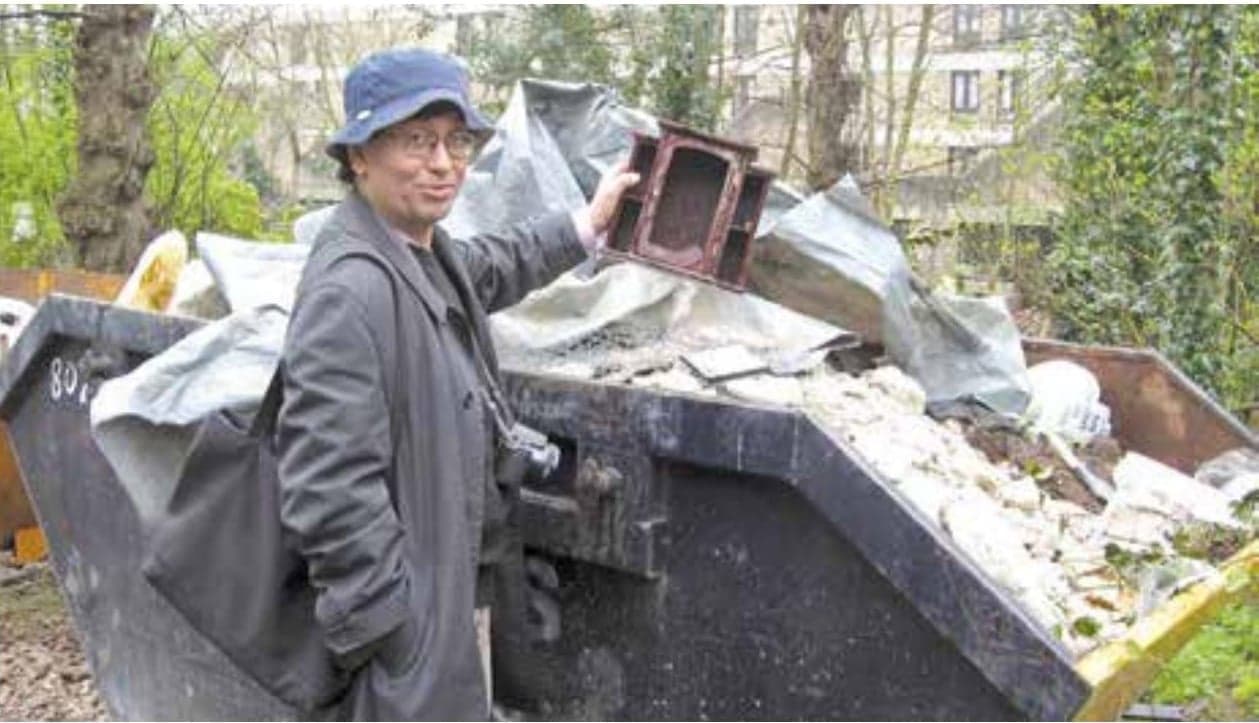
“Dumpster diving” is the practice of sifting through commercial or residential trash to find items that have been discarded by their owners but which may be useful to the dumpster diver.
Mazel tov on the completion of Nazir! In recent years, some organizations have been publicizing their conclusion that it is perfectly fine according to Jewish law for men to marry women who are older than them.
The Gemara relates two short and cryptic anecdotes. (Nedarim 76b) The first is that Chiya the son of Rav would shoot arrows and examine them. The second anecdote is that Rabba the son of Rav Huna would sit and stand.
There was a villager – we’ll call him Reuven – with a taste for fine liquor and a nice collection of schnapps barrels. Reuven knew how to enjoy his liquor responsibly.
There are some questions surrounding the details of the marriage of Rebbe Akiva to Rachel, the daughter of Kalba Savua. According to the Ben Yehoyada (Nedarim 50a), the following is what transpired.
My brother-in-law Raphael Katz doesn’t live too far away from me, yet practically the only time we spend Shabbos together is during the summers at Pine Knoll in Monticello.
In the first perek of Kesuvos, there is a lengthy exposition on Sheva Brachos. What follows is some selected halachos regarding Sheva Brachos with a focus on the psakim of Rav Moshe Feinstein, zt”l.
Mazal tov to all those who finished Maseches Yevamos. We began Maseches Kesuvos on Friday. I remember that a few minutes after I was engaged and we had a mock l’chayim ceremony, my future shvigger opened her notebook.
The Mishna in Yevamos (49a) tells of a mysterious scroll found in Yerushalayim. The Gemara proceeds to enumerate the contents of the parchment.
Sometimes, while learning Talmud and the commentaries, one can uncover new facts about the events recorded in Tanach. Tosfos in Yevamos (21a) states that Dovid HaMelech married the former wife of Shaul HaMelech, Ritzpah…
There is a popular sefer titled What If? It is based on questions and stories in Rav Zilberstein’s sefarim which are organized according to the weekly parashah.
Mazel tov to all those who finished Bava Basra! It was especially monumental considering that Bava Basra is the longest mesechta in Shas, by the number of pages.
Rav Yosef Weissmandl took his son Rav Chaim Michoel Dov (Michoel Ber) Weissmandl (1903–1957) to receive a berachah from Rav Yosef Tzvi Dushinsky (1867–1948). Rav Michoel Dov was just a young boy of 11 at the time.
If a woman is lighting more than one light for Shabbos, why does she recite “L’hadlik ner shel Shabbos”? Ner is the singular form. Shouldn’t the correct text be l’hadlik neiros?
The last mishnah in Maseches Taanis says that the most joyous holidays of the Jewish calendar were Tu B’Av and Yom Kippur. Yom Kippur was understandably a holiday because it is the day that Hashem forgives Klal Yisrael…
My first lesson in how people are wary of shadchanim came when I spoke to my uncle about a prospective shidduch for his daughter. I described the bachur as being five-foot-six.
There are many mysteries surrounding Rebbi Yehuda HaChassid. Questions about his life abound. Even his will has raised many difficulties.
Given Dovid's wife Michal by King Shaul, Palti ben Layish places a sword between them on the first night and keeps that boundary for over seven years.
At a Yerushalayim wedding the ring was forgotten, then dropped under the chuppah. When guests called it a sign, the Brisker Rav gave them a different reading.
Invited to recite a beracha at the Klausenberger Rebbe's last Sheva Brachos, Rav Elyashiv declined over the time of sunset, until the Rebbe promised to finish early.
A young man won't date before his older brother marries. Rav Shmuel Auerbach tells him not to wait, and his wedding leads straight to his brother's match.
A chassan gives a ring for 'your daughter' without saying which one. A sage rules he can marry none of them, and even Rabbeinu Tam's defense falls short.
Rav Chiya bar Ashi's wife disguises herself to test him, and he sins with her unknowingly. Learning the truth, he still fasts in anguish for the rest of his life.
Rabbi Akiva and Rachel live on straw after Kalba Savua disowns them. Eliyahu HaNavi comes begging for straw, to show them others have even less.
A man vowed his drunken brother could not benefit from his schnapps, then traded it for dried fruit. Could it be a dowry? The Chasam Sofer ruled.
The Vilna Gaon tells the author of Teshuvos Shmuel that a minor's kiddushin is meaningless, and one hint about Maseches Parah settles the scholars' challenge.
After slaying Golias, Dovid tries to marry Shaul's daughters Meirav and then Michal by forgiving a debt, and Shaul twice disputes whether the kiddushin worked.
Shaul's general Avner switches sides, and Dovid accepts him if he brings back Michal, whom Shaul had given to Palti ben Layish. The mission leads to Avner's murder.
The young Chofetz Chaim turned down rich dowries and married his poor step-sister Freidah for the sake of shalom bayis, and credited all he achieved to her.
A man in Provence was about to marry his father-in-law's ex-wife, with the meal already prepared. Rabbeinu Tam ruled, despite the loss, that the wedding could not go ahead.
Yeshaya HaNavi tells the dying Chizkiya he is punished for not marrying. Chizkiya prays despite the decree, gains fifteen years and marries Yeshaya's daughter.
A fundraiser needs a shidduch for his son, and Rav Chaim Kanievsky sends him to daven for a donor's daughter. Both children are soon engaged, just as Rav Chaim promised.
A father blamed his daughter's childlessness on a wedding Rav Dovid Feinstein approved; Rav Dovid had him forgive her before a beis din, and a child soon followed.
A girl doubted a fine young man because he wore a gray suit, until she learned the man in gray who visited her sick relative was Rav Dovid Feinstein.
Told that a second wedding should be small, Rav Henoch Leibowitz agreed to invite only close family: hundreds of his talmidim.