Children and Havdalah
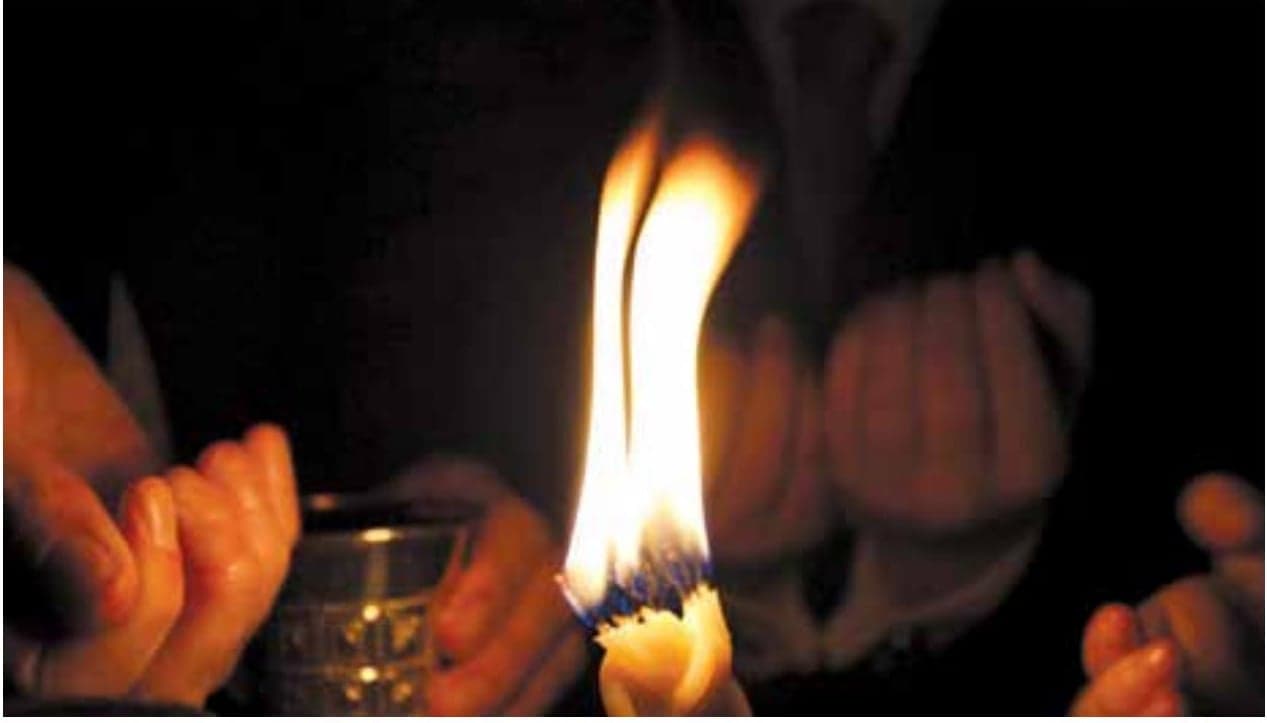
As the days become longer, the time for havdala comes later and later. This is a problem for young children. The Mishna Berura says that once a child understands what Shabbos is, he should be trained to hear havdala.
Seder Nezikin · dafim 2–119
Finished June 26, 2024 in this cycle. 22 articles, 21 stories
As the days become longer, the time for havdala comes later and later. This is a problem for young children. The Mishna Berura says that once a child understands what Shabbos is, he should be trained to hear havdala.
For a while there has been a prevailing theory in the sports world that it's worth it to lock a budding star into a long-term contract before his value escalates.
This article will touch on some issues regarding ordering food items from Amazon that will be delivered on Purim day. Does it qualify as mishloach manos?
At a Purim seudah Rabbah kills Rabbi Zeira, then davens and brings him back to life. The next year Rabbi Zeira declines: a miracle doesn't happen every day.
Rav Huna rebukes his son Rabbah for avoiding Rav Chisda’s lessons. Rabbah says they are only about healthy living, and his father tells him that is exactly why to go.
Rav Henoch Leibowitz brings a magazine to his Gemara shiur and explains the real reason a gadol's da'as Torah guides life questions, not just halachah.
Rav Heschel boasts that Rabbi Yochanan must now carry his clothes. His candle goes out, and the Shach finds an old man who says he is Rabbi Yochanan.
Those who study the daf will notice that the last word of Friday’s daf (Bava Metzia 23b) can be translated as “bed” or “Purim.” Rashi translates it as bed. The Maharsha says it means Purim.
There is a machlokes Rishonim whether the mitzvah of bikur cholim is m’d’oraysa or m’d’rabbanan. It is based on the understanding of a passage in Bava Metzia (30b).
The Gemara records an incident where Rav Huna admonished his son Rabbah for not studying under the guidance of Rav Chisdah, whom Rav Huna considered an exceptional scholar.
There is a Mishnah in Bava Metzia that at first glance seems understandable. Yet when the Gemara (41a) tries to elucidate it, it seems that the first law in the anonymous Mishnah represents the opinion of Rebbe…
Enterprising thieves, in the times of the Gemara, seemed to always be able to catch up to the latest anti-theft trend. The Gemara goes through various measures a watchman was supposed to undertake to safeguard cash.
While the Daf continues plowing through Bava Metzia, many monetary topics are studied. Interestingly enough, someone once asked Rav Yaakov Hagiz (1620-1674) a question about whether a singing bird was muktzeh.
The Gemara records that there was a dispute between Rebbe Eliezer and the Sages regarding the halachic status of a certain type of oven (Bava Metzia 59b).
In Pozen, the hometown of the great and revered sage Rabbi Akiva Eiger, zt’l, lived a wealthy Jew. Unfortunately, this Jew had built his fortune largely by lending money to other Jews with interest.
If someone borrows a loaf of bread before Pesach, does he have to pay it back after Pesach? After all, if the Jewish lender would have kept the loaf of bread in his possession, it would have become worthless.
After much pleading from my wife, I agreed to take my children to the barber. The last child to get his haircut was behaving rather well, when suddenly, the screaming started.
Rav Yosef Weissmandl took his son Rav Chaim Michoel Dov (Michoel Ber) Weissmandl (1903–1957) to receive a berachah from Rav Yosef Tzvi Dushinsky (1867–1948). Rav Michoel Dov was just a young boy of 11 at the time.
Rebbe Chiya was a teacher of Torah. (Bava Metzia 85b) The Gemara relates how Rebbe Chiya personally oversaw the entire harbotzas Torah process from the very beginning. He would plant seeds. Not seeds of Torah!
In this column, we previously discussed Rabbah Bar Bar Chana’s workers who broke the barrels of wine they were hired to transport (Bava Metzia 83a).
A renter is obligated to affix a mezuzah just as a homeowner is. However, most Rishonim are of the opinion that a renter’s obligation is only rabbinic.
Some things just never change. When someone joins a weight-loss group, some people ask, “Can’t you just diet by yourself?” When someone sees a nutritionist, some people ask, “Can’t you just eat healthy?” The presumption…
A shepherd deserts his flock for a quick break. While he is gone, a wolf eats one of the sheep. To determine if the shepherd is liable, we evaluate whether the shepherd could have fought off the wolf had he been there.
The Gemara has a fascinating discussion about miracles happening to ordinary individuals. A shepherd deserts his flock for a quick break. While he is gone, a wolf eats one of the sheep.
Some things just never change. When someone joins a weight loss group, some people ask, “Can’t you just diet by yourself?” When someone sees a nutritionist, some people ask, “Can’t you just eat healthy?” The presumption…
Often, the Gemara faces a halachic question that it can’t resolve. In that situation, the Gemara declares, “Tayku!” The simplest explanation of that word is that the question should stand.
Rabbi Eliezer calls on a carob tree, a canal and the walls of the beis midrash to prove his ruling, but Rabbi Yehoshua and the Sages refuse to accept such proofs.
The Pupa Yeshiva wants to expand its beis midrash, but a fruit tree stands in the way. The Belzer Rebbe tells them to build around the tree, and they do.
Pozen's burial society demands 2,000 rubles to bury a man who lent on interest. Rabbi Akiva Eiger explains why the steep price is actually fair.
Men of Shevet Ephraim leave Egypt thirty years before the redemption and fall to the Philistines; their bones are later revived in Yechezkel’s vision.
Porters break Rabbah bar bar Chanah's wine barrels and he takes their cloaks, but Rav tells him to return them and even pay their wages, beyond the letter of the law.
A bandit chief leaps into the river beside Rabbi Yochanan, who promises him his beautiful sister if he repents. The bandit becomes the great Reish Lakish.
Rabbi Chiya plants flax, weaves nets, hunts deer and writes Chumashim on their hides, then teaches children who each teach the others.
Rabbi Chanina boasts he could restore a forgotten Torah by his reasoning; Rabbi Chiya answers that he ensures it is never forgotten, and Rebbe praises his deeds.
Reish Lakish marks the graves of the Sages but cannot find Rabbi Chiya's. A Heavenly Voice tells him he learned like Rabbi Chiya but did not spread Torah like him.
Porters break Rabbah bar bar Chanah’s barrels of wine. Rav tells him to forgo his claim and, because the workers are poor, to pay them their wages too.
A tired traveler prays for a donkey, and a Roman makes him carry a newborn foal. He regrets not praying for a donkey to ride on.
After Hashem lets Dovid miraculously kill a lion and a bear, Dovid understands there must be a reason and offers to fight Goliath.
Eliyahu tells Rebbe that Rabbi Chiya and his sons could bring Moshiach. Their prayers bring wind and rain, but a fiery bear stops them before “Mechayeh Meisim.”
Rabbi Yochanan sees a widow davening in his neighborhood and asks why she doesn't use the shul near her home. She answers that there is reward for the extra steps.
Rabbah bar Avuhah meets Eliyahu HaNavi in a non-Jewish cemetery, asks him about collecting a debtor's assets, and asks how a kohen may stand among graves.
After the Romans kill Rabbi Akiva, Eliyahu HaNavi buries him. Asked how a kohen may do so, he answers that tzaddikim do not transmit tumah even after death.
Asked whether he is a kohen, Eliyahu HaNavi says he is from Shevet Binyamin, and explains that the first small loaf he asked the widow for hinted at Moshiach ben Yosef.