Horsing Around
If you enjoy halachah riddles, this article is for you.
1. There is a general rule that if melachah on Shabbos is done in an abnormal manner, there is no transgression of a Torah injunction; if one violates a Shabbos prohibition with a shinui, in an irregular way, only a rabbinic prohibition is violated. A classic example of this is carrying on Shabbos, in a public domain, an item together with another individual that one could have carried alone. Since it is normal to carry the item by oneself, and instead this person enlisted the help of a partner, this is a bona fide shinui that reduces the severity of the prohibition from Biblical to rabbinic.
Riddle: On Shabbos, Ed carried with a partner something that he could have carried himself. Yet a Biblical Shabbos prohibition was still violated. Why?
2. There is a mitzvah to check one’s pockets before going outside to a place where there is no eiruv. If one failed to do so and unknowingly carried something in his pocket through a public domain, he has not violated a Torah prohibition. An accidental Shabbos violation is committed when one does an action and he thinks it is permitted or he forgets that it is Shabbos. If, however, one did not even realize he was performing the very action that violates Shabbos, no Biblical prohibition is transgressed. To violate Shabbos, one must be cognizant of the action he is performing. But if someone doesn’t even realize he is carrying, no Torah prohibition is violated (even b’shogeg).
Riddle: On Shabbos, Ed carried something and did not even realize it. Yet a Torah prohibition was violated. Why?
3. There is a concept of ein shaliach l’dvar aveirah. If you tell someone to commit a sin and he does, the sinner himself is guilty. One reason for this is that we say, “Divrei ha’rav v’divrei ha’talmid mi shom’in?—If the master says to do one thing and the student says differently, whom do you listen to?”
Riddle: Someone told Ed to violate Shabbos and he listens; the one who instructed Ed is considered to have violated a Biblical prohibition on Shabbos. Why?
4. There is a mitzvah of tosefes Shabbos. One should refrain from performing melachah before the actual time of Shabbos has arrived. The Mishnah Berurah writes that the most optimal way of performing tosefes Shabbos is to stop performing melachah from 20–30 minutes before sunset. It seems hard to fulfill, but this translates to refraining from melachah from 2–12 minutes before the time for candle lighting.
Riddle: Ed may not have the mitzvah of tosefes Shabbos. Why not?
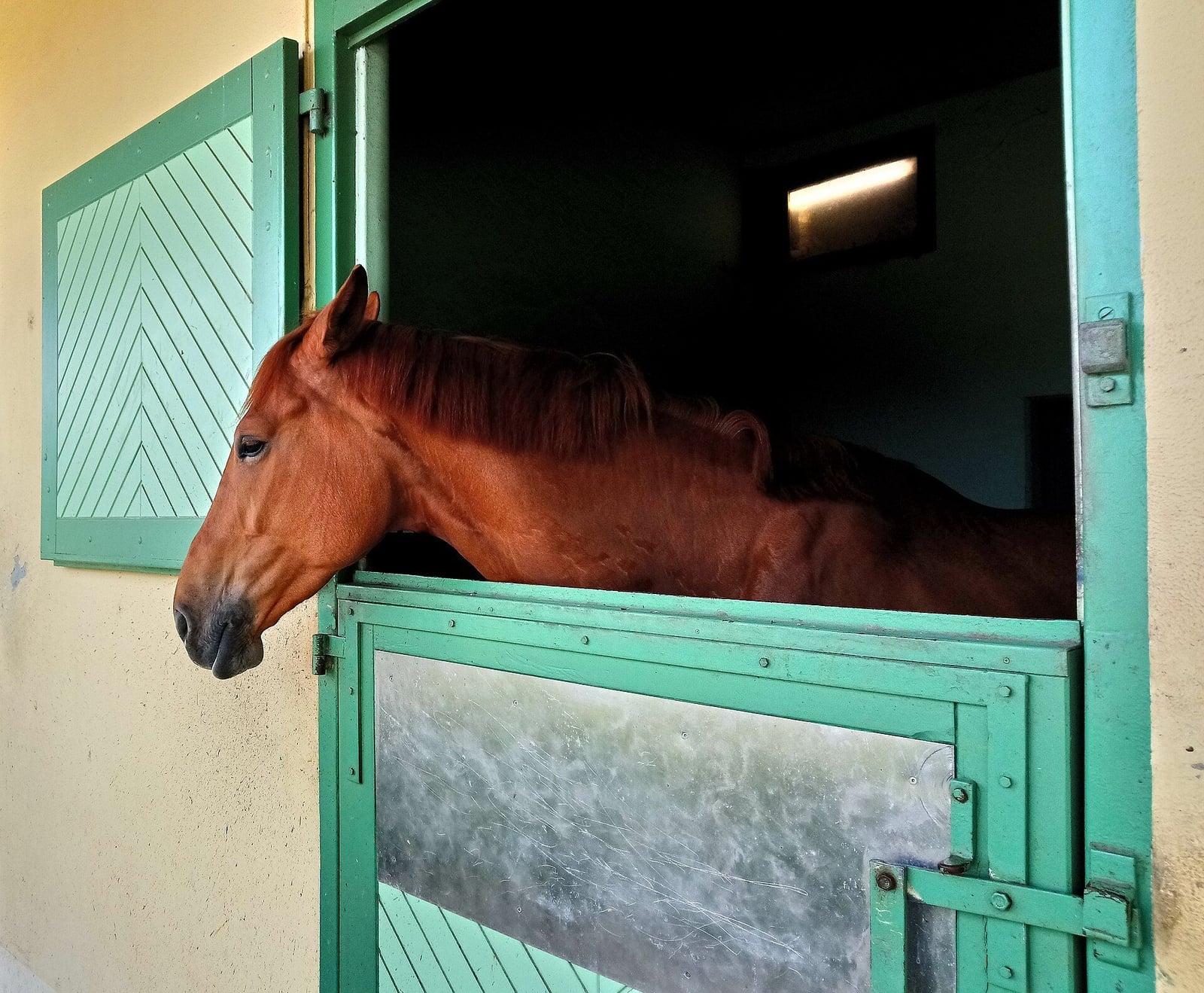
The answer to all these questions is that Ed is a horse, of course.
There is a Biblical injunction against using one’s animals to perform melachah on Shabbos. The Ohr Sameach suggests that a possible reason for the mitzvah is that the Torah wanted to give animals a break as well. This obligation goes so far that one is not even allowed to rent or lend his bull to a non-Jew who is not obligated to keep Shabbos. If his bull is used for melachah, the owner will violate a Torah prohibition. This is conveyed as practical halachah by the Shulchan Aruch (O.C. 246:3).
The answer to the third riddle is now obvious. If a man causes his animal to perform melachah, the owner violates the mitzvah of having his animals rest on Shabbos.
However, the Pri Megadim is unsure of whether or not this mitzvah applies during the time of tosefes Shabbos. This answers the fourth riddle.
Rav Shlomo Zalman, zt’l, said that if one places a needle on the back of his animal to carry through a public thoroughfare on Shabbos, the owner violated a Shabbos prohibition. It is irrelevant whether the animal itself is aware that it is carrying. In the final analysis, the animal is performing melachah on behalf of its owner. This answers the second riddle.
The answer to the first riddle is that perhaps the rules of shinui apply differently to animals performing melachah than to humans. Rav Shlomo Zalman contemplates whether there even exists the concept of shinui with melachah performed by animals. This is a relevant question, since only Biblical Shabbos prohibitions apply to one’s animals. The rabbis did not extend their prohibitions to cover animals as well.
A Mishnah in Avodah Zara (14b) states that one may not sell his large animal (capable of performing farm labor) to a non-Shabbos observer. One explanation (ibid. 15a) is that if we allow an individual to sell his animal to a non-Shabbos observer, he may err and think it is permissible to rent him or lend him one as well. While an animal is rented or lent, the original owner retains his halachic status as an owner. Hence, he is obligated to ensure his animals rest on Shabbos. This is not possible if it is rented or lent to a non-Shabbos observer. To forestall that possibility, the rabbis prohibited even selling an animal to a non-Shabbos observer.
The sefer Reishis Bikkurim points out that Rashi on the Gemara seems to indicate that purchasing an animal capable of performing melachah is a mitzvah. Of course, one who doesn’t own an animal does not violate any prohibition. But one who does own an animal is enabling himself to fulfill the mitzvah of not working his animals on Shabbos. He compares it to purchasing chametz so that one can fulfill the mitzvah of burning it before Pesach. One who does not own chametz and consequently cannot burn it has not violated any mitzvah. Yet some suggest it would be advisable for one who doesn’t have any chametz to purchase some before Pesach to enable himself to perform the mitzvah.
There are definitely some actions that a trained pet may not perform on Shabbos for his owner. Not everything is clear-cut, however. For a Jew, turning on a light switch for an incandescent bulb is a Biblical prohibition according to most poskim. It is not clear that the same thing would be forbidden for a pet. Some poskim suggest it may be permitted to allow one’s dog to open the light for its owner. Actually instructing a dog to open the light would certainly be prohibited, as the very act of telling someone (or something) to do an action that is prohibited on Shabbos violates “v’dabeir davar.”
To make one point clear, though, Rav Shlomo Zalman rules that if your pet is playing around and violating Shabbos for his own amusement, you do not need to stop him.
More Gemara stories
Questions on this article
Rabbi Avrohom Sebrow
Rebbe at Yeshiva Ateres Shimon in Far Rockaway. He leads the Daf Yomi chaburah at Eitz Chayim of Dogwood Park in West Hempstead, and writes “Delving into the Daf” each week for The Jewish Home.
About and contact