Rebbe Meir and the Power of “Eloka d’Meir Aneini”
Rebbe Meir’s wife, Bruriah, had a sister who was kidnapped and held captive. At Bruriah’s urging, Rebbe Meir resolved to rescue her. He reasoned that the captive sister’s righteousness would bring about a miracle to save her. When he arrived at the place where she was held, he approached the guard and offered him money to release her. The guard refused, fearing execution for allowing her to escape.
Rebbe Meir then told him, “Take these gold coins and use them to bribe the officials overseeing you.” Still unconvinced, the guard asked, “What do I do when the money runs out?” Rebbe Meir replied, “Do as I say, and you will be unharmed. Say, ‘Eloka d’Meir aneini, G-d of Meir, answer me’ – and no danger will touch you.”
To prove the power of these words, Rebbe Meir picked up a clump of dirt and threw it towards vicious guard dogs that immediately lunged at him. Calmly, he called out, “G-d of Meir, answer me,” and the dogs froze in place and turned back. Seeing this wonder, the guard released Bruriah’s sister. Later, when the authorities sought to execute the guard for allowing her to escape, he cried out “G-d of Meir, answer me,” and miraculously he was saved, just as Rebbe Meir had promised.
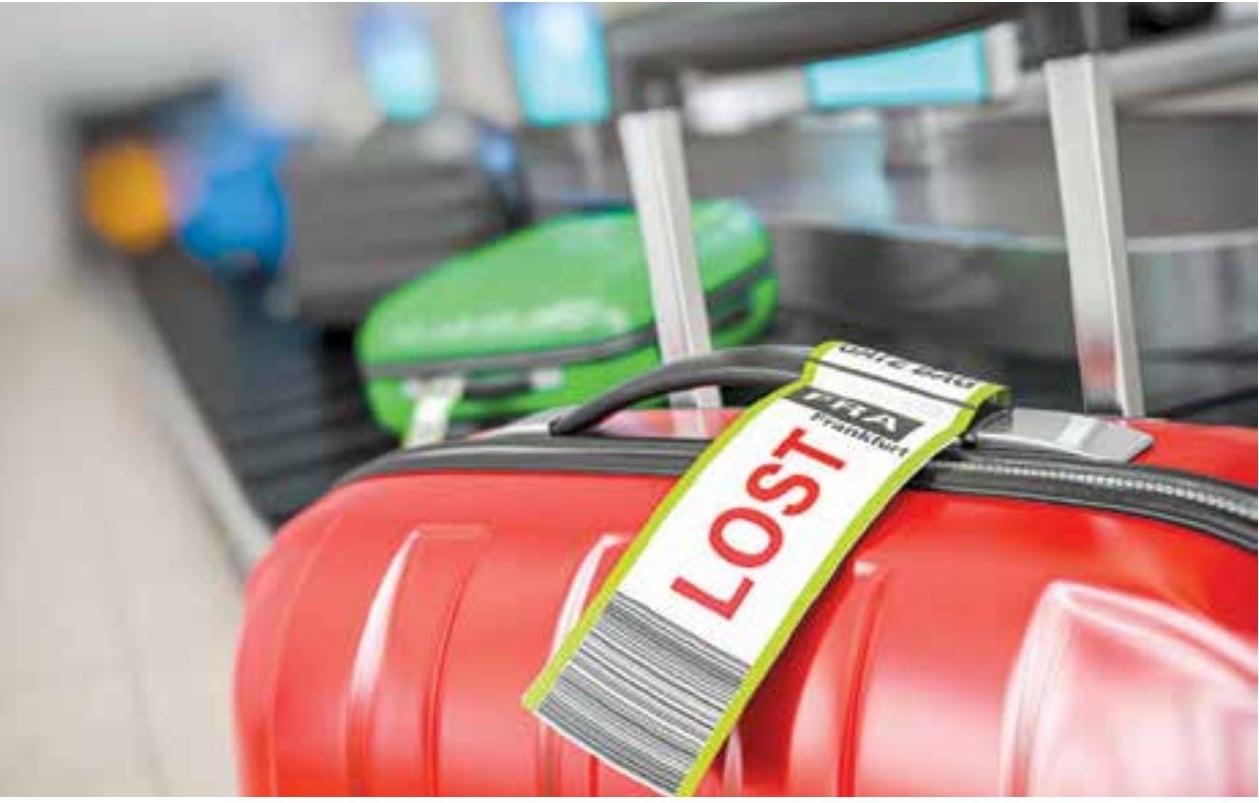
This story is the basis for a famous segulah for finding lost items. One tradition is to give tzedakah in memory of Rebbe Meir Baal Hanes, the Tanna from this story. The segulah has different forms. The Me’il Tzedakah writes that the donation should ideally be in the form of oil or candles to provide light. A modern adaptation is to donate light bulbs or funds for electricity. Nowadays, however, most people give money to any tzedakah, not necessarily for light.
In Peninei Rabbeinu HaKelios Yaakov, it is recorded in the name of the Steipler that he would instruct people who lost something to recite the following Midrash (Bereishis Rabbah 53:14):
Rebbe Binyamin said: “Everyone is in a state of virtual blindness until Hashem enlightens them, as it is stated (Bereishis 21:19), ‘Then Hashem opened her eyes and she perceived a well of water.’”
Hagar expected that her son Yishmael would die from thirst. However, she suddenly saw a well.
Rebbe Binyamin explains that the well was there all along, but Hagar did not see it until Hashem made her aware. Similarly, with lost objects, they might be right in front of us, but we do not see them without Hashem’s help. Reading this Midrash reinforces this concept and is a segulah for finding lost items.
Many people combine both segulos: they recite the Midrash, give tzedakah in memory of Rebbe Meir Baal Hanes, and then say: “G-d of Meir, answer me. G-d of Meir, answer me. Help me find my lost object.”
A Modern-Day Story
In Eretz Yisrael, Rav Aryeh Levine’s great-grandson, Eliyahu, lost his tefillin. For four months he used a gemach pair until he finally called his mother to tell her she would need to buy him new ones. His mother asked, “Did you give tzedakah and say the accepted formula?” He replied that he hadn’t. His mother insisted, but he protested, “It’s too late! I lost them over four months ago!” She urged him to try anyway, promising to buy him a new pair if it did not work.
Eliyahu recited the Midrash and tefillah, then went to the grocery store to buy a roll for breakfast. Sanhedria Murchevet had two supermarkets at that time, a large one and a small one. Though he usually shopped at the large store, that day he decided to enter the small one. At the bread shelf, he saw his tefillin sitting right there. The store owner joked that he should pay rent for storing them there for four months. His tefillin had been in the store the whole time, yet he never saw them until he tried the segulah.
Another First-Person Account
A prepublication version of this article was sent to a friend who shared the following story:
Yesterday, I was sitting in my office ready to order lunch when I realized my wallet wasn’t in my pocket. I knew I had it earlier that day, so I couldn’t have left it at home. I searched my desk and other pockets. Nothing. Exasperated, I mentioned it to one of my chassidic co-workers.
“Say Amar Reb Binyamin,” he suggested.
“Yeah,” I said noncommittally.
Another co-worker said, “Give tzedakah to Reb Meir Baal Hanes.”
“How much should I give?”
“I don’t know. Depends how much you’ve got to lose,” he shrugged.
I had my credit cards, driver’s license, insurance card, AAA membership, and about a hundred dollars. I figured five dollars should be enough. But I still resisted the segulah.
That afternoon, I retraced my steps. The grocer where I grabbed a sandwich that morning said he hadn’t seen my wallet. “Did you say Amar Reb Binyamin?” he asked. “No,” I replied meekly. “Say it. You’ll see, it will turn up.”
The same happened in every store: no wallet, but each person suggested Amar Reb Binyamin or tzedakah for Reb Meir Baal Hanes. I called the bus company in case it fell on the seat, but they hadn’t found it. “Try back tomorrow,” the woman said.
The next day I felt desperate. Coming up the office stairs, I decided not to resist anymore. I mumbled Amar Reb Binyamin and gave money to tzedakah in Rebbe Meir’s merit. I sat at my desk, turned on my computer, and opened a drawer for some papers – and there was my wallet, lying right in front of me. I blinked in disbelief. I was sure I had checked there the day before. It seemed I was actually blind to it until I recited that miracle passage.
Stories in this article (1)
Stories in this article
More about Rabbi Meir
All storiesRabbi Meir Escapes by Faking a Non-Kosher Meal
Rabbi Yehudah ben Bava's Last Semichah
More stories in Avodah Zarah
All in this masechtaRome Claims Its Reward at the End of Days
The Martyrdom of Rabbi Chanina ben Teradyon
The Brisker Rav Checks His Tefillin in a Mirror
Questions on this article
Rabbi Avrohom Sebrow
Rebbe at Yeshiva Ateres Shimon in Far Rockaway. He leads the Daf Yomi chaburah at Eitz Chayim of Dogwood Park in West Hempstead, and writes “Delving into the Daf” each week for The Jewish Home.
About and contact