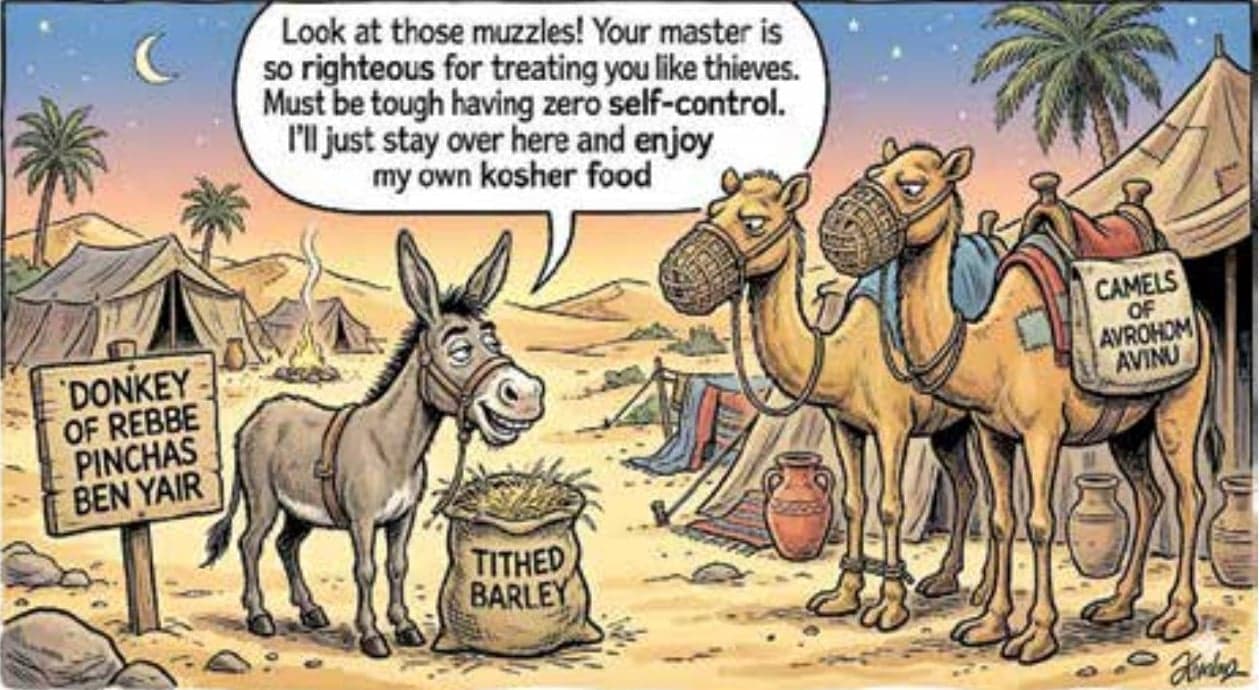
The Gemara in Chullin (7a) records the remarkable journey of Rabbi Pinchas ben Yair as he traveled to redeem captives. Along the way, he arrived at an inn where his donkey was offered barley.
Mazal tov to all the dedicated learners who recently finished Mesechta Menachos and are embarking on Mesechta Chullin this Shabbos! As we wrap up Menachos, we find that the recent Mishnayos delve into the fascinating…
I received a question about whether it is preferable to bake five pounds of flour once every three weeks, thereby fulfilling the mitzvah of hafrashas challah, and serve frozen challah for the subsequent weeks, or to…
Although Cloudy with a Chance of Meatballs sounds like pure fiction, unusual “food rain” events have, at times, been reported. In 2011, residents of Coundon, England, described a bizarre incident in which numerous…
Last week’s daf article about Rosh Hashana was timed perfectly. This week’s article…not so much. Still, there’s a strong connection. The Kohen Gadol performed all of the Avodah on Yom Kippur, including lighting the…
Rebbe Meir’s wife, Bruriah, had a sister who was kidnapped and held captive. At Bruriah’s urging, Rebbe Meir resolved to rescue her. He reasoned that the captive sister’s righteousness would bring about a miracle to…
Is the correct number three, as stated in the Gemara in Sanhedrin, or four, as stated in the Midrash? The Chofetz Chaim suggests that neither is entirely accurate.
Over the course of more than a thousand years, four separate incidents emerged that all share one striking detail. Because of this common element, various poskim have discussed them together.
We have just learned extensively about the subject of the death penalty in the Gemara. What follows is a concise recap of many of the relevant laws, focusing primarily on stoning based on the Rambam.
A shepherd deserts his flock for a quick break. While he is gone, a wolf eats one of the sheep. To determine if the shepherd is liable, we evaluate whether the shepherd could have fought off the wolf had he been there.
The Gemara records that there was a dispute between Rebbe Eliezer and the Sages regarding the halachic status of a certain type of oven (Bava Metzia 59b).
Elisha HaNavi miraculously solved the drinking water issue in Yericho. The water there was poisonous and bitter. A group of young entrepreneurs earned a living by supplying the city with bottled water.
In Parshas Korach, Moshe Rabbeinu announced that the events that were about to unfold would establish clearly whether or not Korach was right in his challenge.
One time, when all of Bnei Yisrael came up on pilgrimage (oleh regel) to Jerusalem, there was no water available for drinking. Nakdimon ben Gurion approached a certain lord and said to him: “Loan me 12 wells of water…
The Gemara (Sukkah 44a) relates an enigmatic episode: A wealthy man approached Rebbe Elazar Bar Tzadok and told him that he owns villages, vineyards, and olive orchards.
R’ Pinchas ben Yair was on his way to fulfill the mitzvah of pidyon shevuyim; he came to the Gina’i River and asked it to split for him so that he could continue traveling.
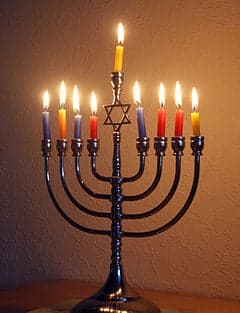
When Chanukah time comes around, I am always reminded of the Beis Yosef’s famous question: Why did the Sages institute eight days of Chanukah to commemorate the miracle that the oil lasted for eight days?
Is Hallel recited on Purim? Of course not; it’s that simple! Or is it? The Gemara in Megillah (14a) tells us that the sages were motivated to institute the reading of the Megillah from the laws of Pesach.
Some things just never change. When someone joins a weight-loss group, some people ask, “Can’t you just diet by yourself?” When someone sees a nutritionist, some people ask, “Can’t you just eat healthy?” The presumption…
The Gemara has a fascinating discussion about miracles happening to ordinary individuals. A shepherd deserts his flock for a quick break. While he is gone, a wolf eats one of the sheep.
I am taking a brief Chanukah vacation from the daf yomi-themed articles. There is a famous question known as “the Beis Yosef’s kasha.” During the time of the Chanukah miracle, the Jews found enough oil to last one day.
There are well-known stories found in the Gemara that made it to the storybooks. Yet there are stories that are equally important but haven’t been publicized simply because they are not suitable for all audiences.
In Parashas Korach, Moshe Rabbeinu announced that the events that were about to unfold would establish clearly whether or not Korach was right in his challenge.
The Shulchan Aruch writes that if one passes a place where a miracle occurred to him, he recites the blessing of “she’asah li neis ba’makom ha’zeh.” It is clear from the Mishnah Berurah that the miracle in question has…
The last mishnah in Maseches Taanis says that the most joyous holidays of the Jewish calendar were Tu B’Av and Yom Kippur. Yom Kippur was understandably a holiday because it is the day that Hashem forgives Klal Yisrael…
[Note: The following is based on a lecture delivered by the author’s father, Rabbi Yaakov Sebrow, shlita, at Chavurat Yisrael.] A pasuk in Bereishis (2:5) says, “Now any tree of the field was not yet on the earth and…
Rabbi Meir bribes a guard to free his wife Bruriah's captive sister and teaches him to call out "G-d of Meir, answer me," which stops vicious dogs and later saves the guard.
At a Purim seudah Rabbah kills Rabbi Zeira, then davens and brings him back to life. The next year Rabbi Zeira declines: a miracle doesn't happen every day.
Rabbi Eliezer calls on a carob tree, a canal and the walls of the beis midrash to prove his ruling, but Rabbi Yehoshua and the Sages refuse to accept such proofs.
Eliyahu tells Rebbe that Rabbi Chiya and his sons could bring Moshiach. Their prayers bring wind and rain, but a fiery bear stops them before “Mechayeh Meisim.”
Did the dry bones Yechezkel saw really live again? One opinion says they did, and Rabbi Yehudah ben Besaira says he descends from them and has their tefillin.
On his way to redeem captives, Rabbi Pinchas ben Yair orders the Ginai River to split. The river argues it too does Hashem's will, but finally gives way.
Nakdimon ben Gurion borrows twelve wells of water for the pilgrims, and when the lender demands payment, his prayers bring rain and then make the sun break through.
When Sancheirev besieges Yerushalayim, Chizkiyahu prays and 185,000 officers die by fire within, their bodies spared as a reward for Shem honoring Noach.
Sancheirev's vast army besieges Yerushalayim, but an angel strikes 185,000 soldiers in the night, a merit of the Torah study Chizkiyahu enforced with a sword.
Yeshayahu tells the gravely ill Chizkiyahu he will die for not having children; Chizkiyahu prays anyway, gains fifteen years, and the sun goes back ten hours.
Youths whose water business dried up when Elisha HaNavi healed Yericho’s water mock him, and bears from a forest attack them. Was the forest a miracle too?
After Rabbi Elazar ben Rabbi Yosi cures Caesar's possessed daughter, he tears up Rome's evil decrees and sees the stolen paroches of the Beis HaMikdash.