Road to Redemption
The Gemara in Avodah Zara (2a-b) opens with a scene so grand—a story that has not yet occurred but waits just beyond the curtain of redemption.
Emunah and Hashkafah
Reward and punishment, Gan Eden and the World to Come.
The Gemara in Avodah Zara (2a-b) opens with a scene so grand—a story that has not yet occurred but waits just beyond the curtain of redemption.
It is customary to slice the challah on Shabbos before reciting Ha’motzi. The source of this halacha comes from a wicked king. Discussing the origins of this halacha never grows stale.
When Moshe Rabbeinu wanted to dissuade the populace from joining Korach, he made the following profound proclamation: “If these men die a natural death, that means G-d did not send me.
Yosef, the son of Rebbe Yehoshua, was sick and temporarily expired (Bava Basra 10b). During that brief lapse, he was given a glimpse of the World to Come.
Rebbe Chiya was a teacher of Torah. (Bava Metzia 85b) The Gemara relates how Rebbe Chiya personally oversaw the entire harbotzas Torah process from the very beginning. He would plant seeds. Not seeds of Torah!
A few years ago, a Jewish individual put his portion of Olam Haba, the World to Come, up for auction on eBay. The bidding started in the morning at 99 cents and had jumped to $100,000 by the afternoon.
David Brooks, a columnist for the New York Times, wrote an article entitled “The Moral Bucket List.” Soon after it was published, it climbed to number one on the list of New York Time’s most emailed articles.
Rav Shmuel Eliezer HaLevi Eidels, more commonly known as the Maharsha, was Rosh HaYeshiva in Austroha. At one point due to the great influx of talmidim to his Yeshiva, the community decided to erect a larger building.
The Mishna in Yoma (28a) tells of a story that once in the Beis Hamikdash they assumed that it was already considered halachicly daytime. Therefore, they slaughtered the animal designated for the Korban Tamid.
The story is related that a Jew, who had only five rubles to his name, was in dire need of a large sum of money for his daughter’s upcoming marriage. He went to his Rebbe for advice.
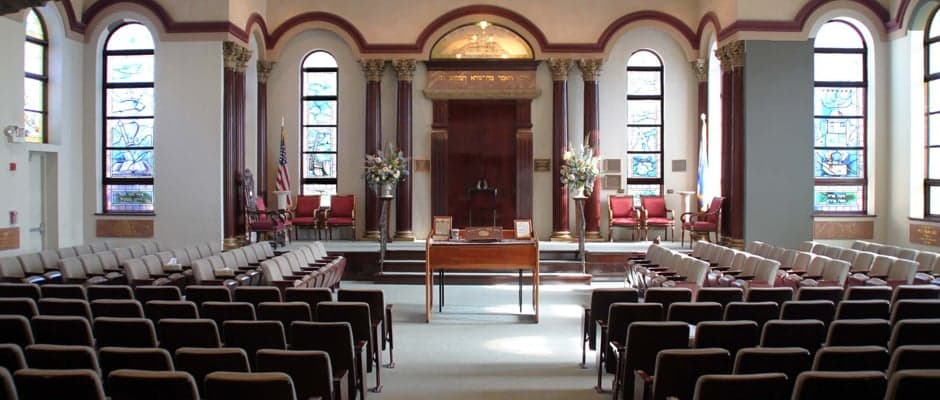
A vexing question that plagues many is how to choose a shul. Some say that the most important aspect of a shul is available parking. After all, if you can’t park there, how can you daven there?
Rebbe Abba says that on Shabbos, one is obligated to recite ha’motzi on two loaves of bread (Shabbos 117b). This is to commemorate the double portion of manna that fell on Friday.
The Gemara relates (Yoma 66b) that a wise woman asked Rebbe Eliezer: Since all the people that worshipped the Golden Calf committed a serious sin, why do we find that they received different punishments?
The mishnah in the beginning of the seventh perek of Pesachim instructs one who is roasting his Paschal lamb to employ a spit made of pomegranate wood.
I had a friend who purchased an air-line ticket using his frequent-flyer miles. Some issue arose and he needed to contact customer service while at the airport.
When Trajan blames the Jews for his daughter's murder, the brothers Luleyanus and Pappas falsely confess, giving their lives to save the community.
Rebbe Yehoshua's son Yosef briefly dies and glimpses the World to Come, reporting an inverted world and the exalted place of those executed by the government.
On his deathbed, Mar Ukva finds he gave 7,000 gold dinars to charity. "My provisions are light," he says, and gives away half his remaining wealth.
At the inauguration of the first Beis HaMikdash the nation feasts even on Yom Kippur, fears punishment, and a Heavenly voice promises them the World to Come.
To get an esrog in a year of shortage, messengers promised the Vilna Gaon's reward to the seller, and the Gaon rejoiced at a mitzvah done purely out of love.
A man jokingly sells his share in Olam Haba for a ruble and then wants it back; the Netziv rules the sale is void, since the reward for mitzvos cannot be sold.
An Arab merchant shows Rabbah bar bar Chanah the smoking cracks where Korach's men were swallowed, and he hears them cry, "Moshe and his Torah are true."
Hillel learns Torah while his brother Shevna does business, and Shevna offers half his wealth for half of Hillel’s reward until a Heavenly voice rebukes him.
On Purim a tipsy bachur in Radin asks the Chofetz Chaim for a share in his Gan Eden, and is offered it on one condition: never speak or hear lashon hara.