Don’t Make a “Pour” Decision
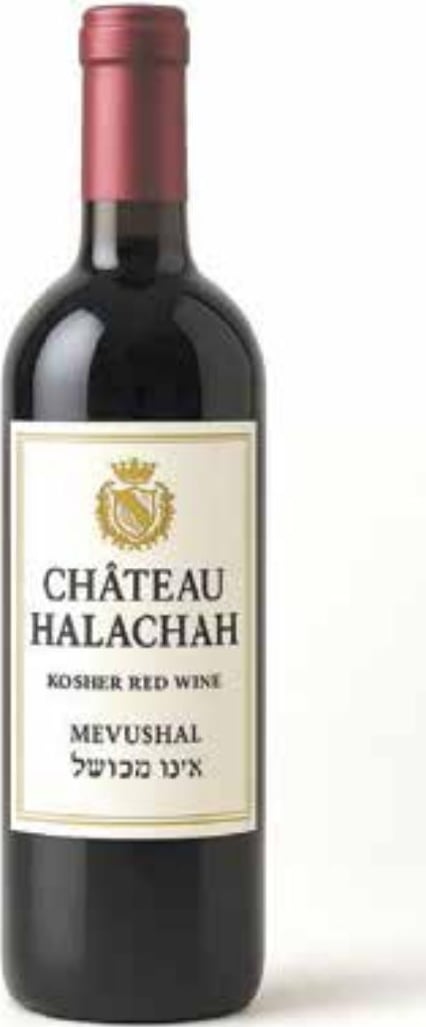
A kosher bottle of wine was sold with a label that stated in Hebrew “Lo Mevushal” (not cooked). However, in English, it stated “Mevushal” (cooked). How can wine be both mevushal and non-mevushal simultaneously? Most likely, the discrepancy was a simple printer’s error. However, that alone would hardly form the basis for an article. Instead, we will suggest that the label may, in fact, mean exactly what it says.
There is a Rabbinic prohibition against consuming the wine of gentiles. By extension, this also applies to kosher wine poured or touched by gentiles. Two primary reasons are given for this prohibition. First, the wine may have been used in a ceremony that pays homage to an idol. Second, consuming such wine may lead to inappropriate relationships.
The Gemara (Avodah Zarah 30a) records that Shmuel once drank wine in the presence of Avleit, a gentile scholar. Avleit was careful not to touch the bottle, knowing that if he did, Shmuel would refuse to drink from it. Shmuel told him, however, that his touching of the bottle was irrelevant, since the wine was cooked— mevushal. From this passage we see a clear leniency: when wine is cooked, it is exempt from the usual restrictions that apply to kosher wine. Mevushal wine may be poured and handled even by a gentile.
Many American kashrus agencies rely on pasteurization to render wine and grape juice mevushal. This follows the ruling of Rav Moshe Feinstein, zt”l, who held that pasteurized wine qualifies as cooked. Thus, they certify and label pasteurized wine and grape juice as mevushal.
However, many poskim reject this leniency. Rav Elyashiv, zt”l, (Journal Even Yisroel, 5751) argued that in earlier times, cooked wine was permitted precisely because it was rare. Today, when pasteurization is the norm, it can no longer be considered exceptional, and therefore the original leniency no longer applies.
Rav Shlomo Zalman Auerbach, zt”l, (Minchas Shlomo I:25) ruled that pasteurized wine cannot be considered mevushal unless the cooking process produces a noticeable change in taste, color, or aroma. Modern flash pasteurization, which rapidly heats and cools the wine, is so subtle that even experts debate whether it alters the wine at all. Therefore, it should not qualify as mevushal.
Rav Ben Tzion Abba Shaul, zt”l, (Ohr L’Tzion II:20:19) added that for wine to be considered mevushal, the cooking process must decrease the volume of the wine. Since modern pasteurization takes place inside sealed pipes, the wine suffers no diminishment whatsoever.
As a result, what may be considered mevushal in America (following Rav Moshe Feinstein, zt”l, and the standards of the OU) may not be considered mevushal in Israel (following the rulings of leading Gedolei Eretz Yisrael). Hence, a label stating “Mevushal” in English but “Lo Mevushal” in Hebrew makes perfect sense if the wine was pasteurized. It would be mevushal according to the OU but lo mevushal according to the Badatz Yerushalayim.
It is noteworthy that Rav Shmuel Kamenetzky, shlit”a, is quoted as being strict against relying on pasteurization to classify wine as cooked (Kovetz Halachos: Hilchos Pesach). According to his view, one cannot leave an unsealed bottle of Kedem grape juice unattended in the presence of non-Jewish help.
At the same time, his view produces a leniency. The Shulchan Aruch writes that ideally one should use non-mevushal wine for kiddush and the Four Cups. According to Rav Kamenetzky, shlit”a, and the aforementioned gedolim, Kedem grape juice and pasteurized wines may indeed be treated as non-mevushal for these purposes.
Another issue tied to this machlokes is the requirement of seals. Chazal required a double seal on wine to prevent tampering. Yayin Mevushal requires only one seal. Today, there is debate whether the double seal requirement still applies. The term “double seal” is somewhat misleading—practically, any seal that cannot be tampered with is deemed a double seal. Some authorities suggest that a sealed plastic cap qualifies. Others argue that, since a plastic cap can be removed and replaced with some effort, it counts as only one seal, which is insufficient for non-mevushal wine. Strictly speaking, current halacha requires only one seal, but one who is stringent both in considering pasteurized grape juice non-mevushal and in requiring two seals even today might find a plastic cap problematic. The OU, however, has written that they consider a plastic cap to be a double seal.
As an aside, the issue of non-Shabbos-observant Jews handling uncooked wine is well known. Less well known is the clear ruling of HaGaon Rav Binyomin Forst. shlit”a. In The Kosher Kitchen, he writes: “The prohibition of wine touched by a Shabbos violator pertains to wine actually touched by him. If a Shabbos violator merely lifts a bottle and pours wine, the wine is permitted. In addition, there is a question whether a Shabbos violator who was not raised in a religious environment prohibits wine that he touched.”
Thus, while it is preferable to serve yayin mevushal in such cases, one need not worry that a bottle of uncooked wine becomes prohibited if poured by a non-observant Jew. This stands in sharp contrast to the case of a gentile, whose pouring from a bottle of uncooked wine would indeed prohibit the entire bottle.
Stories in this article (1)
Stories in this article
More about Shmuel
All storiesShmuel Drinks Wine with Avleit
Shmuel's Wine-Flavored Dates
Rav Nachman and the Revi’is of Wine
More stories in Avodah Zarah
All in this masechtaRome Claims Its Reward at the End of Days
Rabbi Meir Rescues Bruriah's Sister
The Martyrdom of Rabbi Chanina ben Teradyon
Rabbi Meir Escapes by Faking a Non-Kosher Meal
Questions on this article
Rabbi Avrohom Sebrow
Rebbe at Yeshiva Ateres Shimon in Far Rockaway. He leads the Daf Yomi chaburah at Eitz Chayim of Dogwood Park in West Hempstead, and writes “Delving into the Daf” each week for The Jewish Home.
About and contact