The Noble Pas Price
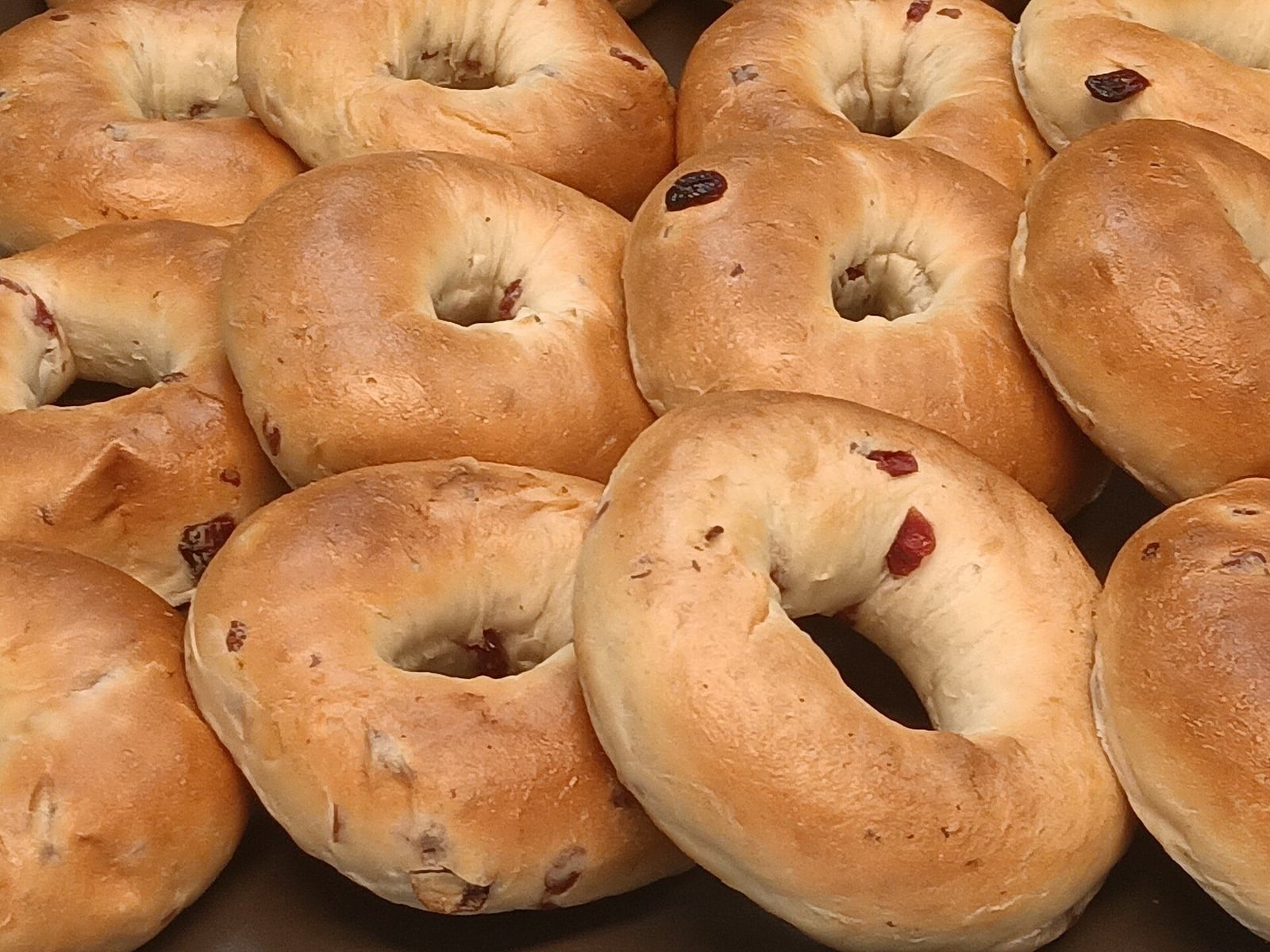
There is a commonly accepted custom to eat only pas Yisrael during the Aseres Yemei Teshuvah. Our bread, bagels, cakes, and muffins should all come from Jewish bakeries during the Ten Days of Repentance. That means that those who usually eat Dunkin’ Donuts muffins or bagels will have to switch to a different bakery for the week. Alternatively, you might want to consider purchasing a doughnut instead. Since doughnuts are deep-fried, they do not fall into the bread family, according to many poskim.
Let’s suppose that someone purchased an Entenmanns’s cake before Rosh Hashanah that will become stale if left until after Yom Kippur. Is it considered bal tashchis to discard it? Would the prohibition of bal tashchis override the custom of refraining from pas palter (bread from a non-Jewish bakery) during the Aseres Yemei Teshuvah? When I tell my children that they don’t have to finish everything on their plate, they argue that it would be bal tashchis to leave something over. They are essentially arguing the same point. Though it may not be healthy to consume all the food on their plate, perhaps bal tashchis directs them to.
Some people are scrupulous to keep pas Yisrael year-round. However, when traveling abroad those same people are lenient because it is difficult to find pas Yisrael in cities that have little or no Orthodox presence. One such traveler who purchased bread from a local supermarket while traveling abroad returned to Eretz Yisrael. He asked the Minchas Yitzchak (Dayan Weiss) if discarding the pas palter bread would be bal tashchis.
Dayan Weiss, zt’l, said that it was certainly not bal tashchis. Bal tashchis in relation to food would only be applicable if he were destroying food for no reason. Here, he was refraining from eating the bread to fulfill a mitzvah. He compares it to the permit that the Sefer Chassidim gives to a scribe to discard a page from his manuscript if he wants to redo it and beautify it. The page is being discarded so that a nicer one can be put in its place.
Similarly, the Chayei Adam allows one to discard his old tzitzis strings that are still kosher if he wants to put on new ones to beautify his tzitzis. In this case as well, the old tzitzis strings are being discarded to fulfill a positive purpose, not to be wasteful.
So if one follows the custom of not eating pas palter during the Aseres Yemei Teshuvah, he does not need to be concerned about bal tashchis regarding the leftover bread. And yes, my kids do not have to eat unhealthy amounts of food to avoid bal tashchis.
The source for bal tashchis is from the prohibition against cutting down fruit trees. We are more stringent regarding chopping down fruit trees, since that is the actual negative precept found in the Torah. However, according to the letter of the law (Bava Kamma 91b) one may cut down a fruit tree if the wood from the tree is more valuable than the fruit it produces. It would not be considered baseless destruction, since the over-all outcome was positive.
After a bird has been slaughtered (shechitah), there is a mitzvah to cover its blood with dirt or a similar substance. Suppose that someone is traveling in a place where no dirt is available and he wants to shecht a chicken. The Gemara (Chullin 88b) says that he can grind up a gold coin and use the dust to cover the blood.
The Rema rules that one can only use that solution when the bird being slaughtered is more valuable than the coin itself. In such a situation, the net result was positive. He lost his gold coin, but was able to eat the more valuable chicken. (The implication being that one cannot slaughter a chicken if he knows he does not have the proper medium to cover the blood.) If, however, the gold coin is worth more than the bird, it would be bal tashchis to destroy a valuable coin and not gain the use of something tangible worth more.
The Pri Chadash disagrees. He says that as long as one has any positive purpose, he may destroy something even if it is valuable. When a cup is broken under the chuppah, there isn’t any net financial gain. However, we break the glass because it causes us to recall the churban bayis. That demonstrates that we can break or destroy something to achieve a positive goal, even if it causes us an overall loss of money. So too, the Pri Chadash argues, one may grind up an expensive gold coin to cover the blood of a cheap bird.
More Gemara stories
Questions on this article
Rabbi Avrohom Sebrow
Rebbe at Yeshiva Ateres Shimon in Far Rockaway. He leads the Daf Yomi chaburah at Eitz Chayim of Dogwood Park in West Hempstead, and writes “Delving into the Daf” each week for The Jewish Home.
About and contact