Happy Accidents
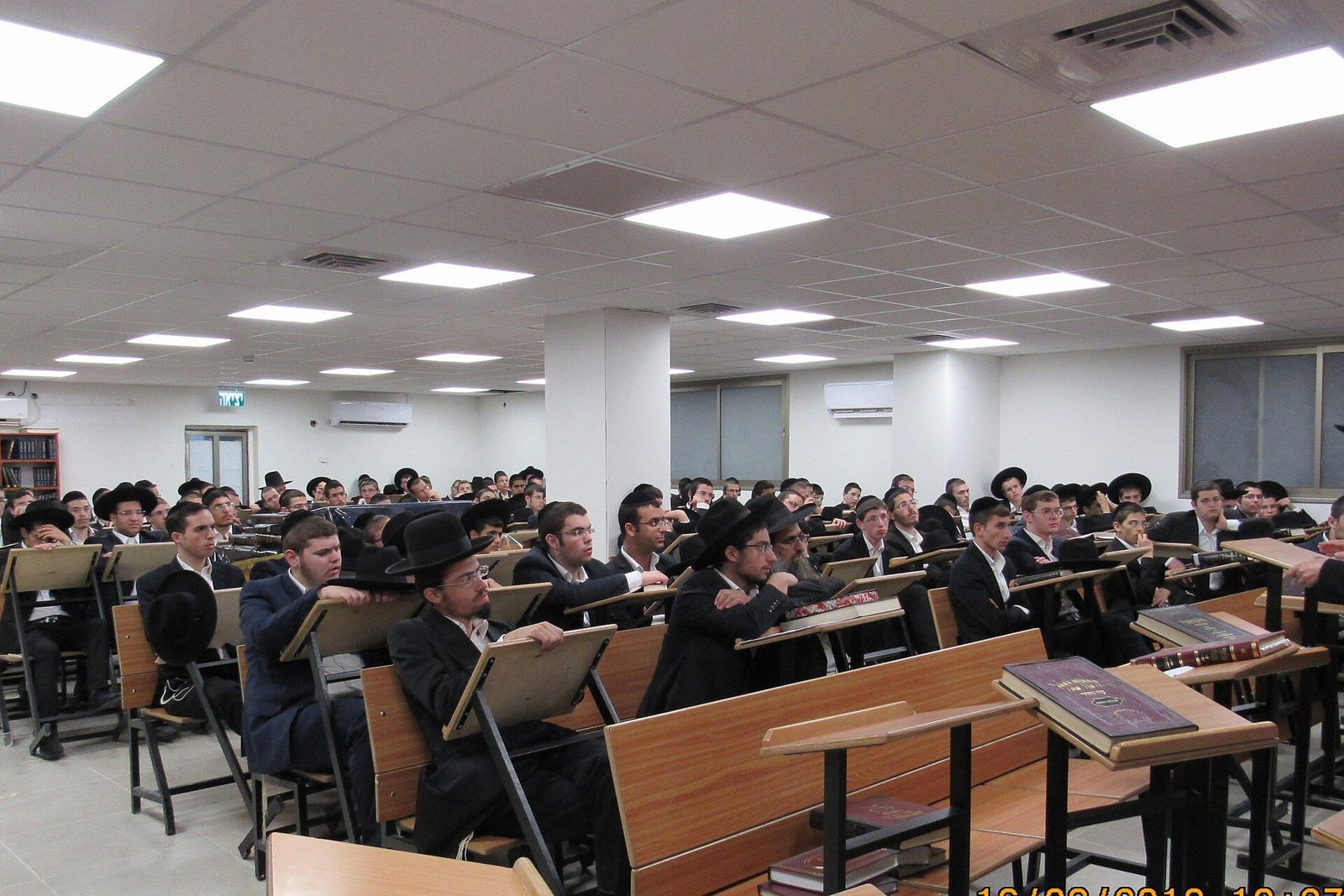
The Mishnah tells us that Rebbe Nechunya ben Hakanah used to utter a short prayer upon entering the beis midrash. Those who witnessed his custom asked about the nature of this prayer. He answered them that he prays that a mishap should not occur through him. The Gemara (Berachos 28b) elaborates that as part of this prayer, he would ask Hashem “that I should not stumble in a matter of halachah and my friends would rejoice” and “that my friends should not stumble in a matter of halachah and I would rejoice.”
We see from this Gemara how sensitive we have to be to the feelings of others. Rebbe Nechunya ben Hakanah was a great sage. Surely he did not gloat over the losing party in a Torah argument. Perhaps, though, the individual who lost the argument would be able to discern a hint of a smile on Rebbe Nechunya’s face and his feelings would thereby be hurt. Rebbe Nechunya therefore prayed that his friends not err and that he not rejoice at correcting them.
Regarding this incident, Rav Elyashiv, zt’l, remarked that if even the saintly Rebbe Nechunya felt the need to daven to be saved from belittling another individual, how much more so do we need to pray for Divine assistance in not hurting another’s feelings. Indeed, this prayer is codified in Shulchan Aruch. We have to remember that even when engaged in Torah discussions, we must make sure not to belittle our opponent.
Rebbe Nechunya ben Hakanah also davened that he should not stumble and his friends rejoice over that. The simple understanding is that Rebbe Nechunya wanted to be spared the same degradation that he himself was so careful not to bring upon his friends. However, Rashi seems to understand that Rebbe Nechunya would not have prayed just so that he would be spared the shame himself. Rather, he was concerned that others who rejoiced over his error would be punished, and he did not want to be the cause of their suffering. He therefore prayed that he be spared from error so that he would not unintentionally bring about the punishment and suffering of others.
Typically, the Chasam Sofer and the Maharsha do not disagree with Rashi, a Rishon, who lived many years before them. However, in matters of aggadah, such as is being discussed here, they frequently do offer their own opinions.
The Chasam Sofer does not agree with Rashi’s explanation. He finds it difficult to fathom that Rebbe Nechunya and his friends would in any way rejoice over each other’s errors. Therefore, he understands it to mean that friends rejoice when they are able to help their fellow scholars. If Rebbe Nechunya ben Hakanah would err, his friends would not at all be happy with that, yet they would rejoice in being able to enlighten him. Likewise, he would rejoice at helping his friends see the truth. Yet he prayed that he and his friends not err in the first place, so that there would be no need for them to correct each other.
The Maharsha understands the rejoicing referenced in Rebbe Nechunya’s prayer completely differently than Rashi. The Maharsha understands that Rebbe Nechunya was praying that his friends not err, and therefore he would rejoice at their success in Torah learning. Likewise, he prayed that he not err, and therefore his friends would rejoice at his success.
Why did Rashi reject these last two interpretations and understand that there was a real concern that even the friends of Rebbe Nechunya might rejoice to some extent at his error? Perhaps his indication was from a recent passage in Bava Kamma (88b) that relates the following occurrence.
Rav Chisda offered his own novel interpretation in the beis midrash. In response, Rabbah proved from the words of an earlier Tanna that Rav Chisda’s interpretation was incorrect. Whereupon Rav Chisda asked Rabbah not to inform the students in the beis midrash of his error. According to Rashi, we can understand why he didn’t want the talmidim to know that he erred, as he was concerned for their welfare. He realized that some students would slightly rejoice over his error and therefore deserve Divine retribution. In fact, Rashi explicitly explains the reason that Rav Chisda directed Rabbah not to inform the students of his error: “They will be happy that a disproof was found for my opinion.” If, however, there is no concern that great sages in the times of the Talmud might on some level rejoice over his error, why didn’t he inform them that he made a mistake?
If even the great sages of the Talmud could be suspected of rejoicing over the error of others, then all the more so does this concern apply to us. Perhaps there are times when even though you can prove your disputant wrong in matters of Torah, you should quit arguing and let him believe he is right. I recall my rosh yeshiva, Rav Henoch Leibowitz, zt’l, relating how he became involved in a Torah argument with several gedolim about an understanding of a passage in the Gemara. Later, he found his position mentioned in the work of a great Acharon. A talmid asked the rosh yeshiva, “So you showed the other gedolim that you were right?” The rosh yeshiva replied that he did not, as the argument did not have any practical consequences, and he did not want to appear to be gloating.
Stories in this article (2)
Stories in this article
More about Rav Chisda
All storiesRav Huna Sends Rabbah to Learn from Rav Chisda
Rav Chisda and the Angel of Death
Avimi Goes to Learn from His Student Rav Chisda
Avimi Goes to Rav Chisda to Relearn Menachos
More stories in Bava Kamma
All in this masechtaHaman's Daughter and the Refuse
The Rogochover and the Baby Who Wouldn't Nurse
The Roman Officers Who Studied Torah
Rav Yaakov Kamenetzky and the Senate Endorsement
Questions on this article
Rabbi Avrohom Sebrow
Rebbe at Yeshiva Ateres Shimon in Far Rockaway. He leads the Daf Yomi chaburah at Eitz Chayim of Dogwood Park in West Hempstead, and writes “Delving into the Daf” each week for The Jewish Home.
About and contact