A Matter of Opinion
Rav Huna was a learned and revered talmid chochom, yet he grappled with the harsh realities of poverty, straining to support his beloved family.
Middos and Mussar
Forbidden speech: lashon hara, rechilus and embarrassing others.
Rav Huna was a learned and revered talmid chochom, yet he grappled with the harsh realities of poverty, straining to support his beloved family.
Male pattern baldness is a common experience for many men. Some individuals embrace their baldness and even display signs in their office, like “G-d created a few perfect heads.
In 1961, Edward Lorenz used a numerical computer model to rerun a weather prediction. As a shortcut on a number in the sequence, he entered the decimal .506 instead of the full .506127 the computer would hold.
An avid Mets fan used to love to talk about the Mets at every opportunity. Back in 1997, they had a pitcher named Barry Manuel. In his spring training debut for the Mets, Manuel faced three batters and walked them all…
The Gemara recounts a story where the government sent two officers to a yeshiva to study Torah. The government wanted to find out if there was anything objectionable in the Torah.
The following stories and the rulings that follow are based on the Chashukei Chemed and Pninei Halacha on Bava Kama. They are not intended to be relied on for practical halacha. 1. Shimshon had a venomous snake as a pet.
Unfortunately, there was recently a restaurant that was found to be serving treif under the guise of kosher. Rav Moshe, zt”l, ruled that if an individual had a halachic basis to believe a restaurant was kosher and it…
The survival of the donkey would be too great a blow to Bilam’s dignity. The Gemara is replete with examples of the sensitivity we must have even to individuals who may have sinned.
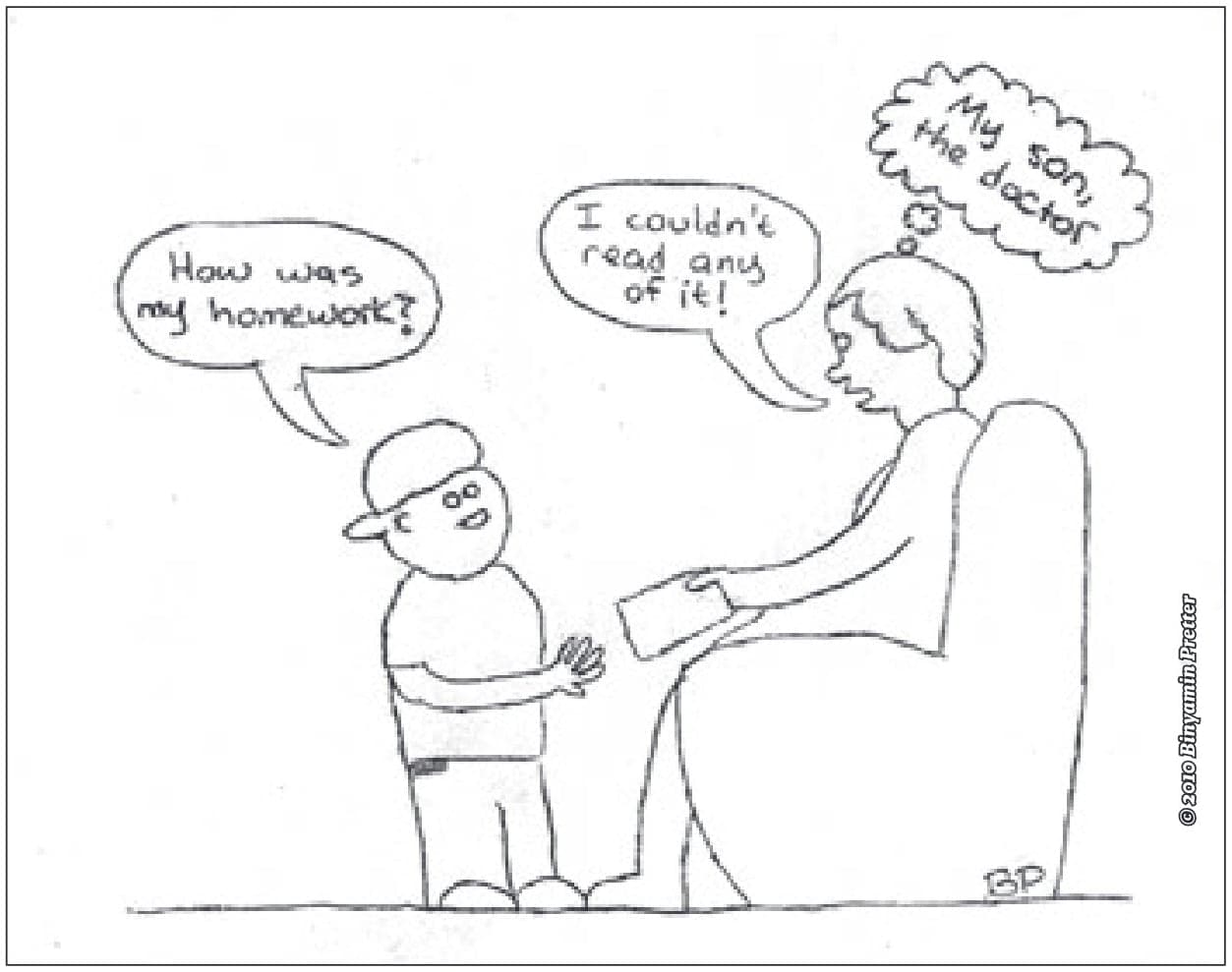
Doctors are notorious for having messy handwriting. Could it be that the same gene that propels doctors to choose their career choice also causes them to have poor penmanship? It seems the solution is a lot more mundane.
The Gemara (Pesachim 87b) records a conversation that Hashem had with Hoshea HaNavi that is not mentioned at all in Tanach. Tosfos and Rashi both explain, however, how this conversation is alluded to in the verses.
The Mishnah tells us that Rebbe Nechunya ben Hakanah used to utter a short prayer upon entering the beis midrash. Those who witnessed his custom asked about the nature of this prayer.
I recall a conversation I once heard when I was a resident of a dormitory. One fellow tossed a wrapper onto the floor, whereupon his friend chastised him about the unsanitary conditions of his room.
Shimon ben Azai declared that he found a scroll in Jerusalem that contained a historical fact not otherwise recorded in the Prophets.
Rabbi Chiya’s father had a son, Aivu, from a previous marriage of his. Rabbi Chiya’s mother had a daughter, Ima, from a previous marriage of hers.
The Gemara relates (Yoma 66b) that a wise woman asked Rebbe Eliezer: Since all the people that worshipped the Golden Calf committed a serious sin, why do we find that they received different punishments?
Yehonasan sends Dovid off without food, Achimelech feeds him in Nov, and Doeg's slander leads Shaul to wipe out the city of kohanim.
Rebbe's son names the scribe of a badly dated document and a beautifully written Tehillim, and twice Rebbe tells him to stop speaking lashon hara.
Bilam's donkey sees an angel, stops and speaks to rebuke him, then dies at once, so that wicked Bilam would be spared the shame of a living reminder.
A driver slams the car door on Rav Moshe Feinstein's fingers. In great pain, Rav Moshe says nothing, so as not to embarrass the man who kindly drove him.
A man tells the amora Levi that someone was "kava" him. Levi asks the beis midrash what it means, and learns the man was robbed but didn't want to shame the thief.
Achimelech feeds the fleeing Dovid, Doeg informs, and Shaul wipes out the city of Nov. Hashem then holds Dovid accountable and offers him a choice of punishments.
Fleeing King Menashe, Yeshayahu is swallowed by a cedar tree; Menashe has it sawn apart, and the prophet dies as the blade reaches his mouth.
On Purim a tipsy bachur in Radin asks the Chofetz Chaim for a share in his Gan Eden, and is offered it on one condition: never speak or hear lashon hara.