It’s Never Too Late
My Rosh HaYeshiva, zt”l, would often quote a powerful Gemara in Menachos, sharing it in a way that left a lasting impression. The following is a partial paraphrase based on various commentaries.
Middos and Mussar
Repentance: its power, its steps and the stories of those who returned.
My Rosh HaYeshiva, zt”l, would often quote a powerful Gemara in Menachos, sharing it in a way that left a lasting impression. The following is a partial paraphrase based on various commentaries.
It is customary to slice the challah on Shabbos before reciting Ha’motzi. The source of this halacha comes from a wicked king. Discussing the origins of this halacha never grows stale.
Is the correct number three, as stated in the Gemara in Sanhedrin, or four, as stated in the Midrash? The Chofetz Chaim suggests that neither is entirely accurate.
There is an interesting custom that many people observe: to add the words “V’kapparas pesha” to the Mussaf prayer on Rosh Chodesh during a leap year.
Chur occupies a significant role in the Chumash. During the war with Amalek, he, along with his uncle Aharon HaKohen, helped hold up Moshe Rabbeinu’s hands, which inspired the B’nei Yisrael to pray.
When Moshe Rabbeinu wanted to dissuade the populace from joining Korach, he made the following profound proclamation: “If these men die a natural death, that means G-d did not send me.
An intense debate erupted in the Beis Medrash. According to the Gemara, the debate spanned at least three decades (Bava Kama 67b). The debate was so long that there were three different Roshei Yeshiva during this time.
This time of year is designated for teshuva. We really should be paralyzed with fear because of the impending judgment. Yet, there is a contradiction. On Rosh Hashana, we enjoy festive meals.
The Shulchan Aruch (O.C. 531:1) writes that there is a mitzvah to get a haircut on erev yom tov. The Pri Megadim is unsure if the mitzvah is that one should ensure his hair looks its best in honor of yom tov, or perhaps…
Yom Kippur and Purim may seem like two very different holidays, but there is actually a deep connection between them. Yom Kippur, the Day of Atonement, is a solemn occasion on which we fast and seek forgiveness for our…
It says in the Torah, “You shall love your neighbor as yourself.” The Talmud (Kesubos 37b) has a very peculiar application of this verse. The Talmud discusses the proper manner of a court-mandated execution.
A scholar was relating a ruling about converts. To buttress his position, he declared that Rebbe Akiva issued a ruling about this very issue.
The story is related that a Jew, who had only five rubles to his name, was in dire need of a large sum of money for his daughter’s upcoming marriage. He went to his Rebbe for advice.
Now that Chanukah is over, we turn our attention to the somber day of Asarah B’Teves, a community-wide fast. Nevuchadnezar laid siege to Jerusalem on the tenth of Teves.
Every Yom Kippur, Jews all over the world recite Viduy, the confession. Some of the sins listed may be familiar to the person reciting them, and those certainly deserve mention.
The Ancient Greek culture was focused on the human body. Someone remarked that on Chanukah we eat latkes and doughnuts fried in oil to ensure that our bodies do not become worthy of worship!
Rebbe Abba says that on Shabbos, one is obligated to recite ha’motzi on two loaves of bread (Shabbos 117b). This is to commemorate the double portion of manna that fell on Friday.
The last perek in Sanhedrin (95a) discusses the tragic story of the destruction of the city of Nov and its kohanim. Shaul HaMelech considered Dovid HaMelech to be a traitor and therefore deserving of the death penalty.
Some people go all out trying to find every last siman listed in the Machzor. One year my wife told me to purchase black-eyed peas. My local supermarket was sold out of the raw beans, but I found the canned ones.
There are some perplexing questions on the Megillah which perhaps may be explained by putting together various passages of Gemara. (1) Why did Esther invite Haman to the party with Achashveirosh?
Rav Yosef Weissmandl took his son Rav Chaim Michoel Dov (Michoel Ber) Weissmandl (1903–1957) to receive a berachah from Rav Yosef Tzvi Dushinsky (1867–1948). Rav Michoel Dov was just a young boy of 11 at the time.
There are well-known stories found in the Gemara that made it to the storybooks. Yet there are stories that are equally important but haven’t been publicized simply because they are not suitable for all audiences.
Rav Yitzchak Zilberstein discusses an interesting incident in his sefer Chashukei Chemed on Yoma (86b). There was an apartment building in Eretz Yisrael with 16 units. Quite possibly, the building lacked an elevator.
Rav Sholom Schwadron, zt’l, would point out that we have absolutely no concept of how serious a sin is. As proof, he would point to the following passage of Gemara in Nazir 23a: “It is taught in a Beraisa: ‘Her husband…
Shimon ben Azai declared that he found a scroll in Jerusalem that contained a historical fact not otherwise recorded in the Prophets.
“Then you shall again discern between the righteous and the wicked, between one who serves G-d and one who does not serve Him” (Malachi 3:18).
Little Johnny watched, fascinated, as his mother sprayed furniture polish on her old dining-room table. “Why do you do that, Mommy?” he asked.
My rosh hayeshiva, zt’l, would often quote the following Gemara in Menachos (a partial paraphrase based on various commentaries): Rebbe Yitzchak said, “At the time when the Beis HaMikdash was destroyed, Hashem found…
A bandit chief leaps into the river beside Rabbi Yochanan, who promises him his beautiful sister if he repents. The bandit becomes the great Reish Lakish.
Rav Chiya bar Ashi's wife disguises herself to test him, and he sins with her unknowingly. Learning the truth, he still fasts in anguish for the rest of his life.
Overcome by desire for a captive woman in his attic, Rav Amram Chasida climbs a heavy ladder, then stops halfway and shouts "Fire!" to bring the rabbis running.
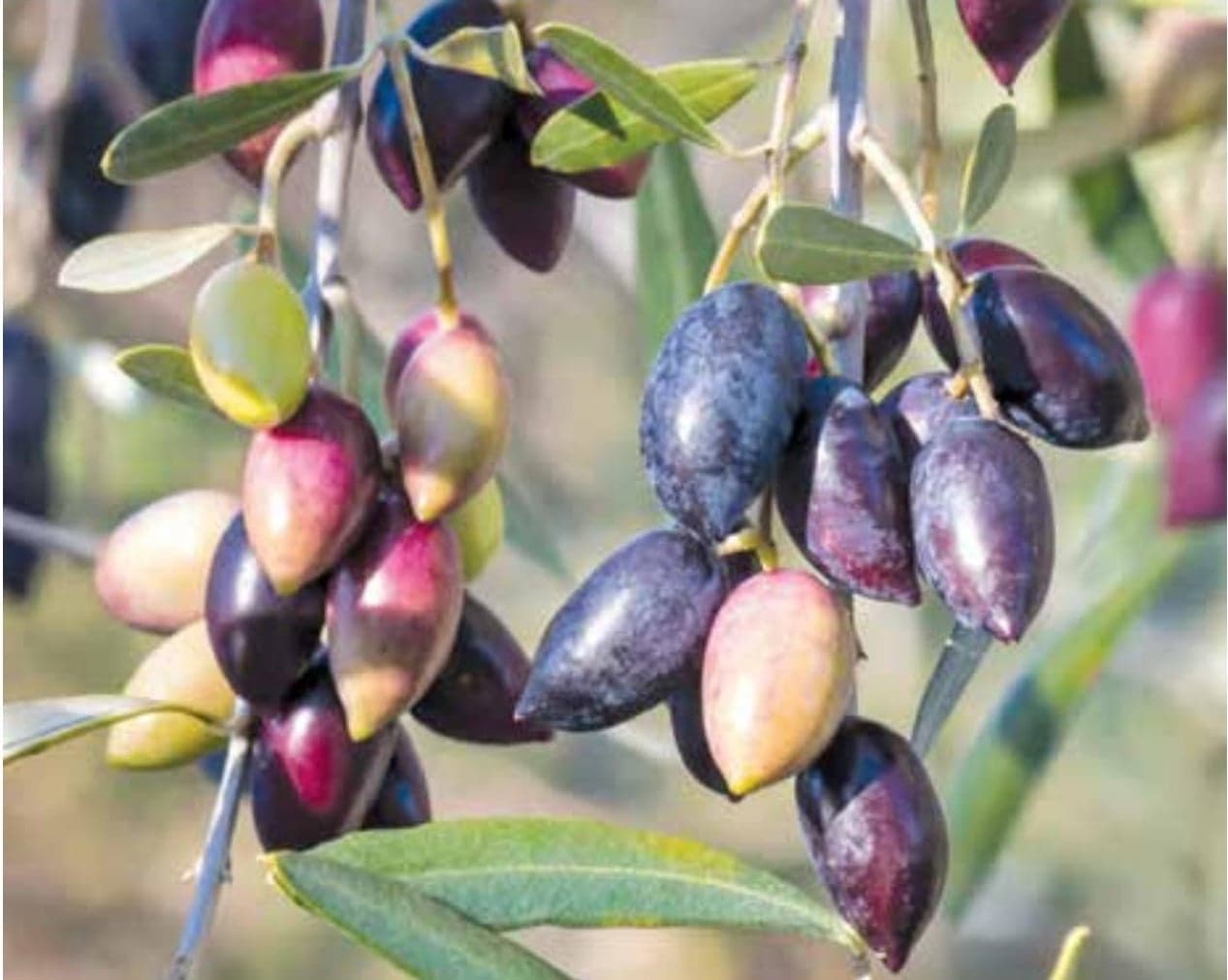
When the Beis HaMikdash is destroyed, Avraham Avinu argues with Hashem for his exiled children and is told Klal Yisrael is like an olive tree that will yet bear fruit.
Seeing Chur lying dead, Aharon reasons that if the people kill him too they will never be forgiven, so he lets them make the Golden Calf instead.
Chur stands up to the people at the Golden Calf and is killed. Aharon HaKohen, fearing they would add a second murder, chooses to take part instead.
After his father Achaz's idolatry, King Chizkiyahu leads a teshuvah movement and adds Adar Sheini so the people can purify themselves for the Korban Pesach.
Yeshayahu tells the gravely ill Chizkiyahu he will die for not having children; Chizkiyahu prays anyway, gains fifteen years, and the sun goes back ten hours.
After Rav Ashi calls the wicked kings "our friends," King Menashe appears in his dream, stumps him on where to cut the bread, and explains his idolatry.
After Rachel's death Reuven moves Yaakov's bed. Hearing Yehudah publicly admit his error, Reuven too publicly confesses, sparing his brothers suspicion.
Each Tishah B'Av in the desert, the generation of the spies slept in graves; in the 40th year they awoke alive and, by Tu B'Av, knew the decree had ended.
Sent by the Romans to loot the Beis HaMikdash, Yosef Meshisa brings out the Menorah, then refuses to go back in and dies al kiddush Hashem.