Minutes Till Minchah
The very first paragraph in Shulchan Aruch expounding the laws of Minchah raises the following question: “What if there is barely any time left for Minchah?” How appropriate!
Tefillah and Berachos
Prayer in the Gemara: Shemoneh Esrei, Minchah, kavanah and davening with a minyan.
The very first paragraph in Shulchan Aruch expounding the laws of Minchah raises the following question: “What if there is barely any time left for Minchah?” How appropriate!
The Shulchan Aruch (Orach Chaim 98:4) writes that tefillah, specifically the Shemoneh Esrei, is comparable to the offering of a korban. “Prayer stands in place of the sacrifice.
With many people traveling for Sukkos and the winter season, it’s appropriate to review some of the halachos of davening on a plane. Those learning the Daf may not realize how this discussion stems directly from our…
Some people go to great lengths to find every siman listed in the machzor. One year, my wife asked me to buy black-eyed peas. The supermarket was sold out of the raw beans, but I managed to find canned ones.
It’s been quipped that if a non-Jew ever grasped the joy a Jew feels upon skipping Tachanun, he’d convert on the spot. While exaggerated, the joke touches on a subtle truth in Jewish life: the unexpected “elation”…
Is the correct number three, as stated in the Gemara in Sanhedrin, or four, as stated in the Midrash? The Chofetz Chaim suggests that neither is entirely accurate.
There is an interesting custom that many people observe: to add the words “V’kapparas pesha” to the Mussaf prayer on Rosh Chodesh during a leap year.
What is the mysterious creature known as a Rechesh? At first glance, one might wonder how this relates to Bava Basra. However, Rav uses this enigmatic creature to clarify his position (152b).
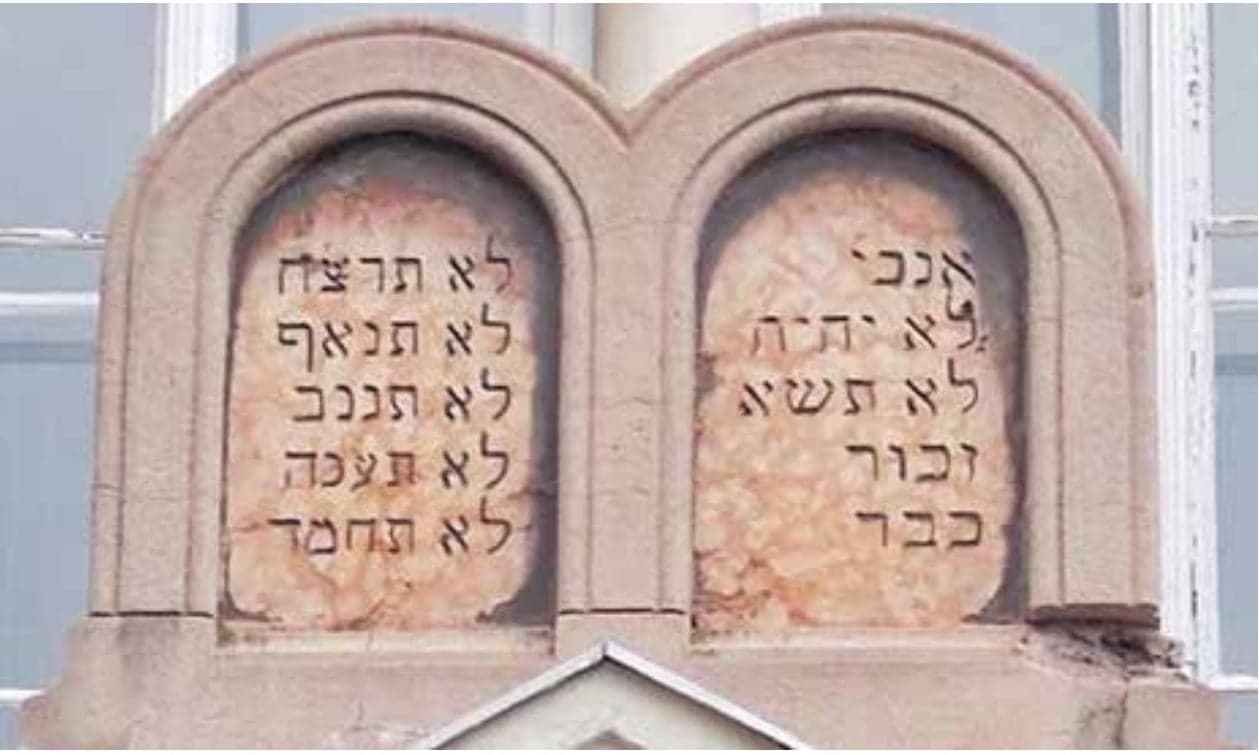
In July 2001, Chief Justice Roy Moore of the Alabama Supreme Court had a massive granite monument – it weighed more than two tons – of the Ten Commandments placed in the Alabama state judicial building.
Yosef, the son of Rebbe Yehoshua, was sick and temporarily expired (Bava Basra 10b). During that brief lapse, he was given a glimpse of the World to Come.
Some things just never change. When someone joins a weight loss group, some people ask, “Can’t you just diet by yourself?” When someone sees a nutritionist, some people ask, “Can’t you just eat healthy?” The presumption…
A shepherd deserts his flock for a quick break. While he is gone, a wolf eats one of the sheep. To determine if the shepherd is liable, we evaluate whether the shepherd could have fought off the wolf had he been there.
There is a machlokes Rishonim whether the mitzvah of bikur cholim is m’d’oraysa or m’d’rabbanan. It is based on the understanding of a passage in Bava Metzia (30b).
The Gemara in Bava Kama (92) says that whoever davens for his friend and he needs that same relief, he will be answered first. Does this mechanism work even though one knows that he will be answered first?
Kimby wandered the streets of Ladispoli, Italy, in early November. It was evening, and few people were around. Kimby didn’t get into any trouble. It was a good thing too, since Kimby was an escaped circus lion.
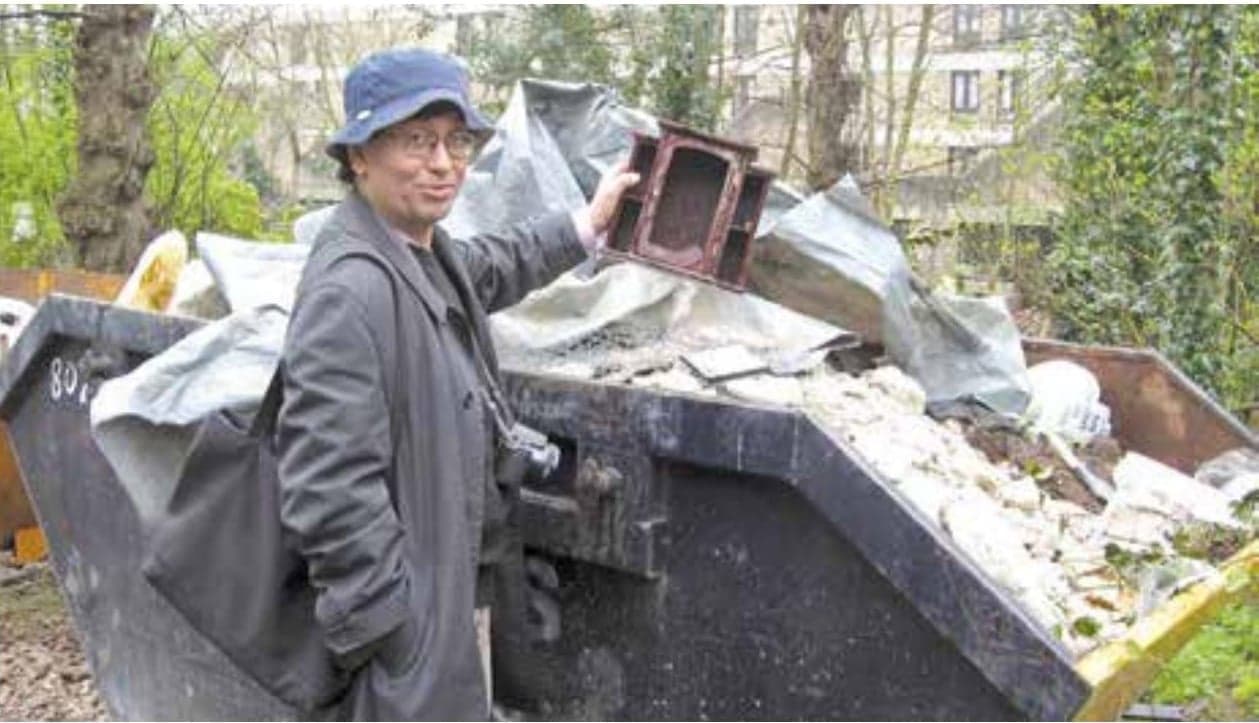
“Dumpster diving” is the practice of sifting through commercial or residential trash to find items that have been discarded by their owners but which may be useful to the dumpster diver.
There are many complex halachos about interrupting one’s prayers for various responses. At some points in davening, it is forbidden to respond, “Boruch Hu u’baruch Shmo.” At other points, one cannot even respond amein.
Every once in a while, one reads an article that is life-changing. There may be a halacha article that raises important points the reader was not aware of.
Rabbi Shragga Kallus delivered an enthralling and engaging lecture filled with Torah riddles. One such riddle was: “What are two scenarios where a person would answer ‘amein’ in the middle of his private Shemoneh…
The Gemara in Nedarim expounds the earliest recorded example of hataras nedarim. Hashem told Moshe Rabbeinu that it was safe for him to return to Egypt “because the men who seek your life have died.” The Gemara explains…
One time, when all of Bnei Yisrael came up on pilgrimage (oleh regel) to Jerusalem, there was no water available for drinking. Nakdimon ben Gurion approached a certain lord and said to him: “Loan me 12 wells of water…
One fine erev Shabbos, Rebbe Yannai was anxiously waiting for a gift of fruit to arrive. Every erev Shabbos without fail, an employee who worked in his field would dutifully bring a gift of fruit to show his…
The Mishna in Yevamos (49a) tells of a mysterious scroll found in Yerushalayim. The Gemara proceeds to enumerate the contents of the parchment.
Klal Yisrael is in a deep state of mourning for the Sar HaTorah, HaGaon HaRav Chaim Kanievsky, zt”l. HaRav Binyomin Forst, shlit”a, remarked that we are no longer living in the same world.
After Shacharis in shul, some have the custom to put out “tikkun”: liquor, herring, and cake for breakfast, in memory of a loved one. It is always fascinating to watch people drinking a l’chaim on an empty stomach.
The Gemara in Brachos (18b) records a particularly interesting incident. A pious man gave a poor man a dinar on Erev Rosh Hashana during years of famine.
A travel company is currently running a marketing campaign with “Captain Obvious” as their spokesman. He utters such phrases as “My enemy’s enemy is my enemy’s enemy.” A researcher was trying to uncover the origins of…
Rav Nachum Bar Papa is mentioned in Yoma (67a) on a daf that was recently learned by Daf Yomi participants. What he was quoted as saying is certainly important. Yet, some commentators chose to focus on the name itself.
The Mishna in Yoma (28a) tells of a story that once in the Beis Hamikdash they assumed that it was already considered halachicly daytime. Therefore, they slaughtered the animal designated for the Korban Tamid.
Everyone knows how hard it is to wake up in the morning. One Siyum HaShas video in fact focused on the coffee served at the Daf. Many Daf Yomi shiurim take place early in the morning, and coffee provides a welcome boost.
I once had the “opportunity” to ride on a bus together with a large group of seventh-graders. There was an announcement that the recital of Tefillas HaDerech was imminent.
Years ago, a Litvishe individual was on his way to Camp Sternberg, a girls’ camp in Narrowsburg, New York. Although there were married men on campus, it was always difficult to find ten men for the minyanim.
A vexing question that plagues many is how to choose a shul. Some say that the most important aspect of a shul is available parking. After all, if you can’t park there, how can you daven there?
This week, daf yomi participants are beginning the perek of Gemara titled Eizeh Mekoman (Zevachim 47a), which starts out discussing the proper place for various sacrifices to be brought.
Our Gemara discusses the laws of avodah in the Beis HaMikdash. Avodah performed by kohanim while sitting is invalid (Zevachim 23b). It is viewed as if a non-kohen performed the avodah.
The floor of the Beis HaMikdash was composed of beautiful tiles. The Gemara discusses the halachah if one of the tiles became dislodged. May the kohen stand on the wobbly tile and perform the avodah?
There is a clear halachah in Shulchan Aruch (230:1) that a prayer on the past is a wasted prayer. The two examples offered are based on a Mishnah and Gemara in Berachos.
Some people go all out trying to find every last siman listed in the Machzor. One year my wife told me to purchase black-eyed peas. My local supermarket was sold out of the raw beans, but I found the canned ones.
Rabbi Shlomo Kluger, zt’l, was the chief dayan in Brody, Galicia. One Shabbos, someone rode into town with an urgent message for the first Belzer Rebbe, Rav Shalom Rokeach, zt’l.
The Gemara (Pesachim 87b) records a conversation that Hashem had with Hoshea HaNavi that is not mentioned at all in Tanach. Tosfos and Rashi both explain, however, how this conversation is alluded to in the verses.
Some things just never change. When someone joins a weight-loss group, some people ask, “Can’t you just diet by yourself?” When someone sees a nutritionist, some people ask, “Can’t you just eat healthy?” The presumption…
The Gemara has a fascinating discussion about miracles happening to ordinary individuals. A shepherd deserts his flock for a quick break. While he is gone, a wolf eats one of the sheep.
The Mishnah tells us that Rebbe Nechunya ben Hakanah used to utter a short prayer upon entering the beis midrash. Those who witnessed his custom asked about the nature of this prayer.
The story is told that someone approached the Chasam Sofer with a dilemma. This man had a Torah scroll in his possession, but he was unsure if the scribe who wrote it was Jewish, or if perhaps it was written by a…
One of the reasons we have a Purim seudah is to commemorate the parties that Esther made, to which she invited Achashverosh and Haman.
In Parashas Korach, Moshe Rabbeinu announced that the events that were about to unfold would establish clearly whether or not Korach was right in his challenge.
I once had the “opportunity” to ride on a bus together with a large group of seventh-graders. There was an announcement that the recital of תפילת הדרך was imminent.
The Gemara (Pesachim 87b) offers numerous explanations as to why Hashem chose Bavel as the destination for the exile. One such explanation is that the language spoken in Bavel, Aramaic, was most similar to Hebrew.
With the thousands of El Al tickets recently sold, it’s appropriate to discuss some of the halachos of davening on a plane. Although the Gemara doesn’t mention traveling on a plane per se, it does discuss the next best…
The topic of Tefillas HaDerech really comes up later in Maseches Berachos, but I found a way to sneak it in this week. There are many questions surrounding the recital of Tefillas HaDerech.
Rebbe Yochanan says that a person should not deviate from his own trade or the trade of his fathers (Arachin 16b). The Gemara often offers Torah-based advice regarding how one should conduct himself in his affairs.
[Note: The following is based on a lecture delivered by the author’s father, Rabbi Yaakov Sebrow, shlita, at Chavurat Yisrael.] A pasuk in Bereishis (2:5) says, “Now any tree of the field was not yet on the earth and…
There are certain minhagim that men should keep in their back pocket. One such example is the mitzvah of tasting Shabbos food on Friday.
When we use the term half we don’t always refer to 50%. When someone is called a half-wit that doesn’t mean he has half of the intelligence of a regular human.
When Hoshea suggests that Hashem exchange Klal Yisrael for another nation, Hashem rebukes him: a father never trades his children. Hoshea then prays for them.
A rosh yeshiva helps JEP's Rabbi Dovid Shenker win a bequest, and gift after gift to his own yeshiva arrives first, matching JEP's money almost to the dollar.
A tired traveler prays for a donkey, and a Roman makes him carry a newborn foal. He regrets not praying for a donkey to ride on.
Eliyahu tells Rebbe that Rabbi Chiya and his sons could bring Moshiach. Their prayers bring wind and rain, but a fiery bear stops them before “Mechayeh Meisim.”
Rabbi Yochanan sees a widow davening in his neighborhood and asks why she doesn't use the shul near her home. She answers that there is reward for the extra steps.
A grieving widow asks Rav Aryeh Levin if all her tears and Tehillim for her husband were wasted. His answer turns her tears of sorrow into tears of hope.
His students ask Rabbi Shimon bar Yochai why the manna fell every day instead of once a year, and he answers with a parable of a king and his only son.
Nakdimon ben Gurion borrows twelve wells of water for the pilgrims, and when the lender demands payment, his prayers bring rain and then make the sun break through.
King Menashe charges his grandfather Yeshayahu HaNavi with contradicting the Torah about when to pray; Yeshayahu flees, and the Gemara gives the answer.
Rabban Shimon ben Gamliel's son, chosen as chazzan for his fine voice, stops before the Rosh Chodesh verses of Mussaf on Rosh Hashanah, and explains why.
Yeshayahu tells the gravely ill Chizkiyahu he will die for not having children; Chizkiyahu prays anyway, gains fifteen years, and the sun goes back ten hours.
Kalev goes alone to Chevron to pray he will be saved from the spies’ plot, stands firm against the crowd, and is rewarded with Chevron as his inheritance.
Yeshaya HaNavi tells the dying Chizkiya he is punished for not marrying. Chizkiya prays despite the decree, gains fifteen years and marries Yeshaya's daughter.
A man tells the Chofetz Chaim his mind wanders in Shemoneh Esrei. The Chofetz Chaim answers with a parable: grab what you can, like the apple seller.
A widow walks past her local shul to daven in Rabbi Yochanan's beis midrash. When he asks why, she answers: is there not reward for each step?
A fundraiser needs a shidduch for his son, and Rav Chaim Kanievsky sends him to daven for a donor's daughter. Both children are soon engaged, just as Rav Chaim promised.