Fair and Square
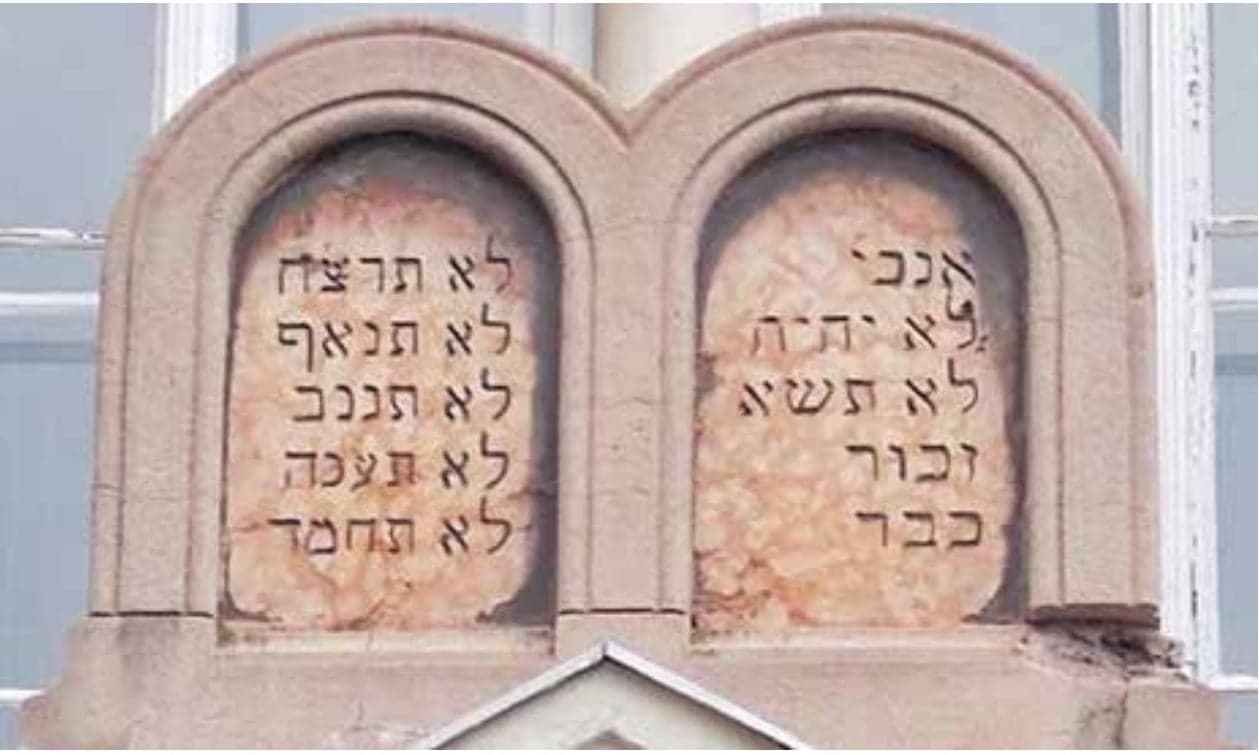
In July 2001, Chief Justice Roy Moore of the Alabama Supreme Court had a massive granite monument – it weighed more than two tons – of the Ten Commandments placed in the Alabama state judicial building. Lawsuits were subsequently filed, claiming that the public display violated the U.S. Constitution’s principle of separation of religion and government. Many religious groups argued that the public display was legal. Two years after the installation, U.S. District Judge Myron Thompson ordered the monument removed.
Lehavdil, years before that incident, a more serious question was raised. Are there any halachic impediments to the public display of the Aseres HaDibros in a shul? And, incidentally, what is the true shape of the Luchos?
One can question whether displaying the Aseres HaDibros at all is appropriate. The Shulchan Aruch, in the very first siman, states that one should recite the Aseres HaDibros daily. The Mishnah Berurah says that this serves as a daily reminder of Ma’amad Har Sinai, which is a cornerstone of our faith. Nonetheless, the Rema writes that the Aseres HaDibros should only be recited privately. A public recital might lead someone to erroneously assume that the Torah comprises only the Ten Commandments. Further, the Mishnah Berurah cautions against commissioning an Aseres HaDibros display for a shul. The reasoning is the same; no one should walk away with the notion that there are only ten mitzvos in the Torah.