Are Pets Muktzeh?
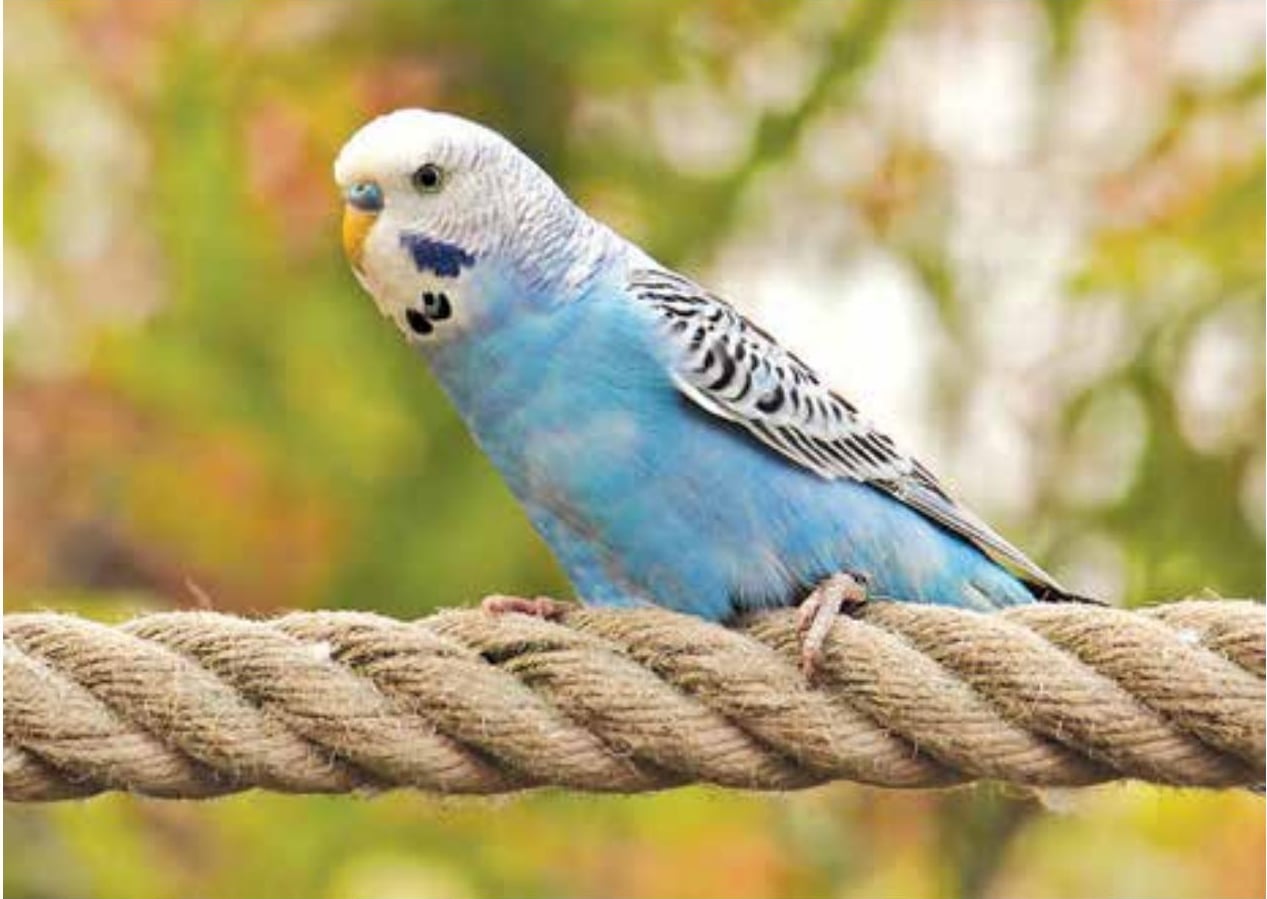
While the Daf continues plowing through Bava Metzia, many monetary topics are studied. Interestingly enough, someone once asked Rav Yaakov Hagiz (1620-1674) a question about whether a singing bird was muktzeh. He answered based on a recently studied daf. For those who don’t know the connection, this is quite a riddle. The Gemara never mentioned Shabbos, let alone muktzeh.
The Daf spent this week learning about kinyan sudar, alternatively referred to as kinyan chalipin. This is the go-to kinyan for religious purposes. At a wedding, the officiating rabbi makes a kinyan chalipin with the groom, on behalf of the bride. When the rRabbi hands his pen over to the groom, the groom takes the pen and thereby becomes responsible for everything he agreed to in the kesuba. The bride’s agent is in essence trading the pen for financial support. Similarly, when someone goes to a rav to sell chametz, he performs a kinyan chalipin with ther. The rabbi hands the congregant his pen, and the congregant transfers the authority to sell his chametz to the rabbi.
There is some discussion as to what item can be used for chalipin. In the times of the Gemara, it seems as if a handkerchief, a sudar, was the standard item. Nowadays, a pen is often used. The object for chalipin can be anything, as long as it is a utensil or functional item. The rabbi officiating at the chosson’s tisch may not take a bunch of grapes and hand them to the chosson. Grapes are not utensils, therefore, they may not be used. What would happen if someone had just borrowed the rabbi’s pen at the chosson’s tisch? The rRabbi needs to make a kinyan with the chosson, so that the chosson will be obligated in the kesubah obligations. The rabbi looks around and sees that for some reason his cow is nearby. Can the rabbi give the cow to the chosson to effectuate a kinyan chalipin? One would have assumed that he could not. A living creature is not a utensil. However, Tosfos (Bava Metzia 46b) says that he may! Tosfos reasons that a cow and donkey are indeed considered functional utensils because they have designated uses. They are used for plowing, pulling, threshing, etc.
Rav Yaakov Hagiz, who hailed from Morocco, cites this Tosfos as proof that a singing bird is not muktzeh. One would have assumed that all animals are muktzeh machmas gufo. They are not considered utensils, and even if they have a permitted use, they can’t be moved. This is similar to a rock that is muktzeh. Even though one may use a rock as a paperweight during the week, one cannot pick up a rock from his garden on Shabbos. However, now that Tosfos teaches us that animals are considered utensils, we can conclude that a singing bird is not muktzeh. A cow would still be muktzeh since its primary use is forbidden Shabbos labor. However, a singing bird’s primary use is permitted on Shabbos. Therefore, Rav Yaakov Hagiz (Hilchos Ketanos) concluded in a very brief teshuva that a singing bird is a keli shemilachto l’heter and is not muktzeh.
What is somewhat surprising is that Rav Yaakov Hagiz made no mention of the seemingly related machlokes Rishonim cited in Tosfos in Mesechta Shabbos (45a). There, Rabbeinu Yosef rules that a live chick is not muktzeh because it can be played with. Tosfos and the Rosh disagree. Indeed, the Rosh says that if we follow Rabbeinu Yosef’s psak to its logical conclusion, no rock found in a garden would ever be muktzeh because one could always find a permitted usage for it. Rav Yaakov Hagiz, while citing Tosfos in Bava Metzia, did not mention the Tosfos in Shabbos.
There is a related controversy. In the eighth volume of the Igros Moshe (OC 5 22:21), there is a brief teshuva that rules that pets are not muktzeh. Yet upon close inspection of the teshuva, it is clear that if one read the unadulterated text, one would conclude that pets are muktzeh! However, the editors of the posthumously printed volume amended the text to explain that while animals are generally muktzeh, pets are not. This has led to very sharp criticism from various sources that the changes are unwarranted and untrue.
As an initial matter, Rav Moshe Feinstein could very well follow the ruling of Rav Yaakov Hagiz and hold that pets are not muktzeh. Still, what will Rav Hagiz and Rav Moshe do with the Tosfos in Shabbos?
Rav Moshe Feinstein himself provided the answer in his work on Gemara entitled Dibros Moshe (33:4). Rav Moshe writes that the stringent opinion in Tosfos in Shabbos is only based on the fact that the bird is not exclusively designated for permitted usage. However, if the bird was designated as a pet, even the stringent opinion in Tosfos would hold that it is not muktzeh. Indeed, this is clear from the Rosh’s comparison of a chick to a rock found in a garden. Both are undesignated for permitted Shabbos use and both are muktzeh machmas gufo. But even a rock can be designated for a permitted use, and then it would not be muktzeh! So, too, an animal can be designated as a pet and then it would not be muktzeh. Rav Shlomo Zalman, zt”l, wrote similarly that a seeing-eye dog, which is inherently designated for permitted Shabbos use, is not muktzeh. (Shulchan Shlomo 74:2)
There are other poskim that disagree and hold that pets are muktzeh. Still, Rav Moshe, zt”l, wrote himself in the Dibros Moshe that live creatures are muktzeh because they are not designated for permitted use. It would seem to logically follow that the version of Rav Moshe’s teshuva that says that pets are not muktzeh is the correct one. This is bolstered by the fact that his logic is supported by a very similar ruling of Rav Shlomo Zalman, zt”l. Finally, Rav Reuven Feinstein, shlit”a, is reported to have concurred that his father held that pets are not muktzeh. For practical guidance, one should speak to his posek or rav.
More Gemara stories
Questions on this article
Rabbi Avrohom Sebrow
Rebbe at Yeshiva Ateres Shimon in Far Rockaway. He leads the Daf Yomi chaburah at Eitz Chayim of Dogwood Park in West Hempstead, and writes “Delving into the Daf” each week for The Jewish Home.
About and contact