A Halachic Argument
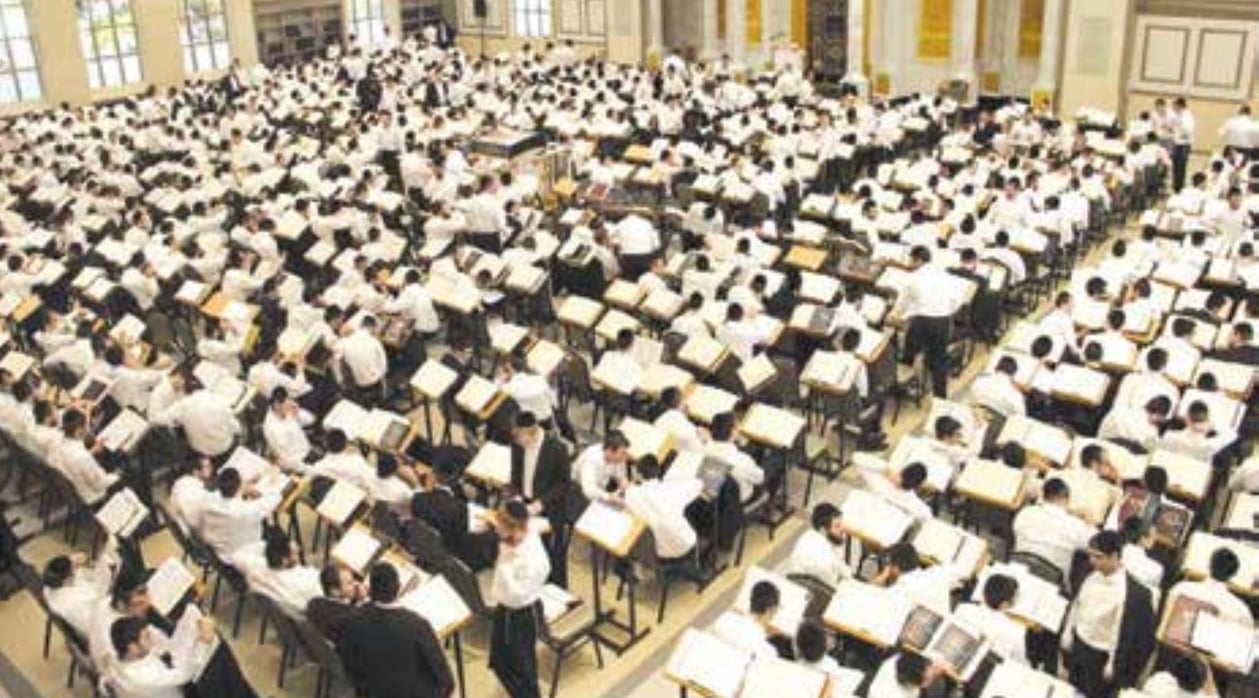
The Gemara records that there was a dispute between Rebbe Eliezer and the Sages regarding the halachic status of a certain type of oven (Bava Metzia 59b). Rebbe Eliezer brought all sorts of proofs to his opinion, but the Sages rejected them. Rebbe Eliezer then exclaimed, “If the law is as I say, may this carob tree prove it.” The carob tree was uprooted from its place a distance of 100 cubits. They said to him, “One cannot prove anything from a carob tree.”
Said Rebbe Eliezer to them, “If the law is as I say, may a canal prove it.” The water in the nearby canal began to flow backwards. Said they to him, “One cannot prove anything from a canal.”
Said he to them, “If the law is as I say, then may the walls of the house of study prove it.” The walls of the house of study began to cave in.
Rabbi Yehoshua rebuked the walls. “If Torah scholars are debating a point of Jewish law, what are your qualifications to intervene?”
The walls did not fall, in deference to Rabbi Yehoshua, nor did they straighten up, in deference to Rebbe Eliezer. They remained at a slant.
The Maharsha explains that there was actually a logical argument taking place with these supernatural occurrences. The Gemara records that a carob tree only produces fruit after seventy years. Rebbe Eliezer was in effect telling the Sages that their opinion is like the carob tree, hardly producing fruit. It is true that they are the majority and the halacha follows the majority opinion; nevertheless, the majority opinion still has to make sense. Halacha will not follow an irrational opinion, even if it is the majority one. The Sages countered that their opinion is rational, and the comparison to the carob tree is not apropos.
Rebbe Eliezer argued further that, in fact, there are many in the majority who would agree with him. However, due to their arrogance, they are not according his opinion proper deference. The water in the canal generally flows from a high elevation to a lower elevation. Here, the water in the canal began flowing upstream, to a higher place. This symbolized the arrogance he perceived in his disputants. They believed themselves to be on a higher echelon and that they did not need to properly consider his opinion. Rabbi Yehoshua responded that the canal takes a twisted and crooked path; this symbolized Rebbe Eliezer’s opinion as following twisted and crooked logic.
Rebbe Eliezer still persisted that those disputing him are simply learning Torah for the sake of arguing with others. They do not intend to learn Torah for its true sake. Therefore, they do not need a beis midrash in which to learn. Rebbe Yehoshua countered that the Sages did indeed study Torah for the sake of studying Hashem’s words. The Maharsha explains that the fact that the walls of the beis midrash remained on a angle was symbolic. In every generation, there will always be students who study Torah lishmah; yet, at the same time, there will always be those who study Torah for the wrong reasons. (Tosfos elsewhere explain that studying Torah for the sake of reward or honor, while not the highest level, is still acceptable. However, studying Torah simply for the sake of argument is wrong.)
Why was there a carob tree near the yeshiva? The Toras Chaim says it was the forerunner of the modern-day vending machine. Instead of snacking on potato chips and cookies, the talmidim would eat the carobs (similar to Rebbe Shimon bar Yochai). However, interestingly enough, there is another explanation for the carob tree being near the yeshiva.
The roshei yeshiva of the Pupa Yeshiva in Hungary wanted to expand their beis midrash. However, there was a fruit tree growing near the current wall of the beis midrash. They asked the Belzer Rebbe if it was permitted to cut down a fruit tree for a mitzvah purpose such as expanding the beis midrash. The Belzer Rebbe said that cutting down fruit trees is fraught with halachic questions. He advised them to construct the beis midrash around the tree. That is exactly what they did.
Rav Gestetner said that, based on this story, he understands a peculiar facet of the story in Bava Metzia. Why did Rebbe Eliezer refer to the carob tree with the prefix “this,” whereas regarding the canal he did not? Rav Gestetner theorizes that the same question that arose in Hungary arose in the times of Rebbe Eliezer. They wanted to build a beis midrash on land where a fruit tree was growing. They came to the same conclusion – namely, that they should build the beis midrash around the tree! Hence, Rebbe Eliezer was standing in the beis midrash and pointed to the carob tree, “this” carob tree. The carob tree wasn’t growing near the yeshiva; it was in the yeshiva!
A Five Towns yeshiva was planning to construct a building on a certain plot of land. However, there was a peach tree growing on it. They did not want to cut down a fruit tree, similar to the dilemma that the Pupa roshei yeshiva had. They decided that they would uproot the entire peach tree and find somewhere else to plant it. An employee of the yeshiva undertook the work and dug out the tree with its roots. He left the uprooted tree there, knowing he would still have to transport the tree and plant it somewhere else. However, that night, to his great relief, someone came by and stole the tree.
Stories in this article (2)
Stories in this article
More about Rabbi Eliezer
All storiesRabbi Eliezer and the Wise Woman’s Question
More stories in Bava Metzia
All in this masechtaRabbah and Rabbi Zeira at the Purim Seudah
Rav Huna Sends Rabbah to Learn from Rav Chisda
Rav Henoch Leibowitz Explains Da'as Torah
Rav Heschel and the Visit From Rabbi Yochanan
Questions on this article
Rabbi Avrohom Sebrow
Rebbe at Yeshiva Ateres Shimon in Far Rockaway. He leads the Daf Yomi chaburah at Eitz Chayim of Dogwood Park in West Hempstead, and writes “Delving into the Daf” each week for The Jewish Home.
About and contact