Pay With Pennies? Call The Coppers!
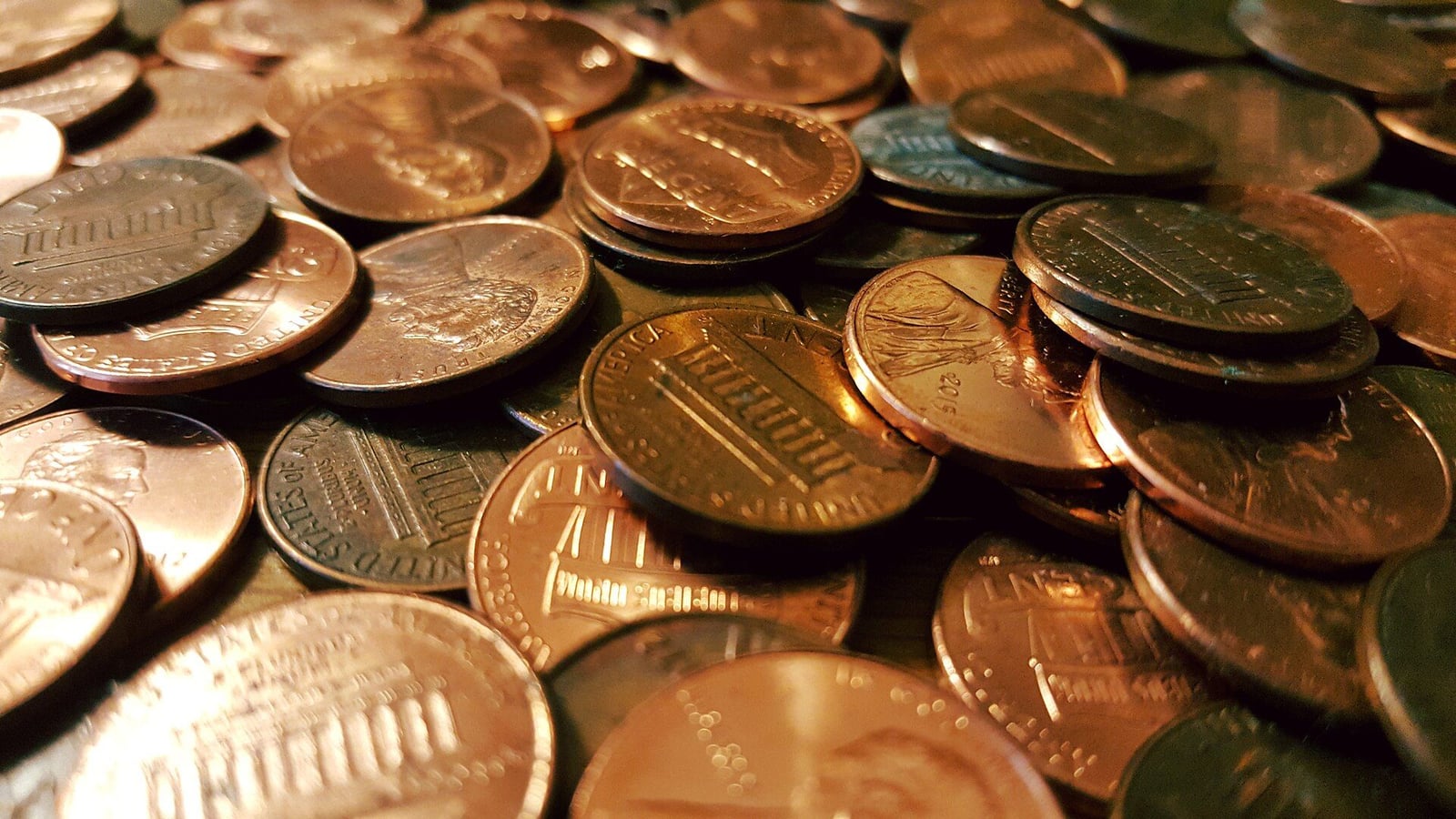
A University of Colorado student wanted to protest his high tuition. He paid his $1,400 tuition payment with 1,400 one-dollar bills. I guess that is somewhat understandable, but when you switch to pennies it gets even worse. Jason West from Utah was arrested after paying his medical bill with pennies. He disputed the bill that the clinic sent him for $25. He went in person to pay his bill and asked if they accepted cash payment. They answered that they did, and he promptly dumped 2,500 pennies on the counter. The clinic called the police and Jason was issued a summons for disorderly conduct. That ticket carries a penalty of up to $140. It was the way he dumped the pennies that got him fined.
A man was upset with the Fulton County tax office. He decided that he was going to pay his fee for renewing his license plates in pennies. Pennies come in boxes of $25 and weigh about 15 pounds. He found a bank willing to supply him with the requisite pennies, and they told him that he was the only person to make a withdrawal using a hand truck! The license fee was $167. He boxed up 15,000 pennies and included a check for the remaining $17. He mailed his pennies to the tax office, which was only a block away. The shipping charge came to $16. The office accepted the payment without comment. Did they legally have to accept the payment? Halachically, does someone have to accept payment in pennies?
The Gemara relates a story about Chanan Bisha (Bechoros 50b), “Chanan the Bad.” He hit a fellow on his ear. (Some Rishonim have other interpretations of what exactly he did.) Apparently, it’s embarrassing to be hit publicly on the ear. The sages determined that the restitution due for that embarrassment is half a zuz. They therefore ruled that he had to pay his victim that amount. Chanan Bisha only had a full zuz, with its impression almost obliterated. Chanan Bisha hit the hapless victim again and then paid him the full zuz!
What is the significance of the fact that he had a zuz with its impression worn out? Why did the Gemara note that fact? The Rashba explains that when Chanan offered it as payment to his victim, he wanted change of half a zuz. However, the victim didn’t want to be stuck with a coin that is not universally accepted and also give up a perfectly good half a zuz. However, when Chanan hit him again, the amount owed was a full zuz. At this point, the victim could not refuse payment. While it was true that the coin would not be accepted everywhere, it would still be valid in some locations. The Rashba concludes from here that when someone is being paid for damages, he may not refuse coins that are somewhat valid. The Gemara made the point that the coin was somewhat difficult to spend to teach us this halachah, that the individual owed money cannot refuse money that is still somewhat legal tender.
As an interesting aside, the Ben Yehoyada notes that even though Chanan paid restitution, he was still known as Chanan the Bad. Paying for damages is not the same as teshuvah. One has to regret his misdeeds and ask forgiveness after making the required payments.
Lehavdil, does federal law force people to accept pennies as payment? Contrary to popular belief, the answer is no. The following is from the Treasury Department’s website: There is no Federal statute mandating that a private business, person, or organization must accept currency or coins as for payment for goods and/or services. Private businesses are free to develop their own policies on whether or not to accept cash unless there is a state law which says otherwise. For example, a bus line may prohibit payment of fares in pennies or dollar bills. In addition, convenience stores and gas stations may refuse to accept large denomination currency (usually notes above $20) as a matter of policy.
For Darchei parents, the next question is: must a local retailer accept the Penguin card?
Stories in this article (1)
Stories in this article
More stories in Bechoros
All in this masechtaYalta Asks Rav Nachman for the Taste of Meat and Milk
Questions on this article

Rabbi Avrohom Sebrow
Rebbe at Yeshiva Ateres Shimon in Far Rockaway. He leads the Daf Yomi chaburah at Eitz Chayim of Dogwood Park in West Hempstead, and writes “Delving into the Daf” each week for The Jewish Home.
About and contact