Nezirus and Annulling Vows
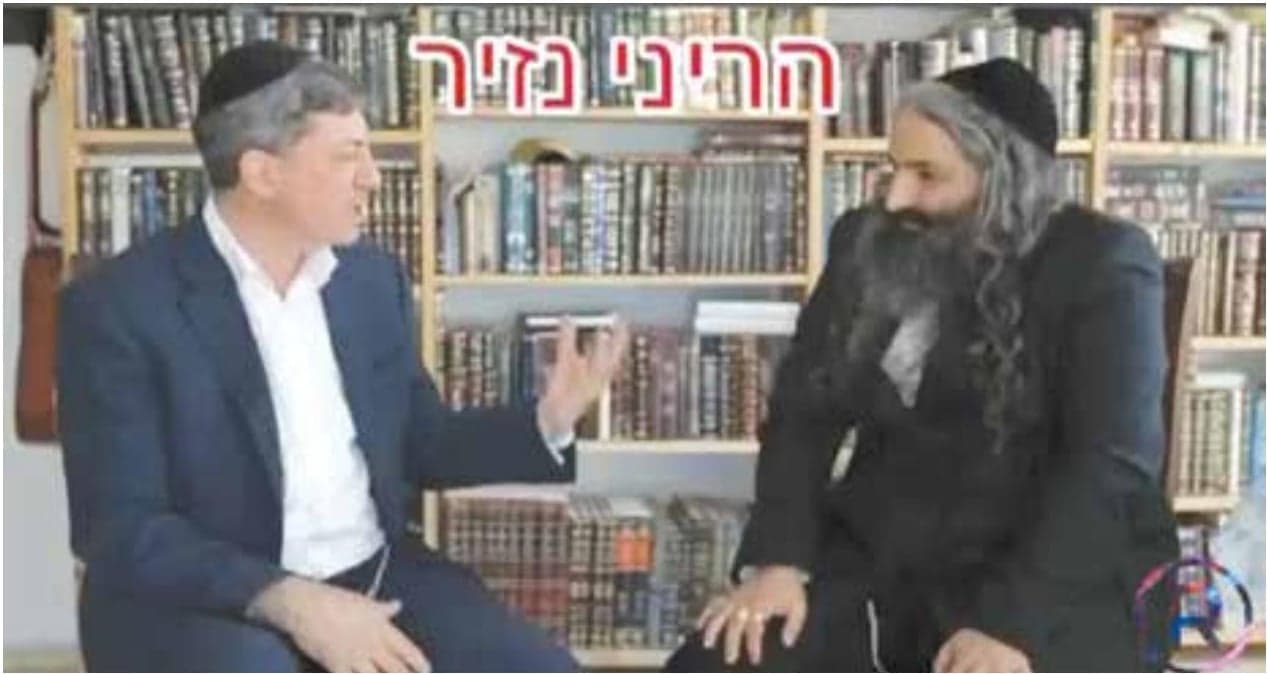
R’ Eli Stefansky recently publicized an interview he had with a Nazir Shimshon. Although the Nazir’s wife was not present at the interview, she was a Nazirah Shimshon as well. There are three general prohibitions a regular nazir has. He cannot consume grape products, he can’t allow himself to become tamei meis, and he can’t cut his hair. Regular nezirus is out of the question nowadays because we are all considered tamei meis. However, a Nazir Shimshon only has two restrictions: consuming grape products and haircutting. That solves the tumah issue. Still, virtually all poskim will advise against the adoption of Nezirus Shimshon. One major reason is that Nezirus Shimshon is a life-long commitment. While a standard term of an ordinary Nazir is thirty days, Nezirus Shimshon lasts forever.
There is another type of Nezirus, called Nezirus Olam. It, too, is a lifelong commitment. A Nazir Olam is more stringent than a Nazir Shimshon in that he may not enter a cemetery. Still, a Nazir Olam has two major leniencies. Whereas a Nazir Shimshon may never take a haircut, a Nazir Olam may take one occasionally. Indeed, years ago a Nazir Shimshon asked Dayan Rav Yitzchak Weiss, zt”l, if he could be matir his vow of acceptance of Nezirus Shimshon. The individual complained that his extremely long hair made him appear freakish. It was causing major social issues for his family. This leads to the next major leniency a Nazir Olam has over a Nazir Shimshon. The Torah taught us that there is a mechanism to undo vows that one accepted. This very useful tool is hataras nedarim. A few hundred years ago, a custom developed to perform this rite every year on Erev Rosh Hashana. A few hundred years before that, the custom of reciting Kol Nidrei on Yom Kippur Eve was established. According to some Rishonim, the purpose of both customs is the same: to release one from having to observe vows that he declared.