Be Our Guest
The pasuk says (Bereishis 18:3), “And he [Avraham Avinu] said: ‘My master, if I found favor in your eyes, please pass not away from your servant.’”
Rashi on Shavuos says that the simple explanation of “My master” is that he was addressing the middle of the three guests. It seemed to Avraham Avinu that he was their leader, and if he would stay and consent to being his guest, then the two other guests would stay as well.
However, Chanina ben Achi, Rebbi Yehoshua, and Rebbi Elazar ben Azariah understand the pasuk differently. Avraham Avinu was in middle of talking to Hashem when he saw the three strangers. He asked Hashem to not depart from him while he attended to his guests. The Gemara explains that the statement that “entertaining guests is greater that greeting the Divine Countenance” follows this view.
Avraham Avinu had two choices – continue speaking to Hashem or tend to total strangers. He chose the latter because that is what Hashem wanted him to do. The Chochmas HaMitzpun points out that this illustrates the halacha in Yoreh Deah that if someone is growing spiritually by learning Torah and there is a chessed that cannot be performed by others, he should interrupt his spiritual growth to do the chessed.
It is interesting to note that this statement that “entertaining guests is greater that greeting the Divine Countenance” is accepted as practical halacha. This is evident from the fact that the Rambam rules that the word “My Master” should be written in the sefer Torah with the intent of writing a Divine name.
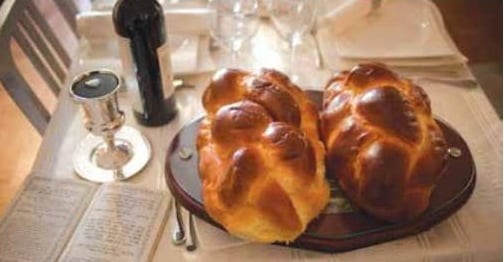
One time, when the Chofetz Chaim invited some travelers to his home for Friday night, he came home with his guests and promptly recited Kiddush. He skipped the recital of Shalom Aleichem, the song that is sung to welcome the angels that accompany an individual to his home on Shabbos night. Later in the meal, when everyone had already partaken of some Shabbos food, Shalom Aleichem was sung. Rabbi Yehuda Leib Chassman, who witnessed this event, asked his rebbi what the rationale for doing this was.
The Chofetz Chaim explained: The guests had traveled all day and must not have had the opportunity to eat, especially since they were in a hurry to arrive before Shabbos. If serving guests comes before greeting the Divine Presence, then it certainly comes before greeting angels! Anyway, angels are not hungry, and they can wait until after the first course. People who are hungry should not be made to wait.
The Dvar Avraham offers a different rationale for the Chofetz Chaim’s conduct based upon our Gemara in Rosh HaShana (6a). Rava says that if one vows to give money to poor people and fails to fulfill his pledge immediately, he transgresses the biblical injunction against delaying one’s vows. While Rava’s statement is codified as practical halacha, the commentators say it doesn’t apply in all situations. (See the Rema YD 257:3.) The Chofetz Chaim reasoned that if one invited poor people to his house for the Friday night meal, in essence he made a vow to provide them with charity in the form of food. If one delays his meal, he may run afoul of the transgression of delaying the fulfillment of one’s charity vows. Therefore, the Chofetz Chaim made Kiddush and started his meal immediately upon returning home if he had poor guests to steer clear of this issue.
The Dvar Avrohom offered a defense to those who sing Shalom Aleichem even when they have poor guests. He reasons that the invitation to the Friday night meal is to be understood as an invitation to eat when the family normally eats. Since the family always sings Shalom Aleichem, the invitation/vow was to provide food after Shalom Aleichem was sung.
Rav Moshe Sternbuch opines that while it is true that the original meal invitation was somewhat conditional, however, now it is irrelevant. If the poor guest is starving at your table right in front of you, you have a mitzvah to feed him right then!
Still, the Dvar Avrohom’s defense doesn’t apply to irregular delays. If someone happened to meet someone in shul and decided after davening to catch up on old times, this would be an unexpected delay and the Dvar Avraham’s defense would not apply.
HaRav Elchonon Peretz notes that the Gemara says that caring for one’s children is considered tzedakah. Therefore, he suggests that delaying any scheduled family meal could potentially run afoul of the prohibition of delaying one’s vows. However, the Taz in Yoreh Deah (149:1) states that the Gemara certainly didn’t mean to equate feeding one’s children with charity. For example, one cannot use maaser money to buy food for his family. Therefore, perhaps in this regard too, one should not equate a family meal with charity. Consequently, one would not transgress the prohibition of delaying the fulfillment of one’s vows by coming home late and delaying a family supper. However, try telling that excuse to your kids and see how well it goes over.
It is interesting to note what the Chofetz Chaim writes about this subject in the Mishna Berura (271:1). It is preferable to make Kiddush immediately after nightfall on Friday night. Nevertheless, the Chofetz Chaim says that one may delay Kiddush if he is not hungry. His delay will enable him to enjoy the Shabbos meal more and thereby fulfill the mitzvah of Oneg Shabbos in a choice manner. However, the Chofetz Chaim cautions, “If the delay will affect Shalom Bayis, or he has kitchen or wait staff who will be inconvenienced by the delay, or he has guests, especially poor ones, he should definitely not delay his meal. You cannot make them wait just because you want to fulfill a mitzvah in the choicest manner.”
Similarly, the Chofetz Chaim notes that some Acharonim rule that on the first night of Sukkos, when it is raining, one should wait until midnight to see if the rain subsidies (639:35). However, the Chofetz Chaim notes that if one is tired or hungry, one should not wait (SH 67). Then he notes further that certainly if one has poor guests, one should not wait. The poor guests aren’t obligated to fulfill the mitzvah in the best manner. Therefore, if one causes them to wait for their meal, one might actually transgress the prohibition against delaying tzedaka.
Stories in this article (1)
Stories in this article
More about Chofetz Chaim
All storiesThe Chofetz Chaim's Hidden Tears on Tishah B'Av
The Chofetz Chaim Corrects His Own Sign
The Chofetz Chaim's Pain Over the Seforim He Owned
The Chofetz Chaim Marries His Step-Sister
More stories in Rosh Hashanah
All in this masechtaRabban Shimon ben Gamliel's Son Skips a Verse
The Pious Man Who Slept in the Cemetery
Levi and the Mysterious Word 'Kava'
Bilam's Talking Donkey
Questions on this article
Rabbi Avrohom Sebrow
Rebbe at Yeshiva Ateres Shimon in Far Rockaway. He leads the Daf Yomi chaburah at Eitz Chayim of Dogwood Park in West Hempstead, and writes “Delving into the Daf” each week for The Jewish Home.
About and contact