Gray Matter
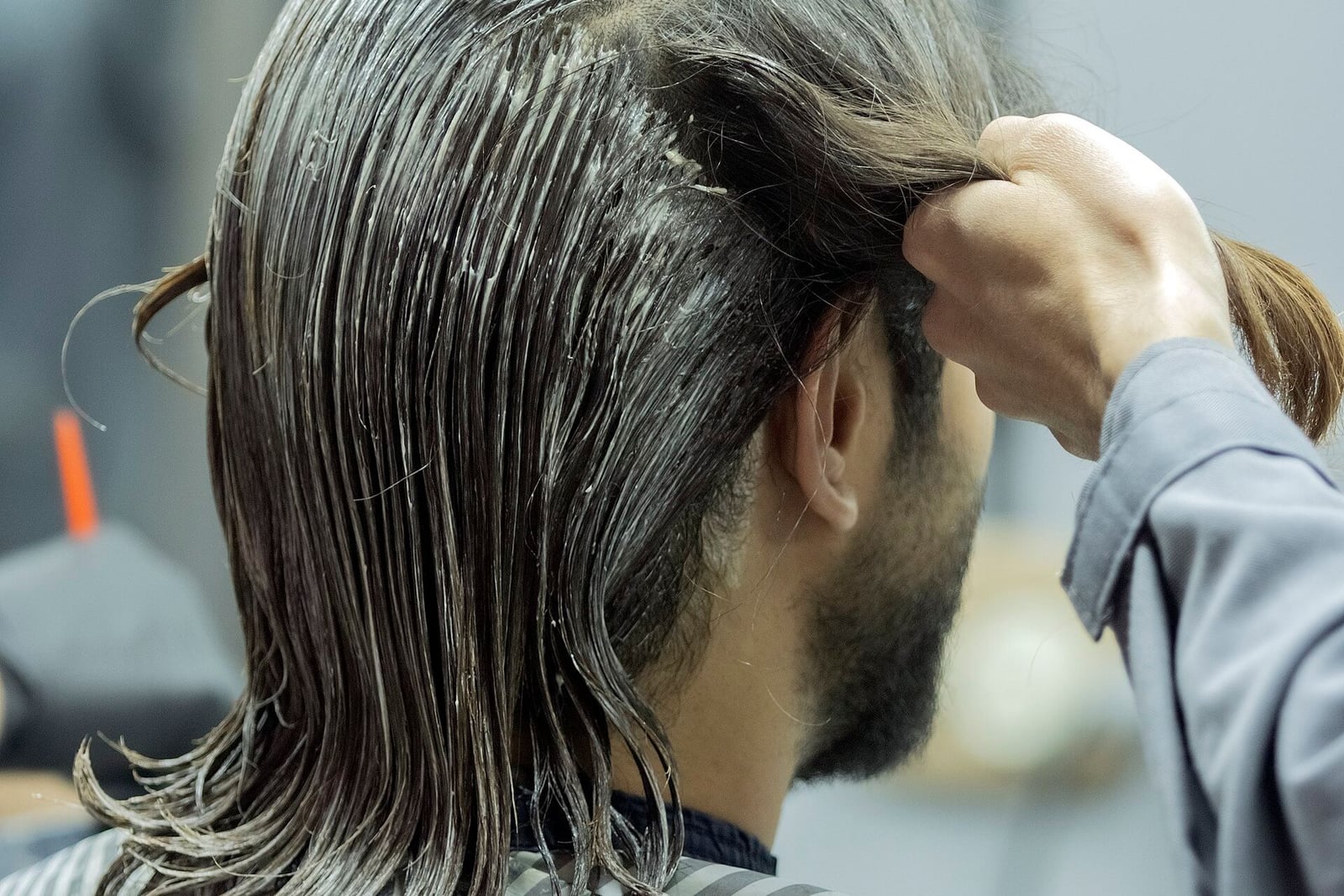
It is an open question whether or not a prospective applicant for a job should dye his gray hair. On the one hand, it would give him a youthful appearance. Perhaps he would appear to be a more energetic person. However a 2005 MSNBC unscientific poll found that 63% of people believe that gray hair implies experience. An employer might value the perceived knowledge and skill over youthful exuberance. It was reported that now infamous Enron chief financial officer Andy Fastow was dyeing his hair with gray highlights to achieve a level of gravitas, and convince people that he deserved such a powerful job in spite of his young age. In any case, Business Week advises job applicants that have gray hair not to wear a gray tie and suit to their interview because that will make them look just gray.
If a job applicant is of the opinion that his gray hair is a hindrance to his prospects, may he dye his hair? Furthermore, is an alter bachur permitted toupee someone to have his hair dyed in order to appear younger? The shear importance of these issues necessitates some discussion.
Our Gemara states that Rabbi Eliezer says whoever forces his young daughter to marry a zakein will be held responsible for the daughter’s infidelity. There is some discussion as to whether it is permissible for the daughter to marry someone significantly older if she is agreeable. The Sefer Chasidim says that in such a situation it is indeed permissible. Shu’t Chayim Shaul writes that we find that Rabbi Eliezer himself who introduced this concept in the Gemara, in fact married a girl that was significantly younger than himself. However, the Sefer Chasidim cautions that one should be upfront about his age and not try to deceive the girl. Dyeing one’s hair to appear younger could potentially be deceitful. However, if a person’s hair turned gray prematurely, then that might be different. Leaving the deception issue aside, there are other issues with a man dyeing his hair. It is a gray area of halachah.
The Mekor Chesed ruled that a man may not dye his hair to appear younger for a job interview because of the biblical prohibition of “lo yilbash.” A man is not allowed to wear a woman’s clothes. The Shulchan Aruch extends this prohibition to other things that women do to beautify themselves as well. This is exactly one of the examples that the Shulchan Aruch offers. A man may not dye his hair, because that is the practice of women. The Mishneh Halachos disagrees with the Mekor Chesed based on a careful combover of the Taz’s rulings. He offers a hair raising heter. The Taz contends that there are exceptions to the rule against a man wearing women’s clothing. If a man is not trying to beautify himself but rather wearing women’s clothes for a practical reason, it is permitted. One time I visited my rosh hayeshiva zt’l’s house and it started to rain. I attempted to leave the house unnoticed. However, the rebbtezin, a’h, caught me and insisted that I wear her raincoat! This is permitted because the wearing of the raincoat was not for aesthetic purposes but rather for protection from the elements. Likewise, the Mishnah Halachos argues, our job applicant does not want to beautify himself. He is just trying to appear younger for practical parnassah purposes. This should be permitted.
HaRav Shternbach, shlita, brushed off the Mishnah Halachos’s perception of what is occurring here. The job applicant is essentially beautifying his hair to have better job prospects. When one wears a woman’s raincoat, he obviously doesn’t care what he looks like! But this job applicant does. The reason he is beautifying himself is for the job interview. Nevertheless, the intended purpose doesn’t change the essence of what he is doing: beautifying himself. HaRav Shternbach therefore says that the job applicant cannot rely on the above leniency.
However, there is another possible heter: please hair me out. The issue is not cut and dried. One example listed in the Shulchan Aruch under the prohibition of lo yilbash is that a man may not look in the mirror. Looking in a mirror was a practice that used to be employed almost exclusively by members of a hairem who wanted to beautify themselves. Consequently, the Shulchan Aruch states unequivocally that a man may not look at a mirror to check his appearance.
However, we all know that many men look in the mirror today. Are they violating a biblical prohibition? Certainly not. (Though, many Chassidim even today refrain from doing so.) Today it is the accepted practice of men to look in the mirror as well. It is no longer considered a woman’s practice. Likewise, nowadays they have a special line of hair dye called “Just for Men.” According to the company they have already exceeded 50 million sales. The Mishnah Halachos postulates that, hairafter, dyeing one’s hair is no longer considered a woman’s practice. It should therefore be permitted for men.
The above leniency notwithstanding, if a man is applying for a job that requires strength and dexterity and he is not really qualified as well as a younger applicant would be, he cannot deceive his prospective employer about his age. Dyeing his hair is tantamount to a bald-faced lie.
As with all halachic questions, consult your (perhaps gray-haired) rav who is familiar with the cutting edge psakim. Maybe he’ll give you a heter to curl up and dye.
More Gemara stories
Questions on this article

Rabbi Avrohom Sebrow
Rebbe at Yeshiva Ateres Shimon in Far Rockaway. He leads the Daf Yomi chaburah at Eitz Chayim of Dogwood Park in West Hempstead, and writes “Delving into the Daf” each week for The Jewish Home.
About and contact