Father Figure
Around a year ago, the editor asked me to write an article on the occasion of the 25th yahrzeit of Rav Moshe Feinstein, zt’l. Although Rav Moshe was known to me by his reputation and his scholarly works, I never had the zechus to meet him. I was at a loss to find something unique to write about him. After all, ArtScroll had recently published a greatly expanded biography. I didn’t feel like writing a book review about that book.
The Shabbos before my article was due, I was contemplating different angles for the article. Then it hit me. Rav Dovid Feinstein, shlita, had given me a set of Igros Moshe as a wedding present. What better place to find interesting tidbits than from the very answers that Rav Moshe himself offered to questioners? Perhaps there would be a story there not yet presented to the English-speaking public. I figured that the questions in the Even HaEzer section (laws pertaining to marriage) would be the most interesting. I came across one teshuvah that discussed a plane crash that occurred in 1959.
I had never heard of this crash, even though it happened in New York. After Shabbos, I did a quick Google search to verify that I was understanding the teshuvah correctly. Sure enough, I came upon the following news item: “An American Airlines plane with 73 persons aboard plunged into the chilling, fog-covered waters of the East River. Sixty-five apparently perished, despite feverish rescue efforts.”
According to the teshuvah, one of the unfortunate victims was Mr. Alfred Diller. I found a list of the victims of the plane crash and sure enough, his name was listed there. His wife wanted halachic sanction to remarry and Rav Moshe convened a beis din for this purpose. The coroner had already positively identified one set of remains as belonging to Mr. Diller. The question facing the beis din was whether that identification met the halachic threshold to permit the widow to remarry.
A Jewish survivor of the plane crash, Mr. Edward Gotlieb, testified before the beis din that Mr. Diller was with him on the plane. There was also physical evidence bolstering the coroner’s identification of the remains. One item of note was a ring that was found that was known to have been owned by the late Mr. Diller. Also, a launderer’s tag was found on the body’s clothing. That tag had the unique numbers that Mr. Diller’s launderer used to identify his clothing. Rav Moshe’s beis din issued a permit for this woman to remarry.
I thought that this was a good example of the serious shailos with which Rav Moshe had to contend. I was wondering, though, if I should use Mr. Alfred Diller’s name in the article. Obviously the teshuvah would seem more authentic if I could include the victim’s real name. On the other hand, perhaps it would arouse bad memories for a family member. I decided to ask my editor for advice. I asked the editor, “What are the chances that a family member of Mr. Diller would read my article? The plane crash happened 50 years ago. Who knows if his family even resided in New York now? Even if they do, what are the odds that they would chance upon my article and be interested enough to read it?” The editor actually didn’t agree with my assessment. “Still,” he argued “the plane crash happened 50 years ago. I don’t think any family member would object to your use of his name.”
The article went to press including the victim’s actual name. Shortly thereafter, I received the following e-mail from a man named Bruce (the e-mail has been edited somewhat for publication):
Dear Rabbi,
My mother was left a widow with two young children: Linda, 6½, and Bruce, 2½. My mother eventually married Henri Verstandig, who then legally adopted her two children. The new couple was blessed with a child of their own.
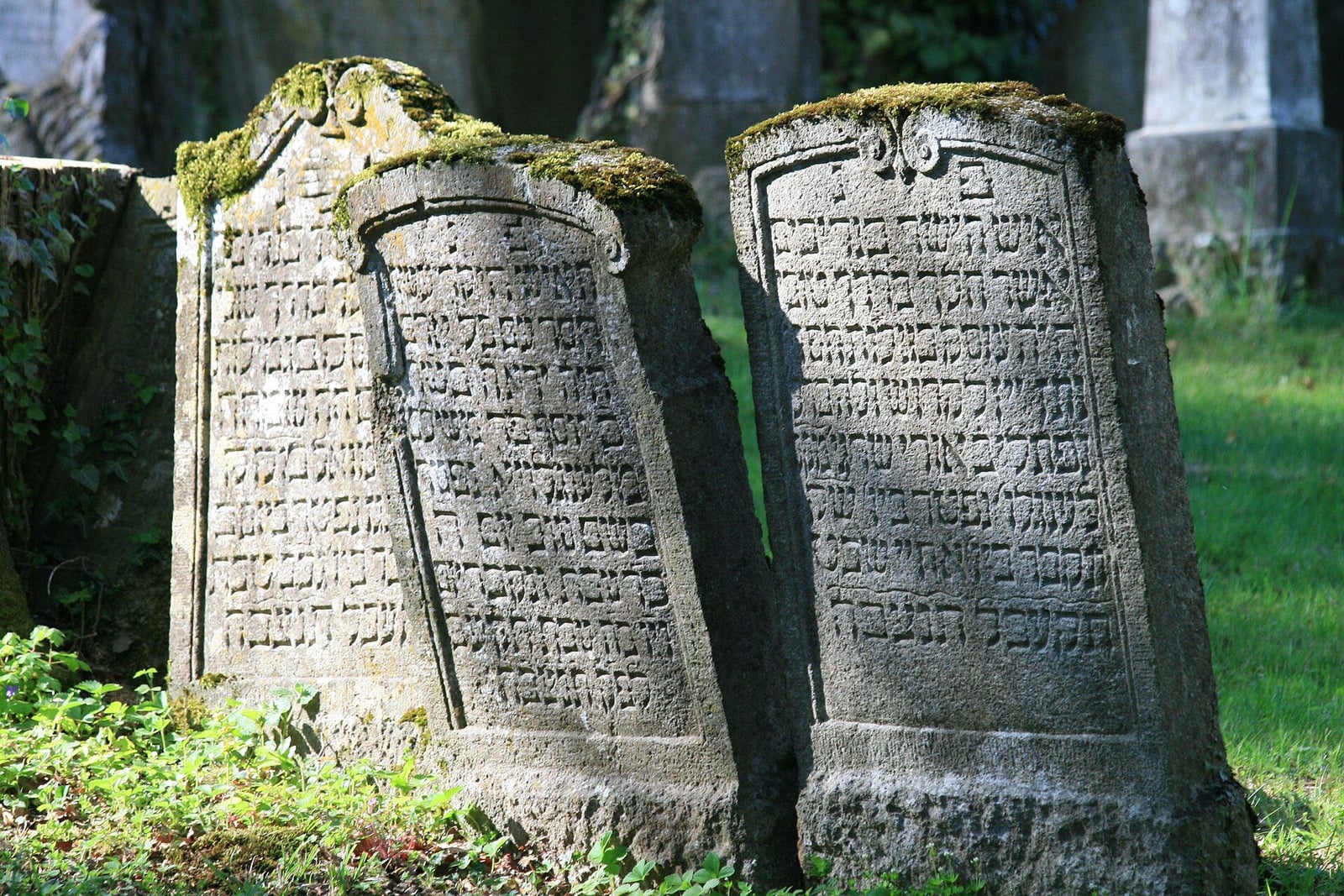
Fast-forward many years . . . In December 2008, my older sister Linda died of breast cancer. There were some family members whose opinion was that only my stepfather’s name should be on the matzeivah (tombstone). I disagreed and insisted that our biological father’s Hebrew name be on the matzeiveh. I actually had to fight for what I believed was correct and proper. It meant so much to me because I am the only surviving descendant of my father and I still have his fire burning inside of me.
Just yesterday, someone tried to rip my insides out because of this feud and who I am.
Side note: Henri Verstandig was shocked to learn that I had to fight to have our father’s name, Yitzchak, on the stone. He said, “I wish someone would have told me, because absolutely it belongs.”
The stone now reads “bat Yitzchak v’gadlya Yechezkel (daughter of Yitzchak and raised by Yecheskel-Henri Verstandig).”
Today, feeling very down, I went to visit one of my best friends, Michael Strauss, who happens to have his silver store inside Park East Synagogue, of which I’m a congregant.
Stay with me, here is where it gets good. The assistant rabbi, Evan Hoffman, who may be my junior but I consider a close friend and is a wonderful teacher of Torah to me, says, “I have an article for you from the Five Towns paper” (he is a Great Neck boy) “that talks about Rav Moshe Feinstein and your father, your real father: Alfred Diller.”
Rabbi, I believe G-d has a plan. Otherwise, how can a young boy ever grasp as I have learned to live my life, “Ivdu es Hashem b’simcha,” “Serve G-d with joy,” when G-d takes your father away?
Thank you a thousand times—for this was no random event—that today, a day after a family member lashed out at me for no reason other than I was a reminder of Alfred Diller and the past, Rabbi Hoffman gives me the article that reminds everyone about my father.
You gave me strength to believe. Believe in G-d, in doing what I believe is right, and clearly my late father Alfred Diller says thank-you.
A directive from above had you print my father’s name to give me strength and tell me I’m doing the correct thing. The story you tell of identifying my father’s body, while it brought tears to my eyes, also made my heart smile.
Thank you.
A belated happy Purim, wishing you and your family a happy and kosher Pesach.
Bruce
Baruch Chaim Yisrael ben Yitzchak
I really should end the article here. But I just wanted to connect the above to the daf. The Gemara in Temurah (16a) noted a discrepancy regarding who the father of the biblical Kalev was. One verse says it is Yefuneh. Another verse says he was the brother of Osniel, son of Kenaz, indicating that his father was in fact Kenaz. Still yet another verse identifies Kalev’s father as Chetzron. The Gemara concluded that Chetzron was Kalev’s biological father. Chetzron passed away and Kalev’s mother remarried. Kenaz was Kalev’s stepfather; Osniel was his half-brother. Yefuneh is just an honorific title noting that Kalev turned away (pinah) from the evil plot of the spies.
When a boy is being called to the Torah, whose name should he give the gabbai as his father’s name: his father’s or stepfather’s? The Chochmas Yedidyah notes that we never find a verse that actually spells out Kalev ben Kenaz. This is due to the fact that the biological father’s name is the one to be used. The Chochmas Yedidyah concludes that the right name to use when getting an aliyah is the biological father’s name. However, he quotes the Chasam Sofer who rules that if the stepfather has no children of his own, the stepson should use his stepfather’s name when being called to the Torah.
Questions on this article

Rabbi Avrohom Sebrow
Rebbe at Yeshiva Ateres Shimon in Far Rockaway. He leads the Daf Yomi chaburah at Eitz Chayim of Dogwood Park in West Hempstead, and writes “Delving into the Daf” each week for The Jewish Home.
About and contact