Till The Cows Come Home
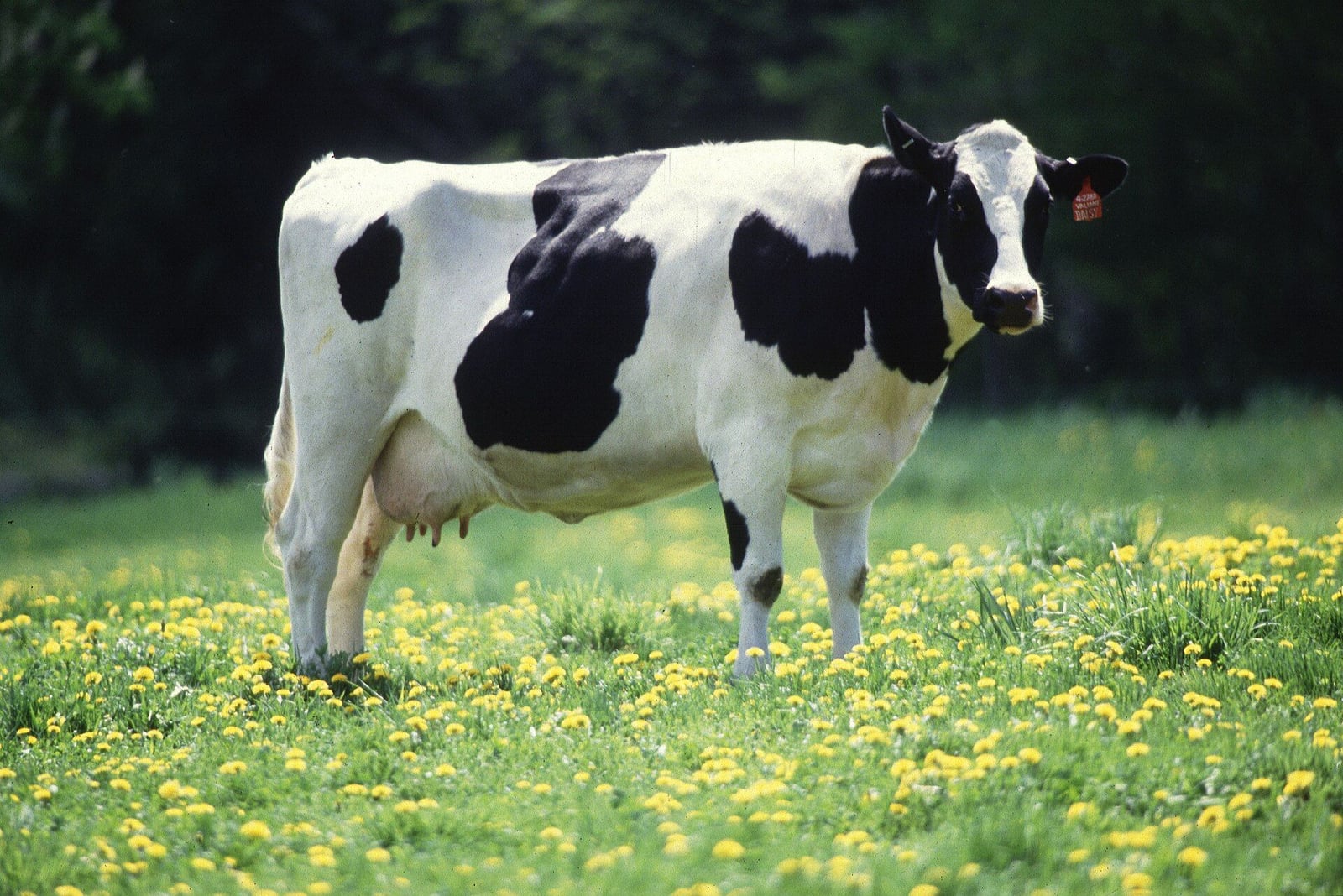
If you are raising Elsie, your cow, are you allowed to feed her non-kosher? The question would seem mostly non-sensical. However, care must be taken to avoid a prohibition, since the steaks may be high. There are a number of food items that one may not halachically derive any benefit from. One such example is a meat and milk mixture. Therefore, you may not use pet food that consists of cooked milk and meat mixture. In fact, a number of years ago, kashrus really went to the dogs. Some Jewish entrepreneur started selling kosher dog food. The kosher dog food was actually treif for humans. However, the certifying agency just ensured that the dog food did not contain a mixture of milk and meat. I have heard that this may be a real concern in commercially available dog food.
The following was received via e-mail from Joel Streiter:
“I once asked a shailah to Rav Blumenkrantz, zt’l. I told my son to buy a bag of doggie treats for Ernie, my pet dog, from the pet store. He bought something which contained both cow meat and cheese (cooked together). I asked the rav if I could return the bag for credit.
“My concern: Perhaps it was completely mine now, and I would be deriving benefit from milk and meat when receiving credit. The rav said that it would be better if it were thrown out.
“I was surprised to learn at the time that milk and meat cooked by a goy had the same issur of hana’ah. I might have thought that the issur hana’ah only applied if cooked by a Jew (as penalty from the Torah for transgressing a prohibition).
“Anyway, Ernie accepted the psak din with bitul (you can see his dignified bearing in the picture). We rewarded him with another treat.”
Food that was used for idolatry is another example of food that cannot be fed to your animals. What about run-of-the-mill ham? You may certainly feed Ernie or Fido ham, but what about Elsie?
Americans have a bucolic image of cows happily chomping grass in fields. Many don’t know that modern animal husbandry practices have provided cheap, plentiful meat through such standard practices as feeding cattle not only pieces of their herdmates (before the practice was banned) but also chicken litter, leftover restaurant food, and out-of-date pet food. So the question can indeed be relevant.
Rebbe Chanina, the son of Antigonus (Temurah 20b), ruled that a kosher animal that nursed from a non-kosher animal may not be used as a sacrifice on the Altar. The Gemara challenges this ruling. Granted, the milk produced by a non-kosher animal is likewise non-kosher. Still, we know that an animal fed with prohibited grains that were used for idolatry can still be offered as a sacrifice. Why should nursing from a non-kosher animal be any worse?
The Gemara answers that Rebbe Chanina the son of Antigonus was referring to an animal whose primary source of nutrition was from non-kosher milk. An animal may eat non-kosher occasionally and still be a valid sacrifice. However, this animal who continuously nursed from a non-kosher animal is rendered invalid for use on the Altar. Tosfos notes that the same rule would apply to animals that ate grains that were used for idolatry. If its primary source of nutrition was from these grains, we would be prohibited from offering this animal as a sacrifice. Tosfos then concludes that it seems to him that not only are these animals forbidden to be used as sacrifices, they would be forbidden for human consumption. This leap is found nowhere in the Gemara.
Yet, this novel ruling of Tosfos is codified by the Rema in Yoreh Deah (60:1). “One may not eat an animal which was fattened primarily with non-kosher food.” The Shach states that the Toras HaChatas seems to be much more stringent than Tosfos and the Rema. The Toras HaChatas ruled that one should not purchase a bull from an unreliable source. We have to be concerned that the seller may steer you in the wrong direction and sell you an animal that was fed non-kosher food. This applies even if its major source of nutrition was from kosher sources. Certainly, the Shach concludes that one may not feed an animal that is designated for consumption by a kosher consumer non-kosher food even on occasion according to the Toras HaChatas.
The Mordechai, however, took this issue by the horns. He ruled that the above ruling is udderly wrong. One may even primarily feed an animal non-kosher food as long as the food item itself is not prohibited from benefit.
The Rambam seems to concur. He does not rule anywhere that one may not consume an animal that was fed primarily non-kosher food. Two reasons for this ruling can be gleaned from the Rambam’s commentary on Mishnayos. Firstly, he disagrees with the previous rendering of the Gemara above. He explains that the Gemara never meant to say that an animal that was fed primarily non-kosher food cannot be used as a sacrifice. All the Gemara meant to say is that while the non-kosher food is undigested it may not be used as a sacrifice. Consequently, if a kosher animal nursed from a non-kosher animal it may only not be used as a sacrifice that very day. The following day it may be used. Further, the Rambam notes that this ruling was proclaimed by Rebbe Chanina ben Atigonus. The halacha doesn’t follow him anyway. Therefore, according to the Rambam, there is absolutely no source for the Rema’s halacha.
However, I assume that practical halacha follows the Rema.
Questions on this article

Rabbi Avrohom Sebrow
Rebbe at Yeshiva Ateres Shimon in Far Rockaway. He leads the Daf Yomi chaburah at Eitz Chayim of Dogwood Park in West Hempstead, and writes “Delving into the Daf” each week for The Jewish Home.
About and contact