Reb Moshe, zt”l
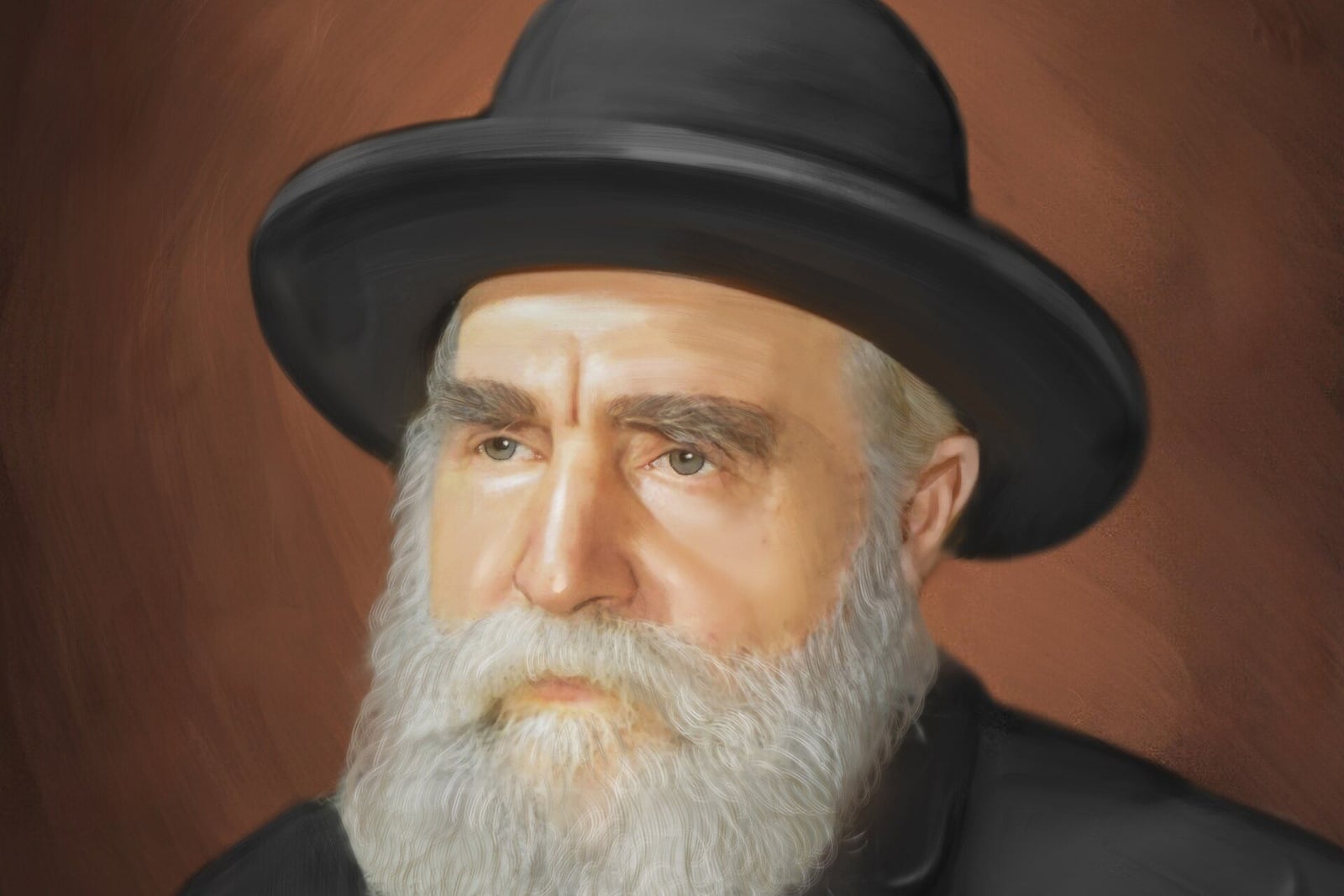
Much has been written about HaGaon HaRav Moshe Feinstein, zt’l, gadol ha’dor of the last generation. Further, the seforim that he authored speak for themselves. Nevertheless, I have attempted to put some ideas on paper in honor of his 25th yahrzeit.
To gain a better perspective, I talked to some of those who knew him. I was fortunate to be given time by Rav Yitzchok Frankel of the Agudah of the Five Towns and Rav Dovid Weinberger of Shaaray Tefila to discuss with them their beloved rebbi. Further, Rav Aharon Felder, also a talmid of R’ Moshe, gave me permission to use material from his recently published Hebrew sefer, entitled Reshimos Aharon. In addition, various other people have given me anecdotes and information about the life of R’ Moshe.
(Note: Please do not make any halachic conclusions on the basis of how I understood these stories. If there is some discrepancy between what is written here and elsewhere, please assume that the error is mine.)
It is well known that Rav Moshe was born on Zayin Adar (the 7th day of Adar). To be more precise, he was born bein ha’shmashos between the 6th and the 7th. This was the same time and date that, the Midrash states, Moshe Rabbeinu was born. Hence, his father named him Moshe.
The Humility Of Rav Moshe
Rav Moshe was an extremely humble person who did not outwardly display his spiritual greatness. During davening, for example, he stood straight, without exaggerated body movements. R’ Nisson Alpert, zt’l, often used the accolade “a normal iluy” to refer to his rebbi.
Rav Moshe’s son R’ Dovid, shlita, was once tutoring a young boy. R’ Moshe needed to send R’ Dovid to fulfill an important task, so R’ Moshe continued the tutoring session himself.
During the general reception hours, a woman entered R’ Moshe’s home. She started complaining that the rav and chazzan of a certain shul were chasing after her with a stick to beat her. She went on and on complaining about this for 45 minutes. R’ Moshe just listened to her patiently and heard her out. What made this so remarkable was that R’ Moshe knew that the chazzan and rav had already passed on and the whole story was a complete fabrication!
Rav Moshe once went to see a top cardiologist. As the cardiologist left his examination room to invite R’ Moshe in, another patient told the doctor, “You have the biggest rav in the whole world as your patient.” The doctor replied, “In this office I am the biggest in the world.” After R’ Moshe entered his office, the cardiologist showed him all the certificates, awards, and accolades he had hanging on the wall. “These awards made me well known in many places so that plenty of people come to see me, but how would people know about you?” R’ Moshe listened and didn’t say a word.
Concern For Others
There is a tradition that continues to this day on the Lower East Side. Young boys arrange communal fires in front of various apartment buildings on erev Pesach to facilitate the burning of chametz. In appreciation of their services, the residents give them a dollar or two, although no fee is ever demanded. In 1972, Jeffrey Mayer, Eli Alpert, ybd’l, and Shaya Alpert, z’l, had an enterprising business idea. They would knock on doors a few days before Pesach and take orders for chametz-burning on erev Pesach. This full-service biur chametz would include picking up of the chametz on erev Pesach and ensuring its incineration soon after.
As was the custom, they did not ask for compensation and instead relied on tips. They hesitated before knocking on R’ Moshe’s door but finally decided to take the plunge. R’ Moshe answered the door himself, as no one else was home. They tried their best to explain their plan in English. R’ Moshe sat them down and treated them to cookies. On their way out, R’ Moshe handed the boys a $5 bill. That was by far the largest tip they received that year, and it would still be considered a decent tip today, 39 years later! The next year, the boys were flabbergasted when R’ Moshe handed them a $10 bill. It was a little cloudy and there was a slight drizzle. Making the fire might be a little harder and deserved extra.
Mrs. Chevi Friedman used to help out her illustrious great-grandfather by putting eye drops in his eyes. One day as she was applying the eye drops, Rebbetzin Feinstein called out, “He already had his drops put in today.” To which R’ Moshe responded, “But she likes to do it!” Rav Moshe graciously accepted an extra application of eye drops just to please his einekel.
Not Afraid To Issue Rulings
Though Rav Moshe was humble, he was not hesitant to tackle various difficult she’eilos. Very often he was called upon to render decisions on the very complex questions of agunos. The following is but one example of many: In 1959, tragedy struck the New York community. An American Airlines plane with 73 persons aboard plunged into the chilling, fog-covered waters of the East River. Sixty-five apparently perished, despite feverish rescue efforts.
Edward Gottlieb was one of the survivors. Unfortunately, Alfred Diller was not. Unable to properly identify his remains, the almanah came to R’ Moshe for permission to remarry. R’ Moshe formed a beis din to accept testimony and review the circumstantial evidence. One major point in the testimony was that Edward Gottlieb confirmed that Alfred Diller was on the plane with him. Among the evidence proffered was clothing which had the mark “D12” that the local launderer used to put on Mr. Diller’s clothes. That, combined with other evidence and testimony, was the basis for R’ Moshe’s permit for the widow to remarry. In Igros Moshe there are countless other teshuvos regarding agunos that R’ Moshe helped.
People turned to Rav Moshe to render decisions on halachic questions related to advances in science and medicine. He once issued a p’sak on a matter of contemporary medicine that caused much controversy. The Satmar Rebbe, zt’l, had a long discussion with R’ Moshe attempting to convince him of his error. The Satmar Rebbe felt very strongly about this issue and was worried that R’ Moshe’s p’sak would cause mamzerim to be born in K’lal Yisrael. However, R’ Moshe would not budge. He went through the sugya and was satisfied that his p’sak halachah was correct.
There was a Torah journal published periodically that heaped scorn upon this p’sak of R’ Moshe. The publishers on their own started sending R’ Moshe the journals. Later, they had the chutzpah to ask R’ Moshe to pay for it. R’ Moshe wrote them a letter stating that al pi halachah he was not obligated to pay, since he had never requested the journals. However, he enclosed funds since he did not want anyone to have any type of monetary claim against him!
The newly expanded ArtScroll book about R’ Moshe states that some community askanim told the Satmar Rebbe that they were going to speak to R’ Moshe to persuade him to retract his p’sak. To which the Satmar Rebbe replied, “But what will you do if he talks to you in learning?”
Rav Aharon Felder writes further that R’ Moshe’s p’sak was limited to post facto cases. A child born utilizing such a procedure would not be a mamzer, but R’ Moshe never permitted anyone to initially utilize the procedure.
The Proper Way Of Machlokes
There was an asifah to which Rav Moshe was invited, but he declined because he was concerned that they would attack the State of Israel publicly. Similarly, R’ Moshe once urged the Agudas Yisrael to drop a public meeting about the State of Israel from its convention. Someone suggested that a private meeting be held instead, with limited attendance. R’ Moshe was against this as well. He said, “There is no use in debating something that already occurred!”
The machlokes between the Satmar Rebbe and R’ Moshe was not personal; it was l’sheim Shamayim. R’ Moshe once commented that you could see the greatness of Rav Kook, zt’l, from the sefer he authored on the first set of simanim in Shulchan Aruch. Further, his humility was shown by the fact that he agreed to be the editor of a Torah journal that many people said was a position not fit for a man of his stature. Lastly, R’ Moshe said that just because you don’t agree with the hashkafah of an adam gadol that doesn’t make him not an adam gadol.
There were, unfortunately, rabble-rousers who took the arguments between their rebbeim personally. Some even wrote shameful words against R’ Moshe. R’ Moshe, though, never bore a grudge against them. One usually had to wait weeks to get a letter of approbation by R’ Moshe for a sefer. However, one author who requested a letter of approbation was given one immediately. The author of the sefer was involved with one of the parties to a din Torah that demonstrated disrespect for R’ Moshe and his p’sak. R’ Moshe wanted to make it obvious that he bore no ill will against this individual, so he wrote the haskamah for him immediately.
A similar point can be seen from the following: A person in the yeshiva administration knew about the misappropriation of yeshiva funds but failed to inform R’ Moshe. R’ Moshe said to him that he knew that he was honest but nevertheless had to fire him for being derelict in his duty. Still, R’ Moshe made a point throughout his life of attending every simcha that this person made, to demonstrate that he bore no ill will against him.
Rav Moshe knew that it was not always worthwhile to make an issue out of something. The Synagogue Council of America was an organization of American synagogue associations, including those that represented Reform or Conservative congregations. R’ Moshe and other rabbanim forbade any Orthodox organization from being affiliated with them. There was pressure on the Agudas Rabbanim to ostracize a specific Orthodox organization for their defiance of this ban. R’ Moshe said that such a move was unwise because it would cause a tremendous division in K’lal Yisrael.
Legendary Diligence, Encyclopedic Knowledge
Rav Moshe’s hasmadah was legendary. During the summer months, when the yeshiva went to Camp Staten Island in upstate New York, R’ Moshe went with them. Due to the awful gnat problem, the bachurim couldn’t learn outside. R’ Moshe, though, had no problem. In fact, there is a famous picture of R’ Moshe learning outside in camp Staten Island in his shirtsleeves. Some bachurim in Yeshiva of Staten Island assumed that Rav Moshe was so holy that bugs stayed away from him. How else could he learn outside under such conditions?
Rav Frankel said that the truth was much different. R’ Moshe would spend the Yamim Nora’im in the Staten Island branch of the yeshiva. It was very convenient, because R’ Moshe did not have to walk far to get to his apartment there. Rav Frankel remembers trying to concentrate on R’ Moshe’s Kol Nidrei derashah. However, it was very difficult for him to do so because there were three flies buzzing around R’ Moshe’s head. R’ Moshe was unfazed. He didn’t even take the slightest notice of the flies when they landed on his head. The gnats upstate were not a distraction for him either. While he was concentrating on Torah, outside distractions just didn’t exist.
In his love and dedication to Torah, Rav Moshe acquired encyclopedic mastery of many Torah works. Someone once told me that he had the opportunity to drive R’ Moshe to a function. On the way, he asked him a question about a passage in the works of Rabbeinu Chananel. He had studied hard for this occasion. R’ Moshe told him from memory that he skipped a word. That missing word cleared everything up.
Rav Moshe would speak every year at a parlor meeting at Rabbi Lasher’s house in Forest Hills. One year R’ Moshe expounded a midrash on the words “Sheishes yamim ta’avod,” “On six days you shall work.” These words are to be understood as an obligation. If someone is not learning Torah and has enough money to live on, he cannot retire and play golf all day. He has an obligation to make use of his free time constructively and work to support Torah.
Some years later, Rav Dovid Weinberger was studying the laws of shiluach ha’kan. The Leket Kemach HeChadash, a lesser-known commentary printed in very small letters on the side of the Shulchan Aruch, stated that the words “shaleiach teshalach es ha’eim” implies a reshus, an optional mitzvah, just as does “Sheishes yamim ta’avod.” This seemingly contradicts what R’ Moshe said at the parlor meeting.
When R’ Weinberger had some time alone with R’ Moshe, he mentioned the midrash that R’ Moshe had quoted some time ago at the parlor meeting. R’ Moshe was instantly familiar with it. Then R’ Weinberger continued, “Well, I am learning hilchos shiluach ha’kan . . .” He didn’t get a chance to finish his thought, because R’ Moshe interjected, “And you have a question from the Leket Kemach HeChadash, which says . . .” R’ Weinberger was astounded to realize that R’ Moshe’s mastery of Torah knowledge even applied to “minor” commentaries of all parts of the Shulchan Aruch.
R’ Dovid Weinberger was visiting his relative, R’ Michel Stern, in Eretz Yisrael. R’ Michel told him a story about R’ Moshe, Rav Shlomo Zalman Auerbach, and R’ Nisson Alpert (R’ Dovid Weinberger’s father-in-law.)
One of R’ Michel Stern’s congregants was due to undergo prostate surgery. However, there are serious halachic concerns about the ramifications of such a surgery. He asked his rav whether he should consent to the surgery or perhaps insist on an alternative. R’ Michel Stern couldn’t pasken this delicate she’eilah and went to ask his uncle R’ Shlomo Zalman, zt’l. Upon hearing it, R’ Shlomo Zalman exclaimed, “This is a question for the gadol ha’dor!” R’ Shlomo Zalman knew R’ Moshe’s number by heart. However, the line was busy. R’ Michel Stern offered to call his cousin R’ Nisson Alpert, a talmid muvhak of Rav Moshe’s; perhaps he could get through.
R’ Nisson Alpert agreed to take the question to R’ Moshe but cautioned that R’ Moshe was very sick and the answer offered might not be reliable. R’ Nisson went to see R’ Moshe. He explained all the details of the question to him. R’ Moshe said, “It’s very difficult to permit such a thing, but it’s not nogei’a (applicable) anyway.” Rav Nisson, who knew that there was a desperate congregant waiting for the answer, asked the question a second time. Again R’ Moshe responded, “It’s very difficult to permit such a thing, but it’s not nogei’a anyway.” R’ Nisson was not about to ask the question a third time. He called R’ Michel Stern with R’ Moshe’s response. R’ Michel related the mysterious answer to R’ Shlomo Zalman and asked him what to tell the congregant. However, R’ Shlomo Zalman didn’t want to discuss the issue anymore, since R’ Moshe said it wasn’t applicable.
Without much guidance, R’ Michel Stern returned home. However, it was two days before he saw the congregant again. R’ Michel asked him, “Where were you? Don’t you want to know about the answer to your she’eilah?”
“No,” the man replied. “Other medical concerns came up that made the question moot.”
R’ Michel was amazed at the prophetic words of R’ Moshe and ran to tell R’ Shlomo Zalman. R’ Shlomo Zalman said, “You are surprised to find out that it wasn’t nogei’a? I already knew it wasn’t nogei’a once R’ Moshe said it wasn’t!”
Rav Dovid Feinstein, shlita, commented that this was probably the last query ever posed to Rav Moshe.
A generation later, the pain of K’lal Yisrael’s loss when Rav Moshe Feinstein was niftar continues to be strongly felt. Yehi zichro baruch.
Questions on this article

Rabbi Avrohom Sebrow
Rebbe at Yeshiva Ateres Shimon in Far Rockaway. He leads the Daf Yomi chaburah at Eitz Chayim of Dogwood Park in West Hempstead, and writes “Delving into the Daf” each week for The Jewish Home.
About and contact