The Right Angle
Over 111 million people watched the Super Bowl on Sunday last week. Anecdotally, many of them were equally interested in the commercials.
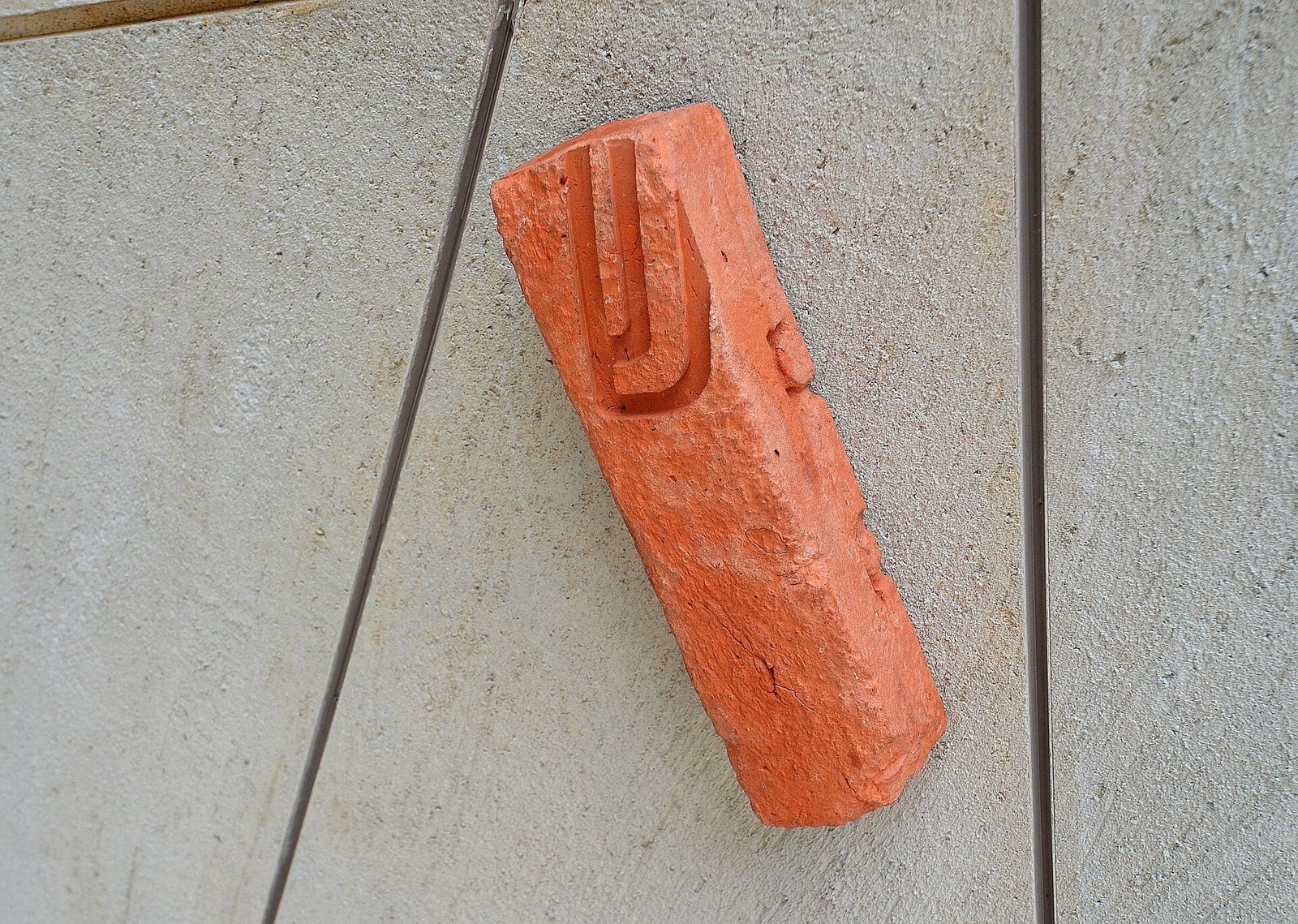
Perhaps for the first time in history, a mezuzah filled up the screen during the big game. Google ran a commercial featuring a product called Google Home. It is an Internet-connected, voice-activated device with a built-in speaker. It can control various items in the house, such as lights, and can respond to spoken questions. But the most interesting part of the commercial was a home that was featured. The commercial shows a family entering their house. Then the camera pans to the mezuzah to capture a clear shot of it. Based on how much it costs to air a Super Bowl commercial, it is estimated that the brief shot of the mezuzah cost Google around $166,000.
The picture clearly showed the mezuzah on the doorpost at an angle. The custom of putting the mezuzah at an angle is widely followed by Ashkenazim. (There may also have been a mezuzah on the garage door. If it was indeed a mezuzah, it was on the wrong side.)
Tosfos at the end of Bava Metzia (102a) reference the dispute between Rashi and Rabbeinu Tam about the proper orientation of the mezuzah. According to Rashi, the mezuzah should be affixed in a vertical position, whereas Rabbeinu Tam holds that the mezuzah should be placed in a horizontal position. Our custom of placing the mezuzah at an angle is a compromise between the two opinions. Most halachic disputes don’t lend themselves to an accommodation of both opinions. However, it is said that the mezuzah is placed at an angle at the entrance to one’s house to teach us that compromise is an integral part of the Jewish home. One should internalize this message every time entering one’s home.
Not only does Rabbeinu Tam write that a mezuzah should be placed horizontally, but he also writes that a sefer Torah in the aron kodesh should be placed horizontally. Support for his opinion can be adduced from a recent daf (Bava Basra 14a). The Aron in the Mishkan contained the Luchos and, according to Rebbe Meir, a sefer Torah. Both were placed inside the Aron facing up. Rabbeinu Tam concludes that our sifrei Torah should be treated the same way the Luchos and the sefer Torah in the Aron were treated— they should be placed lying down, not standing up as is commonly done nowadays. Rabbeinu Tam himself lamented that he didn’t construct his aron kodesh wide enough to accommodate horizontal sifrei Torah.
The Radvaz defended our custom of having the sifrei Torah standing in the aron. He suggests that the Luchos were placed lying down in the aron because they were never taken out to be read from. However, our sifrei Torah are read from every week. The standing position makes the sefer Torah easily accessible to be taken out and read from immediately. (Some suggest that this explanation is only relevant to sifrei Torah of the Sephardim that are read while upright.)
Furthermore, the Radvaz argued, the Luchos were square and flat, so the natural position is for them to be lying down. Our sifrei Torah are round; the shape lends itself more appropriately to a standing position. (The square shape of the Luchos, as opposed to being rounded on top, was discussed in an article titled “Fair and Square” in this publication, November 2013.)
Still, according to Rebbe Meir, there was a sefer Torah in the aron as well that was placed down flat against the bottom. Doesn’t that support the position of Rabbeinu Tam? The Radvaz argues that it does not. Since the holy Luchos were placed flat, it would be inappropriate for the sefer Torah placed right next to them to be put in a standing position. Furthermore, according to Tosfos, the sefer Torah in the Aron was never read from, so perhaps that is the reason it was placed down flat. Even according to Rashi, who holds it was used, it was used rather infrequently. The sefer Torah in the Aron was only read by the king during hakhel once every seven years. The Kohen Gadol also used the sefer Torah, but only once a year, on Yom Kippur.
Moreover, the Radvaz argues that the halachah follows Rebbe Yehuda—that the sefer Torah was not placed in the Aron. It was placed right next to it on a chest or a shelf. Perhaps it was placed standing up. In fact, the Radvaz says that he discerned inferences from the Gemara that according to Rebbe Yehuda it was stored in a standing position. (This is more understandable if the sefer Torah was constructed like the Sephardi version.) Lastly, the Radvaz argues that even if it were true that the sefer Torah in the Aron was placed in a horizontal position, that is not analogous to the situation in our shuls. We daven towards the aron kodesh. It is appropriate that we should be facing the sifrei Torah and they should be facing us. Therefore, the Radvaz says regarding the custom of having the sifrei Torah in the aron kodesh standing that “Minhag avoseinu Torah hi”—the custom of our fathers is like biblical law.
If you would like to learn more about the subject, just find a Google Home device and say “OK Google,” followed by your request.
More Gemara stories
Questions on this article
Rabbi Avrohom Sebrow
Rebbe at Yeshiva Ateres Shimon in Far Rockaway. He leads the Daf Yomi chaburah at Eitz Chayim of Dogwood Park in West Hempstead, and writes “Delving into the Daf” each week for The Jewish Home.
About and contact