The Rechesh and Restlessness
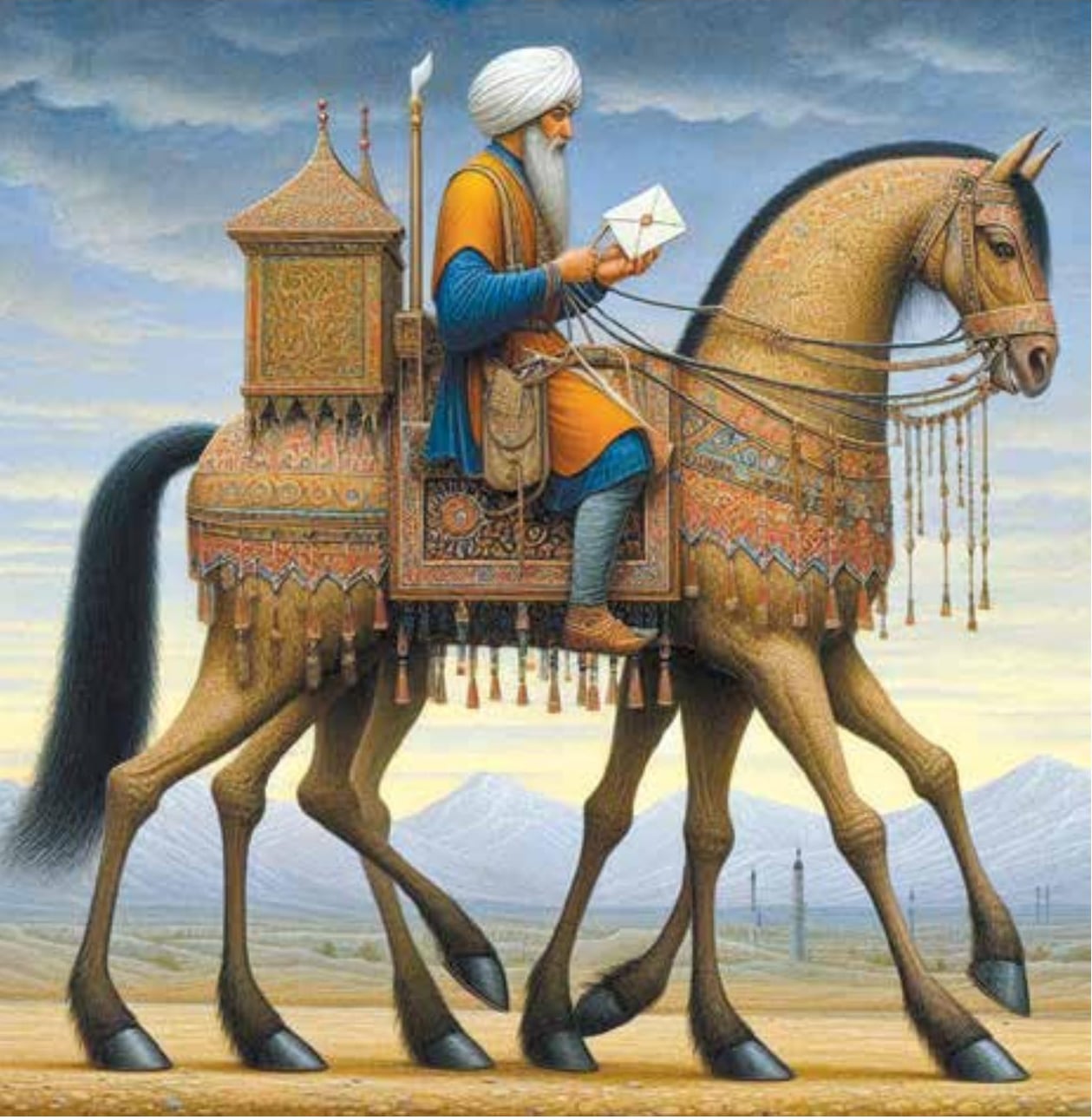
What is the mysterious creature known as a Rechesh? At first glance, one might wonder how this relates to Bava Basra. However, Rav uses this enigmatic creature to clarify his position (152b). He asserts that a gift that employs two distinct methods to transfer it to the recipient is valid, describing it as a “super gift.” He characterizes this gift as one that rides on two “Richsi.” The Rashbam interprets this line to mean that the gift possesses two distinct powers, though he does not specify what a Rechesh is. Instead, he refers us to a verse in Megillat Esther. After Haman was hanged, Mordechai and Esther needed to send messengers to inform the populace about the change in the King’s decree. The verse states (8:10), “Letters were dispatched by mounted couriers riding horses, rochvei haRechesh.” The Rashbam opines that the Rechesh mentioned in our Gemara is the same one referenced in the pasuk.
The Ibn Ezra in Megila explains that rochvei haRechesh means “used in the King’s service.” However, this interpretation does not align with Rashbam’s view in Bava Basra. It appears from our Gemara that Rechesh refers to a type of animal, not merely an adjective. The Aruch suggests that the term Rechesh used by Rav denotes a horse, implying that the gift he discusses is particularly enhanced, much like someone riding on two horses. However, this interpretation does not seem to correlate with the pasuk in Megilla, as the verse mentions Rechesh after already explicitly referring to horses. This suggests that Rechesh and horses are two separate creatures. The Metzudas Dovid speculates that Rechesh may be either a subspecies of horse or an entirely different, unknown animal. An anonymous comment from the Mahari Kra, included with the sefer, proposes that Rechesh is an eight-legged horse.
This discussion regarding the pasuk raises an intriguing question: this is the first instance of a Rechesh being utilized in the Megilla. Regardless of how we interpret the Rechesh, the underlying intent is the same: they employed the fastest animals available to inform the populace about the change in decree. Why, specifically at this time, were the speediest animals used instead of before? The Vilna Gaon explains that Mordechai was aware that the entire Jewish nation was living in fear. They had heard the terrible decree that mandated the destruction of the Jewish people and were suffering under the weight of this impending doom. In response, Mordechai took action by using the fastest means available to alleviate their anxiety as swiftly as possible.
However, another question arises. The verse in the Megilla states that the messengers were sent with the new message on the 23rd of Sivan, while Haman was hanged on the second day of Pesach. Indeed, the Mishna Berura (490:2) notes that it is customary on the second day of Pesach to remember during the yom tov meal that Haman was hanged on that day. If there was such urgency to send the message out, why was there a delay of over two months? The Vilna Gaon answered that it was necessary to dispatch the same riders who had delivered the initial decree. If different messengers were sent to modify the first decree, people might suspect it was a trick, as the King never cancels a decree outright. Although this was not a total cancellation, it was at least a modification. Therefore, a wait was required until the original riders returned from delivering the initial decree, after which those same messengers would be sent with a new message and on faster animals.
The Gemara in Bava Basra (147a) teaches us an important lesson about not keeping anxious people waiting. It states that through careful observation on Rosh Hashana, one can predict the weather patterns for the coming year. The Gemara then inquires about the relevance of this fact to halacha. It concludes that it pertains to the prayer that the Kohen Gadol would recite upon leaving the Kodesh Kedoshim on Yom Kippur.
Tosfos explains that if the Kohen Gadol anticipated a generally hot year, he would pray that it would not be too hot. Conversely, if he expected a cold year, he would pray for it not to be too cold. The Darchei Dovid asks, “Why does the Gemara single out the prayer of the Kohen Gadol? Surely everyone could pray about the weather!”
The answer lies in the fact that everyone else can mention both scenarios by saying, “If the weather is hot, it should not be too hot. If the weather is cold, it should not be too cold.” They do not need to know the weather pattern in advance because they can address both possibilities. However, the Kohen Gadol had the entire Jewish community anxiously awaiting his appearance. There were times when the Kohen Gadol would die and not survive the Yom Kippur service. This caused extreme nervousness and agitation among the people as they waited for him to emerge from the Kodesh HaKedoshim. In fact, the Gemara specifically states in Yoma that he kept his prayers short for this reason.
By knowing the weather pattern in advance, he could condense his tefillah. For instance, if he discerned that a hot year was in store, instead of saying, “If the weather is hot, it should not be too hot. If the weather is cold, it should not be too cold,” he could simply state, “It should not be too hot.” Although the difference in prayer length may seem trivial, it reflects what the Torah expects of us: we must not keep anxious people waiting, even for just a few seconds.
More Gemara stories
Questions on this article
Rabbi Avrohom Sebrow
Rebbe at Yeshiva Ateres Shimon in Far Rockaway. He leads the Daf Yomi chaburah at Eitz Chayim of Dogwood Park in West Hempstead, and writes “Delving into the Daf” each week for The Jewish Home.
About and contact