Message Received
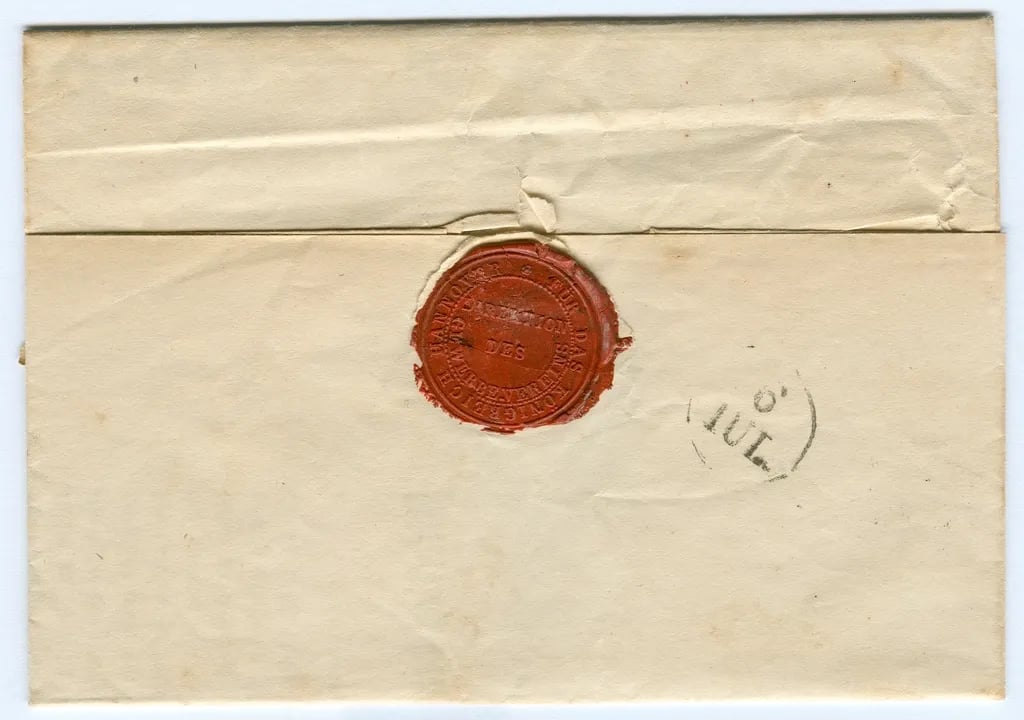
Rabbi Shlomo Kluger, zt’l, was the chief dayan in Brody, Galicia. One Shabbos, someone rode into town with an urgent message for the first Belzer Rebbe, Rav Shalom Rokeach, zt’l. There was a critically sick person in a neighboring village who wanted the Rebbe to daven for him, and the villagers there had decided that a message to that effect may be sent even on Shabbos.
Rav Kluger was aghast at the blatant chillul Shabbos employed in delivering the message to the Belzer Rebbe. Granted, only rabbinic prohibitions were violated, but who had authorized public chillul Shabbos, even if only on a d’rabbanan level?
The Belzer Rebbe’s son-in-law defended the action based on a daf in Bava Basra 156b. The Gemara discusses an individual who is critically ill and wants to distribute his property on Shabbos. In truth, the rabbis instituted that a critically ill individual may distribute property with an oral declaration. However, this individual wants the declaration to be accompanied by a formal act of acquisition, a kinyan. We may perform such an act, even though performing such an act is rabbinically proscribed on Shabbos. The Gemara explains that this leniency was granted so as to put the patient’s mind at ease. There is an element of concern that causing the patient to worry might shorten his life.
Rav Nissin Karelitz and the Shevet HaLevi explain that the Gemara is not discussing a bona fide situation of pikuach nefesh where the patient’s life is in mortal danger. If it were truly a matter of pikuach nefesh, any law of Shabbos may be violated to save the patient’s life. Rather, there is just an element of concern that the worry may adversely affect the patient’s well-being. In such a situation, the Talmud permits making a kinyan on Shabbos to put the patient’s mind at ease.
The Mordechai extended this halachah and rules that we may hire a gentile to travel on Shabbos to inform the patient’s relatives of his condition. This enables the relatives to travel to visit him right after Shabbos. This serves to put the mind of the patient at ease when he realizes that his relatives are on the way. The Shulchan Aruch follows this ruling (O.C. 306:9). Rav Shlomo Zalman Auerbach, zt’l, added that a person may even walk out of the techum Shabbos up to 12 mil (between 6 and 8.5 miles) to inform the relatives of the patient’s condition. In this situation, we may be lenient and consider techum Shabbos to be only rabbinic in nature up to 12 mil.
The Shevus Yaakov took this even further, and said that a Yid may even ride a horse on Shabbos to travel to the patient’s relatives. However, Shu’t Harei BaShamayim strongly disputes this last point. He argues that there are multiple prohibitions involved in riding a horse on Shabbos, and there may even be some issues of biblical violations.
In any case, we can only deduce from the Gemara that for the mental well-being of the critically ill patient we may violate one rabbinic law. What is the basis to violate a whole slew of rabbinic Shabbos restrictions?
The Belzer Rebbe’s son-in-law argued that the above discussion is the basis for violating the Shabbos to send a message for the Rebbe to pray for the patient. There is no need to discuss the definite efficacy of the Rebbe’s prayers. Rather, the point is what the patient believes. The patient truly believes that his Rebbe is the biggest tzaddik and his tefillos are the most powerful. The patient is pained by not being able to send a message on Shabbos to the Rebbe. Therefore, the Belzer Rebbe’s son-in-law argued, just as one may send a message to a patient’s relatives to put his mind at ease, we may violate rabbinic restrictions on Shabbos and send a message on Shabbos to the Rebbe to pray, in order to put the patient’s mind at ease.
The Yad Chanoch raises an interesting point. Why don’t we just lie to the patient and tell him that we sent a request for prayer to the Rebbe and really not do it? The whole point is to put the patient’s mind at ease, so if the patient thinks a message was sent to the Rebbe, he will be relieved; there is no need to actually violate the Shabbos. The Yad Chanoch proves that this cannot really be the correct course of action. If it were, this question could even be asked on the Gemara:
The halachah is that we are allowed to make a kinyan on Shabbos to put the mind of the patient at ease. Why don’t we just fool the patient and tell him that a kinyan was made? Even if he insists on participating in the kinyan, we should inform the other parties that they should have in mind not to actually acquire the items. (If someone picks up an ownerless object and has specific intent not to acquire the item, he does not become the owner.) So, here too, we should inform the other parties that the kinyan is just a charade to put the mind of the sick patient at ease, and it will not be considered making a kinyan on Shabbos. However, that is not the halachah. Instead, we make a real kinyan.
The Yad Chanoch argues that the fallacy of the argument that we should fool the patient is that it only works once. If it were recorded in the Shulchan Aruch that we should trick the patient to prevent Shabbos desecration, his mind would never be at ease. He would know that all our supposed actions on his behalf are just a dog-and-pony show. In fact, this halachah will only make the sick person more despondent. He will know that everything we are saying or doing may be just a trick for his supposed benefit.
This reasoning was actually first articulated by Rav Yonasan Eibeschutz. He was discussing a real situation of pikuach nefesh on Shabbos. The patient asked that a fire be lit to shed light in his room. In situations of pikuach nefesh, we follow this request. But in this scenario, the patient was blind. The Magen Avraham suggested that perhaps we should lie to the patient and tell him that a fire was lit. Rav Yonasan Eibeschutz disagreed. He reasoned that if this halachah were put into practice, the patient would never actually believe that the fire was lit, because he would always assume that everyone was just lying to him. Therefore, honesty is the best policy.
Rav Shalom Mordechai Schwadron, in his Shu’t Maharsham (III 225), adds a postscript to the earlier story. The Belzer Rebbe himself agreed that Shabbos should not have been violated to send him a message to pray. He said, “Now I will have to strengthen myself to see to it that the sick person will get well, for if not, [these acts will have been in vain. But if he does recover] then he will not have been the cause of a Sabbath desecration.” And so it was: the sick person recovered.
Stories in this article (1)
Questions on this article
Rabbi Avrohom Sebrow
Rebbe at Yeshiva Ateres Shimon in Far Rockaway. He leads the Daf Yomi chaburah at Eitz Chayim of Dogwood Park in West Hempstead, and writes “Delving into the Daf” each week for The Jewish Home.
About and contact