Readjusting The Scales
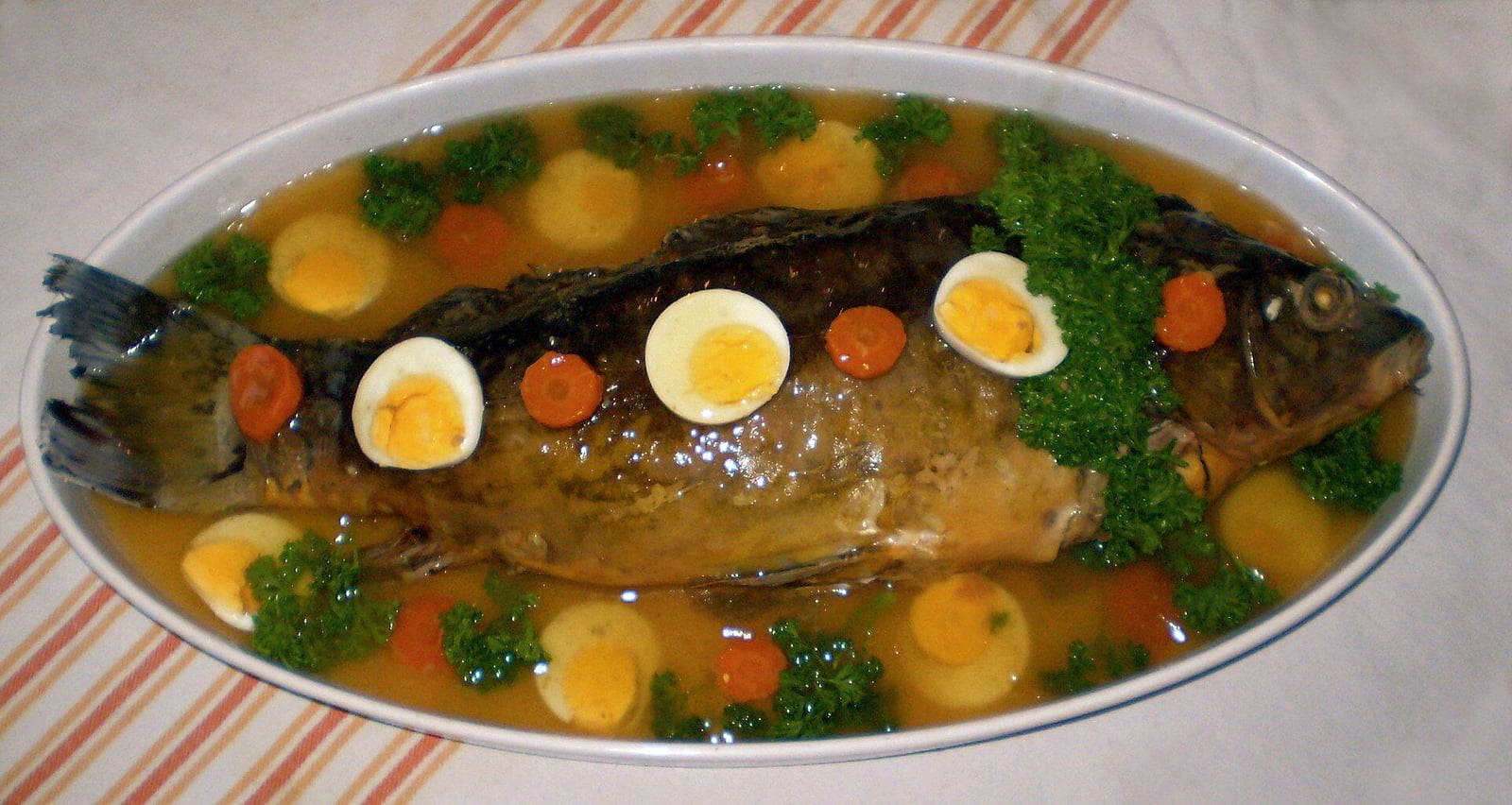
Gefilte is the o-fish-al appetizer of Shabbos. How did it achieve that status? The Gemara in Chulin (27b) relates that there is no Torah-prescribed method for killing fish. This is borne out by the following verse: “Could sheep or cattle be slaughtered for them and suffice for them? Could all the fish of the sea be gathered for them and suffice for them?” (Bamidbar 11:22) The Torah uses the terminology of slaughter in reference to animals rather than gather, which is used for fish. The Gemara deduces from here that simply gathering fish from the sea is enough to permit them for use.
The Kotzker Rebbe said that this is precisely the reason to eat fish on Shabbos. We may fulfill the mitzvah of shechitah, kisuy hadam, and nikkur with animals and fowl. No mitzvah, though, is specifically related to fish. Therefore, in order to use all of Hashem’s creations for a mitzvah, we fulfill the mitzvah of oneg Shabbos with fish. Another, simple reason for fish being the sole of the Shabbos table is that the numerical value of the word “dag” is seven. So we eat fish on the seventh day. (Divrei Tzadikim)
The Gemara relates an interesting incident (Bava Basra 166a–b). There was a time when birds used for korbanos became exceedingly expensive. Each pair of birds was sold for a gold dinar. A gold dinar at that time represented about a month’s salary for the average person. Women who had recently given birth could hardly afford to purchase them for the korbanos they were required to bring.
Rabban Shimon ben Gamliel cried fowl and declared, “I will not go to sleep tonight until the price drops dramatically.” He went to the beis midrash and declared that any woman who hitherto would have brought five korbanos is now free as a bird to just bring one; she may bring the others if she so chooses. (This is a rather simplistic interpretation; see the Gemara for all the technical details.)
After Rabban Shimon’s declaration, the price of the birds swooned dramatically—to a hundredth of the original price. According to Rashi in Kerisus, Rabban Shimon ben Gamliel instituted an emergency, limited-time measure to bring down the price of the birds. He felt that bnos Yisrael were being taken advantage of financially and were not getting proper tweetment. Perhaps some would chicken out of buying their korbanos. After the temporary measure, however, they were able to wing it. We can certainly conclude that the rabbis did at times see fit to intervene and lower the bill; they didn’t duck the issue.
However, was that measure only for the birds, or can it be applied to fish as well? Mullet it over for a second, then read the rest. (I briefly discussed this issue last week.) The question was posed to the Tzemach Tzedek (the rishon). It seems that hundreds of years ago, the gentiles of that place knew that the Jews had the halibut of buying fish for Shabbos, and they cod raise the prices without suffering a drop-off in sales. When the prices increased dramatically, the Jews realized that something was fishy. Some were in favor of instituting a temporary ban on the purchase of fish for Shabbos to cause the price to sink.
Others, however, referred to the Gemara in Beitzah (16a) that the money one spends on Shabbos and yom tov is not deducted from one’s yearly allotment. So, they reasoned, what difference does it make if the fish is expensive? Since they are buying it for Shabbos, their money will be returned to them in one way or another through Divine intervention, and they will remain afloat.
The Tzemach Tzedek ruled that a boycott was in order. Just as Rabban Shimon ben Gamliel curtailed the offering of korbanos, we may temporarily curtail the mitzvah of oneg Shabbos. This would be true even if eating fish on Shabbos is a mitzvah d’Oraysa, as some argue (see the Shulchan Aruch HaRav). However, for halachah l’maaseh we hold that eating fish is just one manifestation of the mitzvah of oneg Shabbos. One can fulfill the biblical mitzvah of oneg Shabbos with other dishes as well. So a boycott is certainly in order to bring the price of fish down.
As to the argument that the money spent on Shabbos will be returned: The Tzemach Tzedek said that it is fine for people who have the money to lay out, but not for a poor person who does not have the money to spend now and will not be able to buy the fish, even though there is a guarantee that the money will be returned to him later. Since these poor people were floundering, a temporary ban on buying fish for Shabbos was proper.
One interesting point that can be made from the above story is that the Tzemach Tzedek agreed that one should continue buying fancy food for Shabbos even if it is above one’s means. That money will be returned to him somehow that year. I heard the following caveat from R’ Reuven Feinstein, shlita: One cannot buy a $1,000 bottle of wine and expect the money to be returned. However, a food that is indeed within one’s means and suddenly becomes expensive may continue to be purchased without suffering any net loss in his income that year. This fits with the above story. Apparently the fish started out as affordable but was subject to the whims and manipulations of the gentile merchants.
Just one note: There is no way to tell how the Shabbos expenditures will be repaid to each individual. Perhaps the individual might be saved from losing his wallet. Perhaps there was a decree that he should sell six cars one week and now will sell seven. But one way or the other, Hashem will pay him back for the money he spends to honor Shabbos.
Stories in this article (1)
Stories in this article
More about Tzemach Tzedek
All storiesThe Tzemach Tzedek and the Price of Shabbos Fish
More stories in Chullin
All in this masechtaChizkiyahu Destroys the Copper Snake
The Donkey of Rabbi Pinchas ben Yair
Rabbi Pinchas ben Yair Splits the Ginai River
Rabbi Zeira Moves to Eretz Yisrael
Questions on this article

Rabbi Avrohom Sebrow
Rebbe at Yeshiva Ateres Shimon in Far Rockaway. He leads the Daf Yomi chaburah at Eitz Chayim of Dogwood Park in West Hempstead, and writes “Delving into the Daf” each week for The Jewish Home.
About and contact