Hashem’s Hechsher
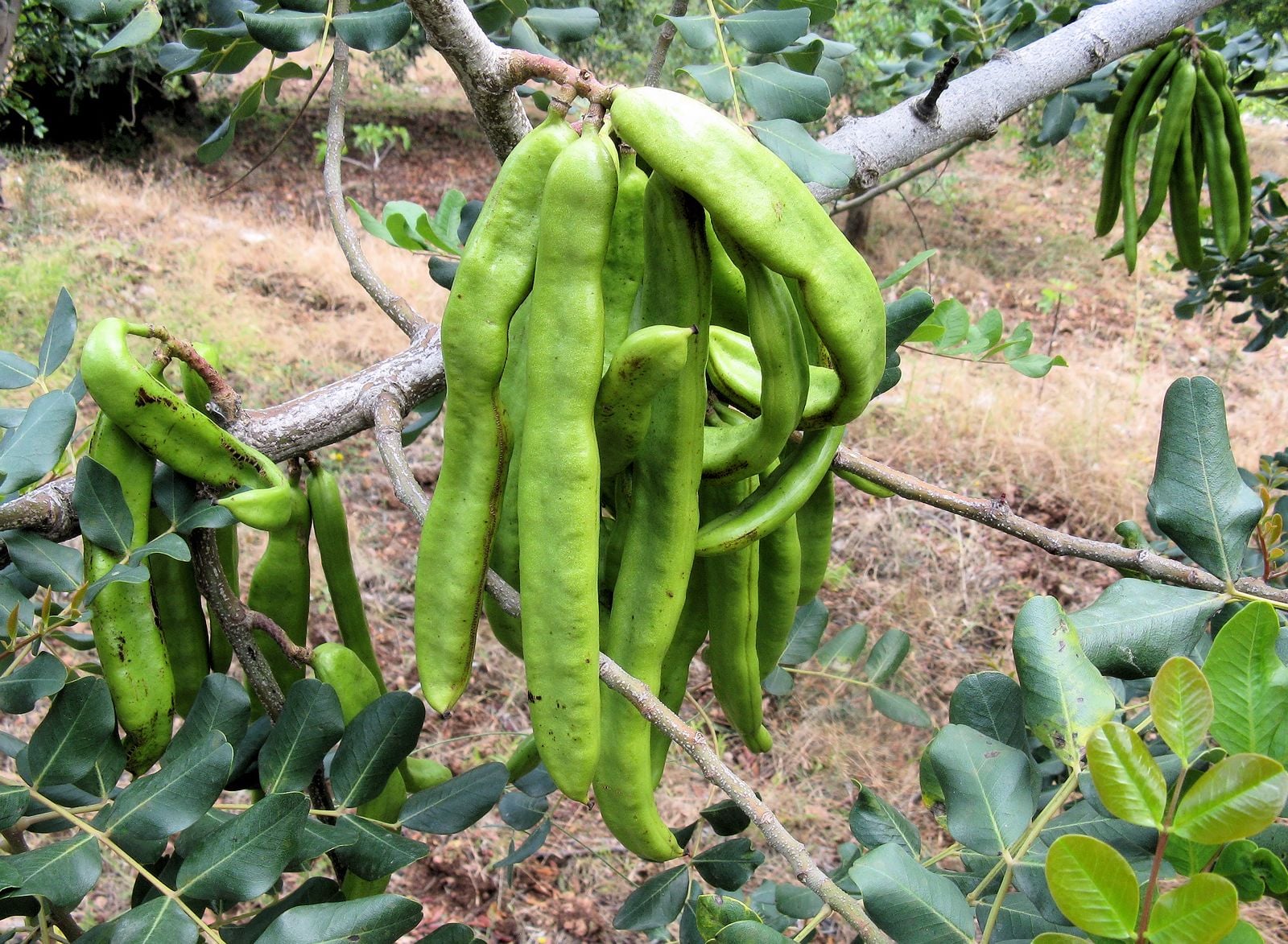
After Lag B’Omer, one of my neighbors asked me an interesting question. Rebbe Shimon bar Yochai and his son hid in a cave to escape from the wrath of the Roman government. Hashem miraculously supplied them with a carob tree for sustenance. How were they allowed to eat fruit from the carob tree? The fruits produced by a tree in its first three years of life are forbidden because of orlah. In Israel, this is a biblical prohibition. Of course one could argue that Rebbe Shimon bar Yochai’s life was in danger and he was permitted to eat the fruit because of pikuach nefesh. However, this answer seems rather forced. If Hashem was performing a miracle couldn’t he just supply them with “kosher” food? The truth is that I’m really unsure if the entire question is valid to begin with. But for an article, anything goes!
Perhaps one could argue that a carob tree is not subject to orlah. Rebbe Eliezer says (Tamid 29b) that wood from the carob tree was used to establish the fire on the Altar. Perhaps the main purpose of a carob tree is for wood and therefore it does not qualify as a fruit tree. This argument is clearly spurious. The Shulchan Aruch rules that even trees that are not usually planted for their fruit are subject to orlah if planted for their fruit. So even if we were to say that generally the primary purpose of a carob tree is for wood, Rebbe Shimon bar Yochai’s tree would still be subject to orlah, because that tree was meant to supply him with food.
In any case, no inference can be made from Rebbe Eliezer’s statement. The Gemara states that they also used branches from fig trees and date trees to supply wood for the Altar. According to Rav Papa they even used the branches of date and fig trees that were currently fruiting. No one would argue that the primary purpose of a date tree is for wood. It is true that Rav Acha bar Yaakov disagreed with Rav Papa. He was of the opinion that only non-fruiting date and fig trees were used. However, the Mefareish (the anonymous commentary printed on the side of tractate Tamid) explains that even Rav Acha bar Yaakov would permit wood to be sourced from fruiting carob, apple, or pear trees. Wood was not allowed to be brought from olive, fig, and date trees or grape vines. This is due to the special nature of these fruits, as they are among the fruits that Eretz Yisrael is praised for. However, there was no such limitation on other fruit trees. So carob may be halachically similar to any other fruit that is not one of the seven species. Orlah clearly applies to all fruits and not just fruits from the seven species.
There is a well-known story with Choni HaMagel. One day he was journeying on the road and he saw a man planting a carob tree and asked him, “How long does it take [for this tree] to bear fruit?” The man replied, “Seventy years.” He then further asked him, “Are you certain that you will live another 70 years?” The man replied, “I found [ready grown] carob trees in the world; as my forefathers planted these for me so I too plant these for my children.” The end of the story was that Hashem miraculously made Choni sleep until this tree bore fruit.
The story indicates that it takes 70 years for the carob tree to bear fruit. Perhaps that is the answer to my neighbor’s question. It wasn’t a new tree but an old tree transplanted for Rebbe Shimon bar Yochai. Can a 70-year-old tree be subject to orlah? Yes, actually. The Shulchan Aruch rules that if an old tree is replanted, then the years of orlah start again. Even a 70-year-old tree can be subject to orlah if it was uprooted and planted elsewhere. However, there is one exception to this rule. If enough of the original dirt covers the roots to enable the tree to live without additional dirt, the years of orlah do no start again. This perhaps is a viable answer. Hashem transplanted an existing carob tree with its dirt to a new location outside the cave. Therefore, the years of orlah did not start again.
Still, granted such a miracle was possible, how did Rebbe Shimon bar Yochai know that is what occurred, that the tree was transplanted with the dirt? We are forced to conclude that Rebbe Shimon bar Yochai relied on Hashem’s hechsher. If Hashem provided him this fruit to eat, then it must be kosher!
The Parashas Mordechai offers two reasons why Hashem specifically chose a carob tree to supply Rebbe Shimon bar Yochai with fruit. The first is a practical one. Carob is not such a desirable fruit. Hashem did not want travelers to discover Rebbe Shimon bar Yochai and his son hiding in the cave. So Hashem planted a tree that would not entice people to eat from it and come close to the cave. The second reason was to indicate that just as a carob tree bears fruit after 70 years, so too the righteous are rewarded in the next world after 70 years. Seventy years represents a typical lifespan of a human. Because of their harsh living conditions, Hashem was reminding them of the great reward they could expect in Olam HaBa.
All this talk of 70 years made me wonder, do people still plant this tree that only fruits after 70 years? It turns out that the carob tree we all know and love fruits after only 10 or 15 years. However, scientists suggest that there used to be many more species of carob trees that are now extinct. A different approach was offered by Feliks (1985, 2007). It is the female carob tree which produces fruit. The male carob tree is just a pollinator. Feliks suggested that very old male trees may produce pistilate flowers and thereby also produce fruit. It was a male tree that the man suggested in the above story would only fruit after 70 years.
I just wanted to point out an application of the laws of orlah mentioned above. One can purchase fruit trees from a catalog or online nursery. These trees are usually shipped bareroot. The years of orlah would start when one plants them. However, if one bought a potted tree from a local nursery, one would not have to start orlah again. If there is a type of tree that one could only find online or in a catalog, he should order from one of the few nurseries that ship potted plants if he wants to avoid orlah problems. (Some trees shipped are anyway a few years away from fruiting. This might make this point moot.)
Someone suggested that many local nurseries just buy cheap bareroot trees from various sources. They then pot them and raise the price. Does this create an orlah problem even from trees from local nurseries? For starters, HollyBrook Orchards takes pride in the fact that the trees they ship to nurseries are in the same container they were grown in. This should produce a healthier tree with less transplant shock than a bareroot tree. One local nursery, Cimato and sons, sells trees from HollyBrook. (One can contact HollyBrook to find other retailers.)
However, it is my opinion that outside of Israel one can purchase a potted tree from any nursery. This is due to the fact that the laws of orlah outside of Israel are much more lenient. As long as one doesn’t know for sure that a tree was bareroot and potted, one does not have to assume that it was. As long as there is a possibility that it was potted for three years, one does not have to start orlah again. This is just my opinion. Please ask your rabbi for practical guidance. To be clear, this same leniency does not apply to other areas of Jewish law. In kashrus, for example, one cannot assume a product is kosher if he doesn’t know otherwise. However, in my opinion, one is allowed to make such an assumption for orlah.
Finally, see the Shulchan Aruch as to how years for orlah are calculated.
Stories in this article (1)
Stories in this article
Questions on this article

Rabbi Avrohom Sebrow
Rebbe at Yeshiva Ateres Shimon in Far Rockaway. He leads the Daf Yomi chaburah at Eitz Chayim of Dogwood Park in West Hempstead, and writes “Delving into the Daf” each week for The Jewish Home.
About and contact