Big Shoes To Fill
While a gentile may wake up in the morning and immediately eat to his heart’s content and get dressed however he feels, we have halachos that guide our morning. Although the halachos of dressing are not difficult, some may find it hard do anything right while groggy-eyed. The basic rule of thumb is that we give preference to the right side over the left side. Hence, we put on the right sock first. We put on the right shoe before the left shoe. Yet, we tie the left shoe first because the left side is considered more important with regards to tying because tefillin is tied on the left arm. This is true even for women who don’t wear tefillin. A lefty, though, who wears tefillin on his right arm, ties his right shoe first.
Rav Avraham Liss was learning this topic with his long-time chavrusa. His chavrusa asked him why there are halachos even for trivial things like putting on shoes. The next time Rabbi Liss met his Rebbe, HaGaon Avrohom Pam, zt’l, he asked him the question. Rav Pam related the following anecdote: There was a wayward Jew who slowly left the path of Yiddishkeit. He was engaged to be married to a nachriyah. On the day of his wedding, he woke up and got dressed. He was tying his shoes when it dawned on him that he had just put on his right one first. Now he was tying his left shoe first. The realization that Yiddishkeit was so deeply engrained in his very nature hit him with a jolt. Remorse slowly built up for the decisions he had made and he called off the wedding. He returned to Yiddishkeit to become once again an upright member of K’lal Yisrael. These seemingly insignificant acts of halachah that we follow in the morning set the tone for the rest of our day and possibly for the rest of our lives.
In the daf this week, we learned the story of Rav Chiya bar Ashi. He faithfully attended to the needs of his rebbe, Rav. He would often drop water on his rebbe’s shoes even on Shabbos to clean them. This opened up a discussion about the permissibility of using water to clean clothing on Shabbos. The Gemara concludes that one is not allowed to intentionally cause clothes to become wet on Shabbos. With fabric, the very act of becoming wet is considered laundering. This violates the av melacha of melabein. However, leather, which is significantly less absorbent than fabric, may be cleaned by pouring water over it. One may also rub the shoe gently to clean it of wet mud. (Dried mud involves other prohibitions.) Heavy rubbing may constitute a Biblical or rabbinic violation of laundering even for leather. However, if there is fabric stitching on the shoe, you may not pour water over it. In addition to cleaning the leather you are laundering the fabric stitching. There is another leniency related to cleaning shoes. Whereas Ashkenazim refrain from dusting off their clothes on Shabbos, they are permitted to dust off shoes. (There are circumstances under which dusting off clothes is permissible as well.)
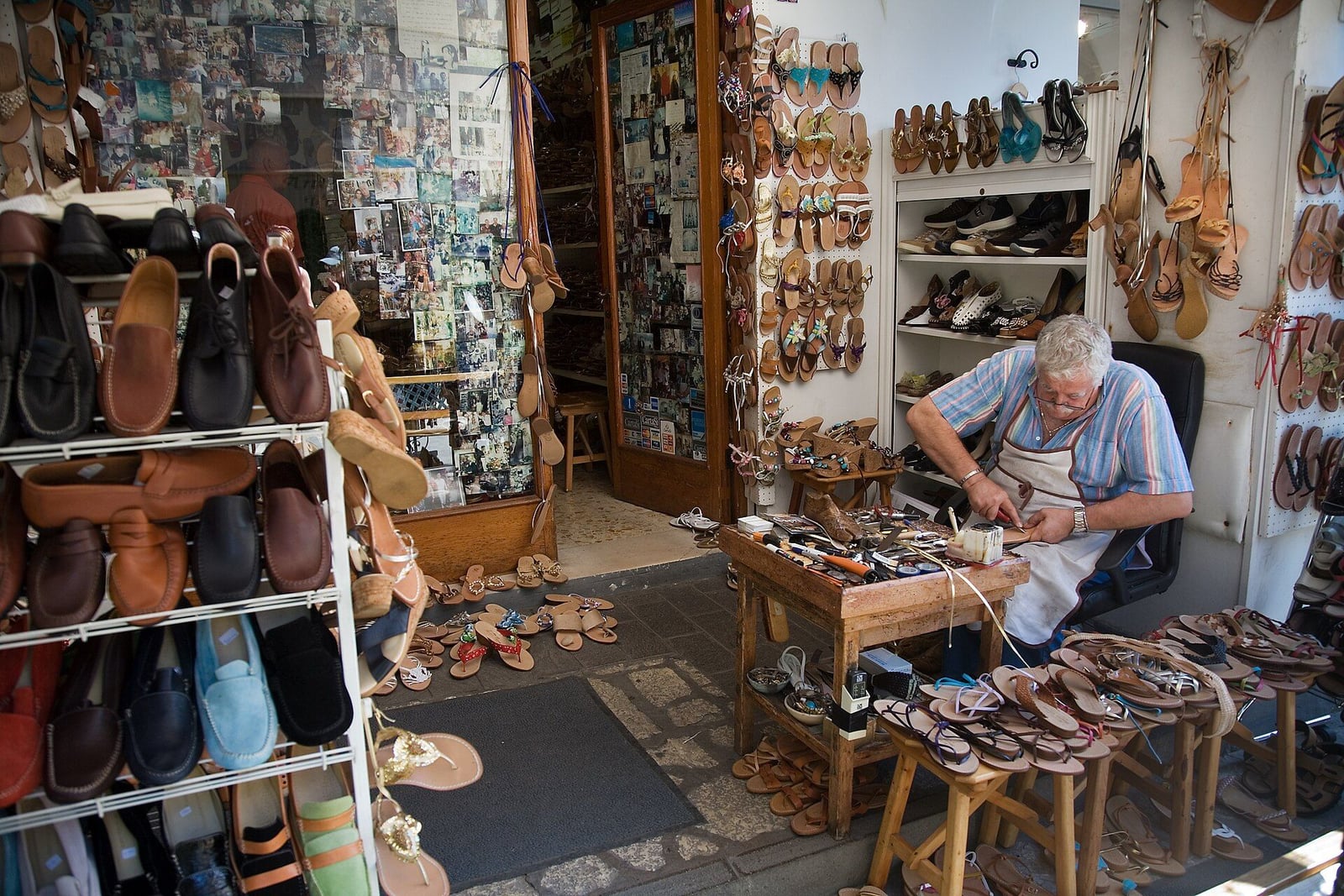
In the back of my mind the whole discussion of shoes reminded me of my rav’s derashah the previous week. My rav was exhorting those assembled to be ever diligent to grab precious extra moments for Torah study. He mentioned that the Novominisker Rebbe used to have a special seder in learning one masechta while his wife was shopping. Another person he singled out for honorable mention was Yehuda Uriel. Yehuda emigrated from Samarkand, Uzbekistan in 1993. His grandfather was a shoemaker there. His father followed in his father’s footsteps and runs a shoe repair shop in downtown Manhattan. Yehuda graduated from Touro College with a degree in business management. When the opportunity arose five months ago to run a shoe repair store on Doughty Blvd. that serves a significant Jewish clientele, he jumped at the offer. What earned Yehuda the honorable mention? When my rav entered the store he witnessed Yehuda utilizing his downtime in the store to learn. When he’s not fixing shoes, watches, or jewelry, he dedicates himself to Torah. Very often, if you come to the store after four o’clock, you will find him studying with Rabbi Avrohom Glenn.
Yehuda follows in the footsteps of Rav Chiya bar Ashi, learning Torah and cleaning his rabbi’s shoes!
Stories in this article (2)
Stories in this article
More stories in Zevachim
All in this masechtaDovid HaMelech Prepares the Beis HaMikdash
Moshe Designates the Cities of Refuge
The Chofetz Chaim and the Spilled Apple Cart
Rabbi Yochanan and the Widow's Footsteps
Questions on this article

Rabbi Avrohom Sebrow
Rebbe at Yeshiva Ateres Shimon in Far Rockaway. He leads the Daf Yomi chaburah at Eitz Chayim of Dogwood Park in West Hempstead, and writes “Delving into the Daf” each week for The Jewish Home.
About and contact