All Roads Lead To . . . Yerushalayim
The Gemara in Avodah Zara (2a–b) relates a fascinating story, albeit one that hasn’t happened yet. It will take place sometime after Mashiach comes. Hashem will hold a Torah and proclaim, “For each one who occupied himself with it, let him come and receive his reward.” Immediately, all the nations of the world will gather and come in pandemonium. The Maharsha explains that each nation will assume that Hashem is holding their books of laws that they erroneously followed. They will therefore come zealously to collect their reward.
The kingdom of Rome will enter before Him first . . . The Holy One will say to them, “What good deeds did you do throughout the generations that you are deserving of reward? (Tosfos’s explanation.) They will say before Him, “Master of the World! We installed many markets, we made many bathhouses, we amassed much silver and gold, and all this we did for no purpose other than to enable [the people of] Israel to busy themselves in Torah.” The Holy One will say to them, “Fools of the world! All that you did, you did for your own purposes. You built marketplaces for your own needs, bathhouses to adorn yourselves, and the silver and gold is actually Mine . . .”
Rashi explains that the Romans were claiming that their markets made it very convenient for Jews to learn Torah. After all, they didn’t have to interrupt their studies to travel far to obtain their necessities. They were able to buy them at the local Roman shopping mall. Further, they were able to profit from the local commerce without having to travel to China. Bathhouses were the recreation of the day, and those who engaged in the deep study of Torah were offered a brief respite.
However, it is not so clear what the Romans intended when they claimed to Hashem: “We amassed much silver and gold.” How did that facilitate the study of Torah? The Raavad explains that the Romans were claiming that they amassed fortunes of money with the sole intent that they wouldn’t find it necessary to tax those who study Torah. Clearly, they otherwise would have been content to live as paupers, but it was necessary for them to become billionaires to allow those learning Torah to live tax-free.
The commentators are amazed at the sheer audacity and stupidity of the Romans to try and deceive Hashem. Obviously, Hashem knows what their true intentions were!
The Chiddushei HaGriz says that the Romans are somewhat right. The only reason that they amassed fortunes and built bathhouses and marketplaces was to enable the Jewish people to learn Torah. That is why Hashem called them only fools and not liars. The problem was that it wasn’t their true intent, so they weren’t deserving of reward. However, after Mashiach comes, when one is able to look back at history, it will be crystal-clear that everything was part of the Divine plan. They may have intended to build bathhouses for their own self-indulgence, but Hashem was really pulling the strings. Hashem was orchestrating the provisions necessary for those who study Torah. It will be so obvious to all what the purposes of the marketplaces were that it could have only been for the sake of Torah!
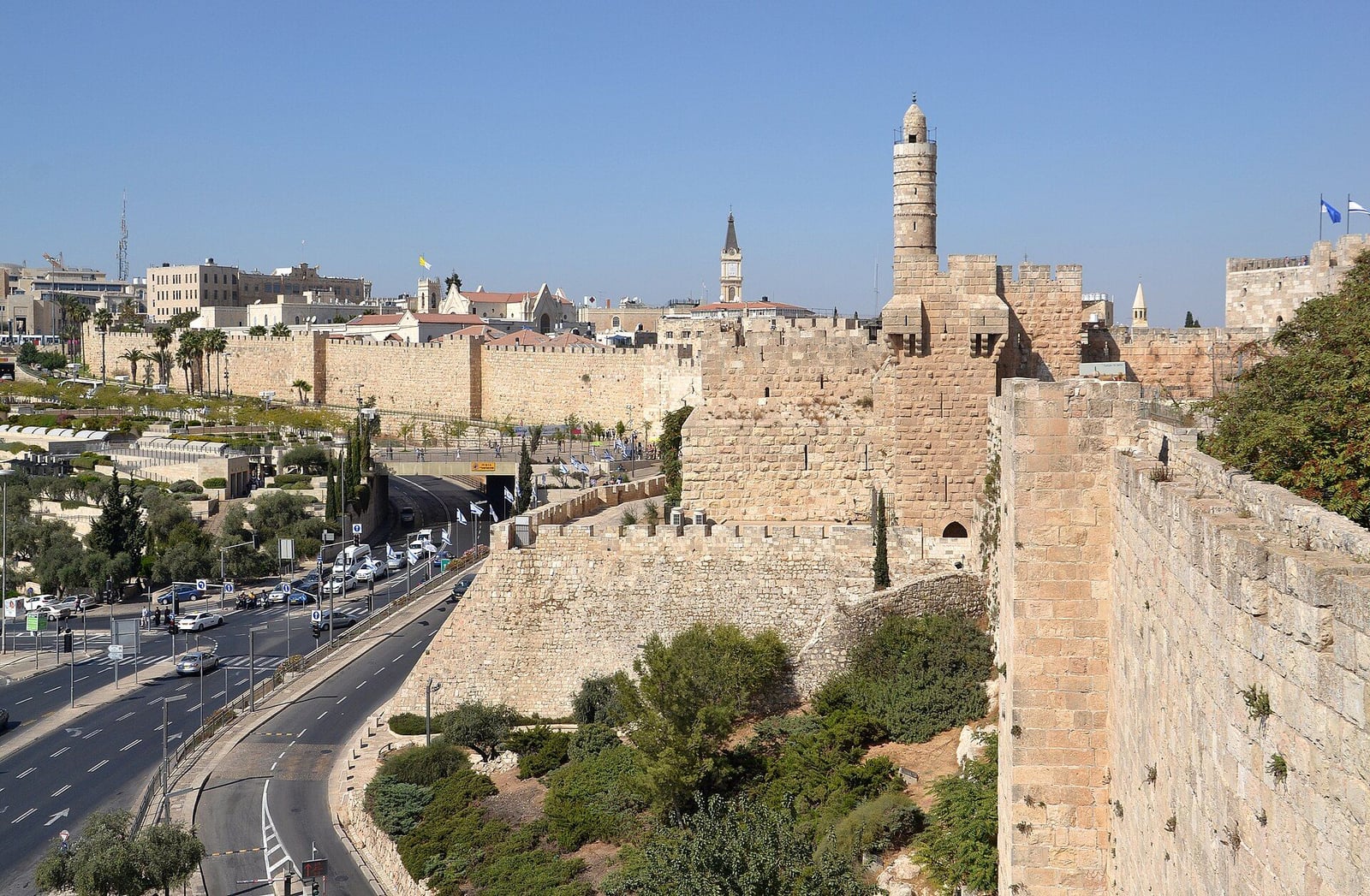
The year 1964 saw the first-ever papal visit to Israel. That visit, by Pope Paul VI, lasted only 11 hours. Pope Paul VI never once called Israel by name, and went out of his way to avoid using the word Jews. In those days, the Vatican saw Israel as a non-country and its people as a non-nation. Pope Paul VI even used the occasion to praise his mentor, Pope Pius XII, defending the latter’s silence during the Holocaust. The pope then was careful to stress that his pilgrimage was “a purely religious act, absolutely extraneous to any kind of political or temporal considerations.” He avoided all sites of Jewish significance, including Yad Vashem, Israel’s national Holocaust museum and memorial. At that time, Israel’s statehood was still unrecognized by the Vatican. So what higher purpose could there have been in this Roman descendant visiting Jerusalem?
Rabbi Berel Wein points out that in 1964, the United States paid for the paving of the road to East Jerusalem from somewhere in Jordan. This was to facilitate an easy and comfortable trip for the pope. However, three years later, this very same road had a different purpose. It enabled Israeli forces to effectively mobilize and rout the Jordanian forces. It facilitated the reunification of Yerushalayim!
This road that was seemingly constructed for a Roman was made for Torah! That thoroughfare paved the way for all the Torah that is learned in the Old City today. It seemed like it was just a street, but it was a high road.
Stories in this article (1)
Questions on this article
Rabbi Avrohom Sebrow
Rebbe at Yeshiva Ateres Shimon in Far Rockaway. He leads the Daf Yomi chaburah at Eitz Chayim of Dogwood Park in West Hempstead, and writes “Delving into the Daf” each week for The Jewish Home.
About and contact