Road to Redemption
The Gemara in Avodah Zara (2a-b) opens with a scene so grand—a story that has not yet occurred but waits just beyond the curtain of redemption. After the coming of Moshiach, Hashem will raise a Torah scroll before the world and declare, “Let all who occupied themselves with it come and receive their reward.”
In a storm of excitement and disorder, the nations of the world will come rushing in—clamoring, jostling, each eager to claim their share of eternal reward. The Maharsha explains that every nation will believe Hashem is holding their sacred lawbooks, imagining that their philosophies, codes, and ideologies have earned them merit. In their eyes, their history was righteous.
Rome, imperial and proud, will enter first, standing tall with centuries of conquest and civilization behind them. “Master of the Universe,” they will say with confidence, “we built sprawling marketplaces, bathhouses, and heaped up silver and gold—not for ourselves, but so that the Jewish people could dwell in peace and study Torah.”
Hashem replies: “Fools of the world! All that you have built, you have done for yourselves. The marketplaces served your economy, the bathhouses your indulgence, and the silver and gold—you merely held what was Mine.”
Rashi and Tosfos explain that the Romans claimed their infrastructure provided Jews with the convenience of accessing daily needs without traveling far. The bathhouses provided a form of recreation and refreshment for weary scholars. Trade hubs kept local commerce strong and Torah learners closer to home.
But what of their final claim—“we amassed much silver and gold”? The Raavad offers a startling twist: the Romans argue that they became wealthy so they wouldn’t have to impose taxes on the scholars of Torah. Their riches were, they claim, an act of “sacrifice”—so that those in the study halls could live free of financial burden.
The claim that everything they did was for the sake of the Jews would almost be comic if it weren’t so bold. Do they think the Creator of thought, the Knower of secrets, can be fooled by spin?
And yet, the Chiddushei HaGriz brings a remarkable insight: Rome is not lying, only foolish. Indeed, from the Divine perspective, the purposes of their actions were for Torah. They may not have intended it, but Hashem orchestrated their deeds for higher purposes. Bathhouses, markets, roads, and wealth—all would eventually support Jewish survival and spiritual growth. That’s why Hashem calls them “fools” rather than deceivers. They were instruments of Providence, even if unwitting.
In 1964, the world watched as Pope Paul VI became the first pontiff in history to visit the Holy Land. His visit lasted barely eleven hours, but every minute was choreographed with diplomatic caution. He refused to refer to Israel by name, carefully avoided any mention of the Jewish people, and pointedly skipped all Jewish sites of memory and meaning, including Yad Vashem. At the time, the Vatican did not recognize Israel and viewed its existence as a political inconvenience.
So complete was the Pope’s avoidance of Israeli recognition that he refused to land at Lod Airport (now Ben Gurion Airport), Israel’s main point of entry. Instead, he arrived in Jordan, landing in Amman, and crossed the Allenby Bridge by car into Jordanian-controlled East Jerusalem. This diplomatic detour necessitated the paving of a special road to facilitate his journey into the Old City.
To accommodate the Pope’s itinerary, a new road was paved—from East Jerusalem, skirting around the Old City’s southeastern walls. It led to the Lion’s Gate, where he would enter the Old City and continue on foot toward non-Jewish holy sites. The road was built quickly, funded by the United States, and tailored specifically for this short, symbolic papal pilgrimage.
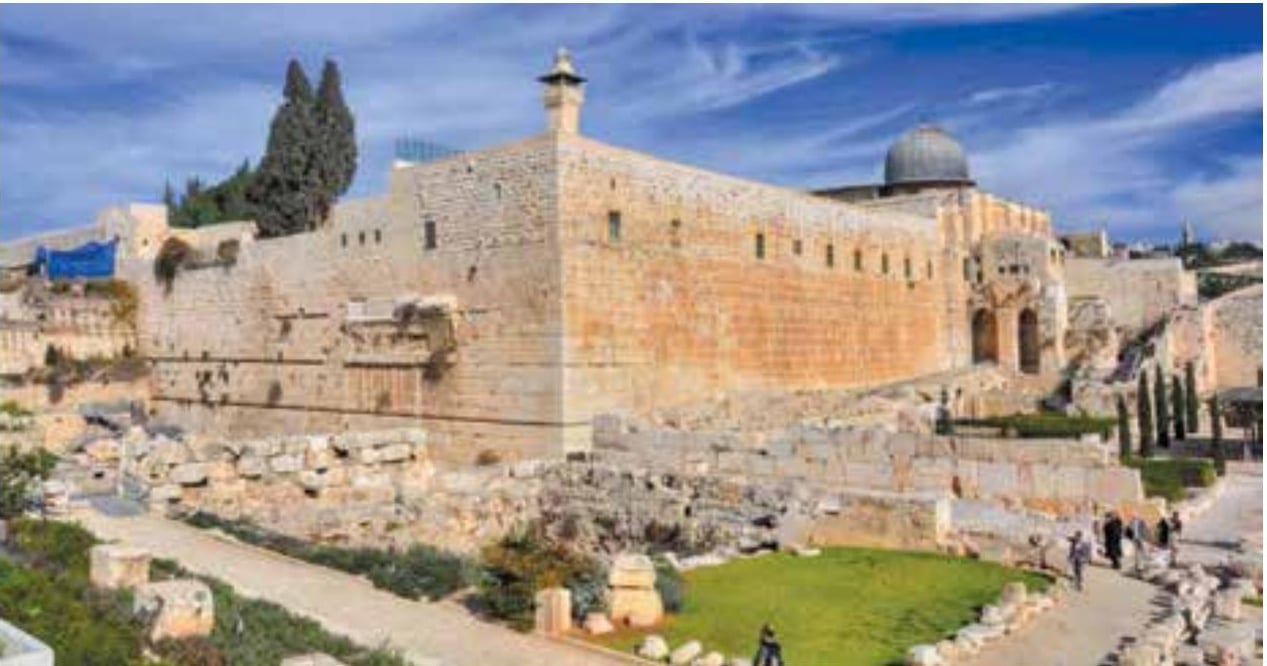
That road still exists today. It is known as Derech HaOfel. It runs along the eastern slope of the City of David, beginning near the Silwan neighborhood, and curves up past the Kidron Valley, winding around toward the Dung Gate, the southern entrance to the Old City. Today, it serves as a critical artery for traffic going into the Jewish Quarter, the Kosel (Western Wall), and yeshivas within the Old City.
Rabbi Berel Wein famously observes the irony and Divine choreography of this infrastructure. What was initially built to usher a Roman religious figurehead in and out of Jerusalem with dignity ended up paving the way for Jewish soldiers just three years later during the Six-Day War. Israeli troops used the very same road to flank Jordanian positions and reclaim access to the Old City. Through that road, Yerushalayim was reunited.
Today, thousands of Torah learners—day and night—travel on Derech HaOfel. Buses bring talmidim to the Aish HaTorah, Yeshivat HaKotel, Netiv Aryeh, and other batei midrash.
The road may have been intended for a pope, but Heaven paved it for the Torah. What appeared to be a road for a Roman was, in actuality, a high road for holiness.
More Gemara stories
Questions on this article
Rabbi Avrohom Sebrow
Rebbe at Yeshiva Ateres Shimon in Far Rockaway. He leads the Daf Yomi chaburah at Eitz Chayim of Dogwood Park in West Hempstead, and writes “Delving into the Daf” each week for The Jewish Home.
About and contact