Words vs. Swords
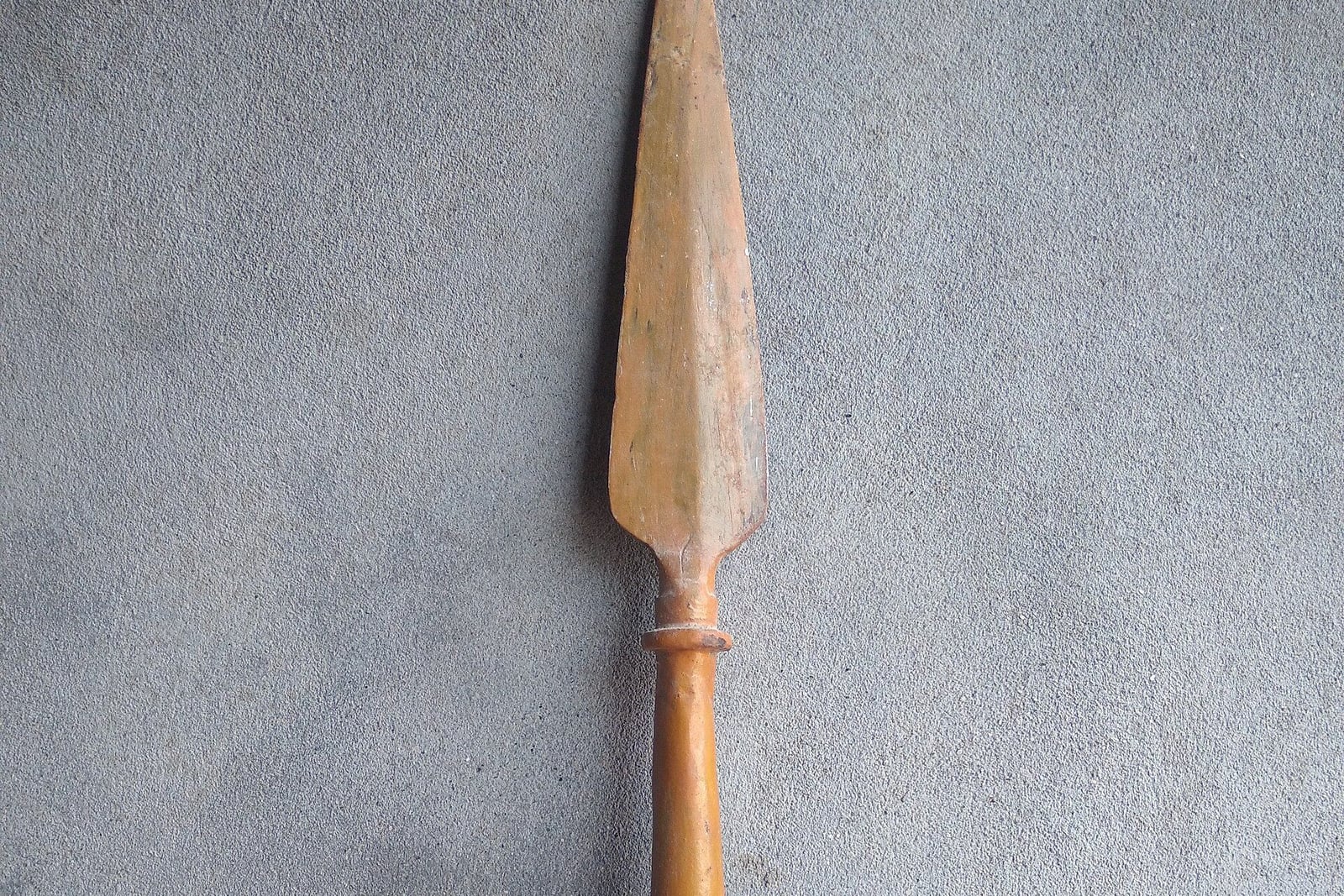
“Sticks and stones will break my bones, but words . . .” Well, the adage might need a revision, according to a recent study. New research shows that when people hear or read pain-related words, such as “plaguing,” “tormenting,” and “grueling,” the section of the brain that retains memories of painful experiences (the brain’s “pain matrix,” acting as a reminder to avoid painful situations in the future) is triggered.
Psychologists from Friedrich Schiller University had 16 subjects read pain-related words. During the experiment, participants had their brains scanned with functional magnetic resonance imaging. There was an activation in the pain matrix in response to pain words.
I have always felt that the adage was never true anyway. Support for my belief comes from last Wednesday’s daf.
The Gemara discusses the events surrounding Pinchas’s act of zealotry. One Jewish man after another began to indulge in base acts of immorality. The situation became so awful that Zimri, son of Salu, one of the leaders of the tribe of Shimon, committed acts of immorality in his tent with one of the Moabite women, within the sight of Moshe and the entire assembly of the Jewish people. The only one to stand up against this abomination was Pinchas, son of Elazar, grandson of Aaron, the Kohein Gadol. As a true zealot, he grabbed a spear and killed them.
The Gemara (Sanhedrin 82b) records that six miracles occurred for Pinchas at that time. The second miracle on the list is that Zimri did not call out and summon help. Pinchas had disguised his spear by hiding the metal blade in his clothing and using the wooden handle as a walking stick. In this way he was able to gain access to Zimri’s tent. When Zimri saw him assembling the spear he should have called out for help. The tent would have been rushed by the thousands of people gathered outside who were ready to save Zimri. Yet, Hashem decreed that Zimri should not summon help, so none was forthcoming.
The sixth miracle on the list is that Pinchas was not killed himself after he slew Zimri. The Midrash says that the members of the tribe of Shimon were in fact ready to kill Pinchas when he exited the tent holding their slain leader. However, just as they were prepared to act, Hashem sent an angel who began striking them down with a plague. Without this miracle, Pinchas would surely have been killed.
The Acharonim are bothered by the need for two separate miracles. Why didn’t Hashem just start the plague earlier so that even if Zimri did call for help they would be unable to help him? Many answers are offered. Perhaps the simplest answer is proffered by the Eitz Yosef. Even if there were an ongoing plague, they still would have answered the call to rescue their leader. Their desire for revenge was halted by the plague, but if they knew their leader was in distress they would have answered the call regardless.
Another answer offered by the Eitz Yosef demonstrates Hashem’s love for K’lal Yisrael even when they are sinning. Sure, the plague could have started earlier. However, that would mean that more people would perish. It was worth having an extra miracle silencing Zimri, in order to have the plague start a few moments later to save the lives of some members of shevet Shimon.
In any event, there were indeed two separate miracles required to save Pinchas’s life. Surely, Pinchas was aware of the risks to his life but acted anyway for the sake of kiddush Hashem.
Following Pinchas’s actions, the Torah refers to him as “Pinchas ben Elazar ben Aharon haKohein” (Bamidbar 25:11). The K’li Yakar explains that Pinchas was the son of Elazar, whose marriage partner was from the daughters of Yisro, who was a Midianite. His ancestor Yisro himself fattened calves for idols. Furthermore, his grandfather, Aharon, had a major part in making the Eigel, also a form of idolatry. So on all accounts, Pinchas should not have acted. The scoffers of the generation would call him the biggest hypocrite. Here he comes from a family descended from Midianites and idol worshippers and he kills a nasi for cohabiting with a Midianite woman who serves idols? The Torah therefore extols the virtues of Pinchas—that this consideration did not deter him from acting zealously to honor Hashem.
In light of the Gemara’s list of miracles, my rosh yeshiva, zt’l, pointed out that the comments of the K’li Yakar are astonishing. Here Pinchas willfully put himself into a situation of extreme danger. He was ready to give up his life al kiddush Hashem. He most certainly would have been killed if not for miraculous Divine intervention. Is it possible that a tzaddik as great as Pinchas might not have performed this tremendous mitzvah simply because of what the scoffers of the generation might say?
We can see from here the great impact that another’s words can have on an individual. Even just the anticipation of what another might say can significantly affect someone’s actions. Pinchas—not wanting to be the butt of scoffers and bloggers—perhaps could have chosen not to act, instead rationalizing, “Well no one else is acting; why do I have to get involved?” Yet, the Torah is extolling Pinchas as being a virtuous tzaddik. He did not allow his thought process to be clouded just to maintain acceptance by all.
Still, the lesson here is a powerful one. It is conceivable that a person is willing to put his life in danger and is still not able to subject himself to others’ ridicule. We have a tremendous obligation to ensure that our words are not the cause of another’s extreme pain. As the saying should go, sticks and stones will only break my bones, but names can really hurt!
Stories in this article (1)
Stories in this article
More about Pinchas
All storiesPinchas Kills Zimri and Kozbi
More stories in Sanhedrin
All in this masechtaThe Vilna Gaon and the Minor's Kiddushin
Aharon HaKohen and the Golden Calf
Chur's Death and Aharon at the Golden Calf
Chaplain Samson and the Airman's Baptism
Questions on this article

Rabbi Avrohom Sebrow
Rebbe at Yeshiva Ateres Shimon in Far Rockaway. He leads the Daf Yomi chaburah at Eitz Chayim of Dogwood Park in West Hempstead, and writes “Delving into the Daf” each week for The Jewish Home.
About and contact