A Standout Moment
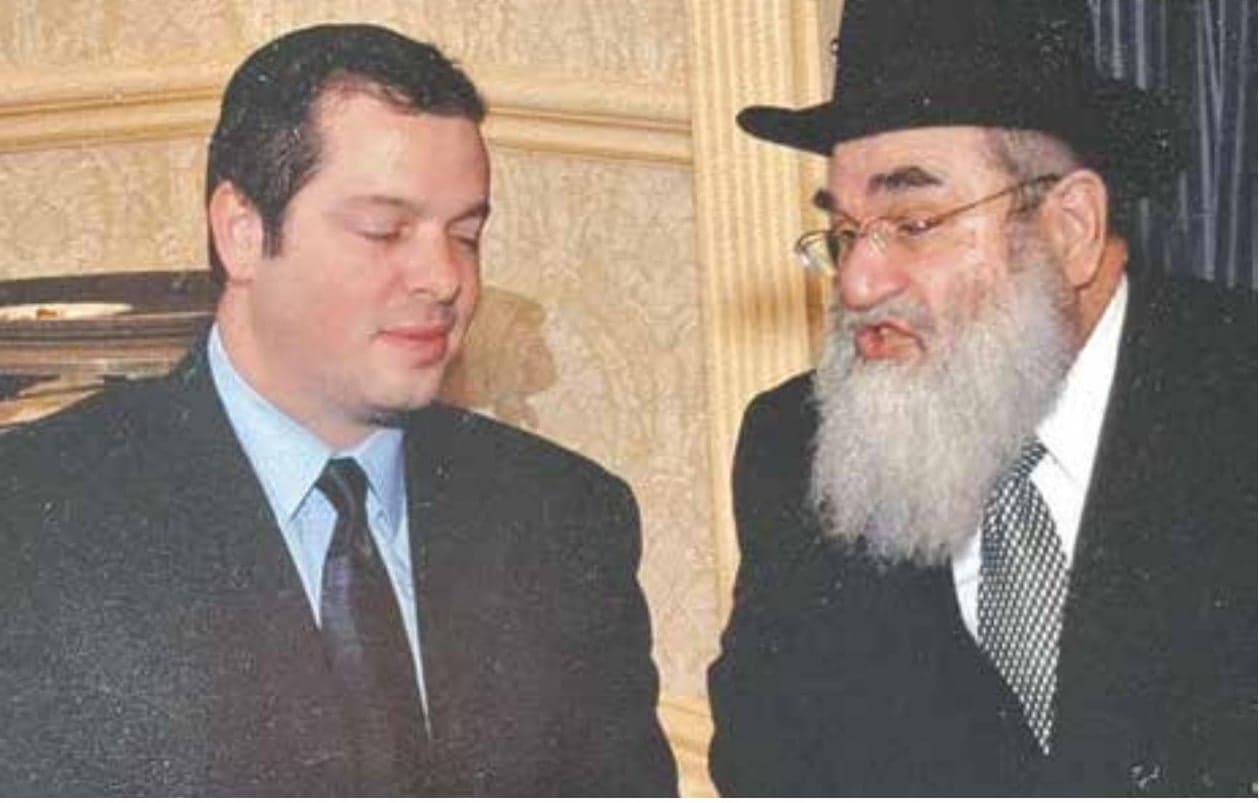
It was an electric moment. The 50th Anniversary Dinner for Yeshiva Darchei Torah was already underway, but a buzz suddenly rippled through the room: HaRav Reuven Feinstein, shlita, had just arrived.
Beis Din and Halachic Process
Jewish courts, judges, and settling disputes by Torah law.
It was an electric moment. The 50th Anniversary Dinner for Yeshiva Darchei Torah was already underway, but a buzz suddenly rippled through the room: HaRav Reuven Feinstein, shlita, had just arrived.
It started innocently enough. Boruch was just going to pop into the store—grab some lightbulbs. That’s it. He even said it out loud in the car like some kind of budgeting mantra: “Just the lightbulbs.
We have just learned extensively about the subject of the death penalty in the Gemara. What follows is a concise recap of many of the relevant laws, focusing primarily on stoning based on the Rambam.
Tavi had a strong passion for musical instruments, and when he saw Pafi’s harp, he was determined to acquire it. He resorted to extreme measures and placed Pafi in a tree, refusing to let him down until he agreed to…
Boruch: Hi, Shimon. I believe this is yours. Shimon: My Superbowl ticket! Where was it? I was looking all over for it, and I missed the game!
There is a well-known phenomenon that occurs in communal refrigerators and shelves. Food seems to disappear from them mysteriously. This occurs in dormitories, offices, and schools.
The following is based on a true story. Chaim the Customer: Shaya, do you have any sugar in stock? Shaya the Shopkeeper: Sure, and it’s on sale today! Chaim: Sweet! I’d like 5 pounds, please.
Many attorneys are familiar with the case of Pierson v. Post. It is often the first case studied in law school when property rights are taught.
The Torah permits a person to annul his vows with the assistance of a chacham or beis din. One method of annulling a vow is by finding a “pesach,” literally an opening.
It says in the Torah, “You shall love your neighbor as yourself.” The Talmud (Kesubos 37b) has a very peculiar application of this verse. The Talmud discusses the proper manner of a court-mandated execution.
Amidst a discussion about the laws of inheritance, the Gemara in Yevamos (37b) introduces the following scenario: There is a field that is surrounded by other fields.
The Gemara (Shevuos 31a) discusses a situation where two litigants appear before a judge. One is wearing expensive clothing valued at 100 maneh, and one is wearing something akin to rags.
There is a popular sefer titled What If? It is based on questions and stories in Rav Zilberstein’s sefarim which are organized according to the weekly parashah.
Note: This article discusses serious halachic and philosophical issues. It is not my intent to provide guidance to anyone in a particular situation but rather to engender discussion.
A woman was deathly ill, and her family was gathered around her. She wanted to ensure there would be no lingering or bitter disputes regarding the inheritance she was leaving to them, so she pleaded with her children to…
The great sage Rabbi Yochanan ben Zakkai desired to give a lecture on the topic of accuracy in weights and measures, but he was unsure whether to deliver the talk.
Kol Nidrei, the well-known Yom Kippur tefillah, should not actually be said on Yom Kippur, according to the Rema. However, there is some debate as to the exact reason.
People frequently ask if one is permitted to shower or bathe on the 17th of Tammuz, Asarah B’Teves, or Tzom Gedaliah. A daf learned this week by daf yomi participants may shed some light on this issue.
Rava changes a ruling on his wife's word about a litigant, but rejects Rav Papa's lone testimony. Rav Ada bar Masna asks him why.